
Nicaragua Goes Deeper in Debt with “Chinese Solidarity”
A track record of failed projects with authoritarian leaders
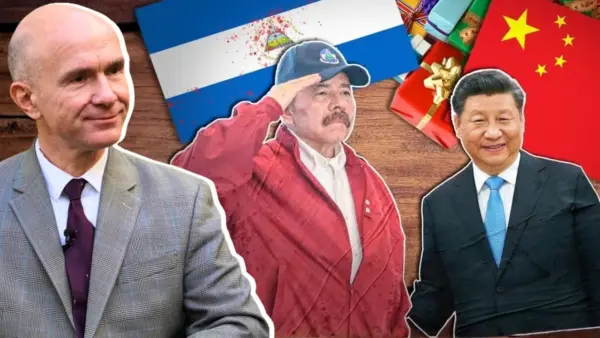
Evan Ellis: There is a “pattern” of borrowing from Chinese companies in Ecuador, Venezuela, Guyana, Sri Lanka, Angola, Zimbabwe, and Mozambique.
By Carlos F. Chamorro (Confidencial)
HAVANA TIMES – Chinese companies CAMCE and CCCC, which the Ortega-Murillo regime has used to contract major loans of more than USD 1.4 billion for various infrastructure projects—including the Punta Huete airport—have a record of failed projects and a vicious cycle of debt under onerous terms in Venezuela, Ecuador, Sri Lanka, Nepal, Angola, and Mozambique, according to Dr. Evan Ellis, a researcher and expert on China’s foreign relations.
“There is a pattern, especially noticeable in loans to countries with authoritarian regimes and very little transparency,” says Ellis, a Latin American Studies researcher at the U.S. Army War College’s Strategic Studies Institute, who was expelled from Nicaragua in 2016 just 24 hours after arriving to investigate the feasibility of Wang Jing and HKND’s interoceanic canal project.
In an interview on the program Esta Semana, broadcast on CONFIDENCIAL’s YouTube channel, Evan Ellis analyzed the findings of the journalistic investigation ‘Solidarity’ Made in China, which examined the eleven loans contracted by the Ortega-Murillo dictatorship with Chinese companies. These agreements establish high interest rates and commissions, advance payment obligations, and short repayment terms.
“These companies have a bad reputation in many parts of the world, such as the disastrous Coca Codo Sinclair hydroelectric dam project in Ecuador, the Guri dam in Venezuela, and the Hambantota port in Sri Lanka,” Ellis explained.
CONFIDENCIAL’s journalistic investigation confirms that the Nicaraguan government has contracted eleven loans with Chinese companies totaling USD 1.437 billion. In the end, Nicaragua will pay more than USD 600 million in interest and fees—an amount representing 42% of the original loans—and will pay China more than USD 2 billion in total. The government claims this is an act of “solidarity” from China toward Nicaragua, but the terms of these loans are not concessional—that is, they are not development loans.
This report is excellent because it not only highlights the concern that this economic relationship is benefiting the Chinese rather than Nicaragua, but it also shows a pattern seen in other countries with authoritarian regimes where there is little transparency. In the cases of Ecuador, Zimbabwe, Suriname, and others, certain patterns emerge: when there are no alternatives, interest rates are high, and in this case, as the report notes, interest rates range between 4% and 6%. On top of that, there are very high fees, between 2.5% and 3.5%, as well as advance payments and other conditions. From these loans totaling 1.4 billion dollars, apart from the returns for Chinese companies and their track record in other projects, more than 2 billion dollars will ultimately be paid. This is a pattern observed in many other places.
In the specific case of the Punta Huete airport, the loan is USD 440 million, but in the end Nicaragua will pay USD 800 million, including interest and fees. In other words, the interest and fees amount to almost 100% of the loan.
EVAN ELLIS: Yes, it’s a pattern seen in many places. This project didn’t start with a government-designed plan; instead, the Chinese were allowed to design it themselves, just as in other countries. The loan also requires advance payments—around 20% paid upfront. That means if the Chinese don’t make progress on the project, Nicaragua loses more than 20% in fees. The interest rate on this airport loan is over 4%, which is very high for a 15-year loan, a very short term for a public works project.
If we compare this with loans from the IDB or the World Bank, which can be as low as 1% over 40 years, it’s clear the Chinese benefit greatly while Nicaragua bears the cost. Once the grace period ends, the government will have to pay between USD 150 and 200 million per year in interest alone.
The Nicaraguan government is already spending a lot on studies, and so far the Chinese haven’t done anything at Punta Huete. On top of that, as in many other projects, there isn’t necessarily any demand for this airport. Augusto C. Sandino International Airport is operating at less than half its capacity, yet another airport is being built 60 kilometers from Managua, where there are currently no hotels, restaurants, or tourist infrastructure, and no easy way for workers to reach the site. It’s unclear which airlines will serve this airport, paying large sums for something that may not benefit the Nicaraguan government in tourism or cargo.
In Nicaragua, two Chinese companies appear as the main contractors: China Engineering Company (CAMCE) and China Communications Construction Company (CCCC). Do these companies have a track record from their operations in Ecuador and other countries? How do they operate?
Yes, CAMCE is known worldwide, and in Ecuador it has a reputation for projects that haven’t performed well. In Bolivia under Evo Morales, the company also carried out projects that failed, especially hydroelectric and road projects that were lost or abandoned.
China Communications Construction Corporation, which is part of China Harbour, is involved in numerous projects that have not gone well across the Americas and elsewhere.
A few years ago, the World Bank sanctioned CCCC for corruption. These companies have a poor reputation in many parts of the world. Even disastrous projects like the Coca Codo Sinclair hydroelectric dam in Ecuador—originally a USD 1.7 billion project—ended up costing the state more than USD 3.4 billion, with over 17,000 cracks and only half of the dam’s capacity usable. These companies do not have a strong record elsewhere.
The Punta Huete airport was originally conceived in the 1980s for military purposes but was never built. Now it’s supposedly being designed for commercial use, but Nicaragua operates with fewer than ten commercial airlines. What determines the viability of this project?
The way the Chinese operate worldwide is that they sign contracts that require repayment, whether or not the project is profitable. We’ve seen this in Sri Lanka with the Hambantota port, which doubled its capacity but created financial challenges.
Sandino Airport currently handles roughly 700,000 passengers, with a capacity of 2 million—less than half its capacity. So why invest all this money in another airport when the existing one is underutilized? Especially given Nicaragua’s situation under Ortega, subject to sanctions and pressures, there’s no reason to think tourism will increase significantly.
There’s speculation that this airport could serve China or Russia because of its long runway, similar to what happened during the Cold War with the MiG-21s, although it was never used. It could also serve as a cargo airport—but if it’s a cargo airport, does it serve Chinese interests or Nicaraguan interests? Ultimately, the question is: who pays? If this airport doesn’t generate revenue for Nicaragua, the government still pays the loans and has already lost the first 20% in fees.
The same thing happened in Venezuela, where USD 64 billion in loans disappeared during the Chávez and Maduro years. The Chinese have been paid on almost all of these loans, with only USD 7 billion left unpaid. But what did Venezuela get in return? Abandoned projects at the Guri dam, abandoned rail projects like Tinaco-Anaco, and factories that never produced cars.
Nicaragua is heading down the same path: in the end, the Chinese receive their payments. There may be some benefits going to Ortega’s family, especially Laureano Ortega Murillo, for their role in these contracts, but Nicaragua is left paying off the debt with little real value gained for the Nicaraguan people.
The Nicaraguan government presents these projects with Chinese companies as an act of “solidarity” from China toward Nicaragua and as part of a long-term strategic relationship. For the Chinese companies, though, are these 15-year loans really part of a long-term relationship, or are they just short-term deals?
The Chinese—and I’ve been following this issue for more than 25 years—are very good at speaking in smooth, polished terms that sound like the language of developing countries, friendship, and brotherhood. But in practice, the benefits go to the Chinese companies and, strategically, to the Chinese government. They take advantage of authoritarian, populist leaders willing to give them what they want under terms that are favorable to China, but not necessarily to the people.
The same pattern has appeared in infrastructure projects in Angola, Mozambique, and elsewhere. That’s why these companies have such a poor reputation, with over a third of their projects failing from Central Asia to Latin America. They talk about brotherhood, but when you look at who actually benefits from these contracts, the high interest rates, commissions, and advance payments are the same in Venezuela and Ecuador. The Chinese understand that populist governments are unreliable, so they secure their money upfront, knowing projects may be diverted or canceled. Whether the project creates value or not, the Chinese still want to be paid. That is their concept of “solidarity.” Authoritarian leaders may say, “It’s something wonderful for our country,” but in reality, it’s a scam.
What happens if there’s a change of government? For example, if Nicaragua undergoes a democratic transition, the country inherits a very burdensome debt. How do you negotiate with these Chinese companies under such conditions?
There’s plenty of historical precedent. In Suriname or Sri Lanka after the Hambantota port, or with government changes in Guyana or Ecuador, the Chinese are unwilling to forgive this debt. Western institutions tend to renegotiate when debt becomes too onerous—for example, in Paris Club negotiations—but China doesn’t participate in that kind of process.
In Suriname, they insisted that the government repay over USD 430 million in accumulated projects after the indebtedness of former dictator Desi Bouterse. In Sri Lanka, the “win-win” plan required the government to hand over the port built under the previous administration to Chinese operation before any debt relief could occur—again, benefiting China. In Nicaragua, annual payments of USD 200 million or more will continue for many years.
Another pattern is that the Chinese often use their leverage to push governments deeper into the trap. For example, in Ecuador, when Lenin Moreno succeeded Rafael Correa and tried to escape the large debt that had caused a payment crisis, the Chinese told him: “We won’t forgive this debt or these contracts, but if you face a payment crisis, we will lend more at high interest rates.” Moreno partially fell into this trap.
The same happened with the disastrous Coca Codo Sinclair project. Recently, the Chinese addressed its poor performance but offered another USD 600 million in new projects. In other words, they take past underperformance and use it as leverage to extract more debt and obligations. Any future democratic government in Nicaragua will not only have to deal with the burden of repayment but also navigate the pressure of escaping this trap.