
What Would Be Needed During a Transition in Cuba?
An interview with Yunior Garcia a Cuban actor, playwright & activist
By Julio Antonio Fernandez Estrada (El Toque)
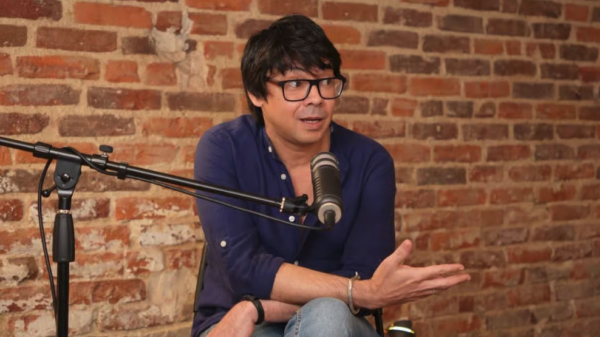
HAVANA TIMES – Yunior Garcia Aguilera is a Cuban actor, playwright, and activist. In 2020, he became one of the visible voices of the 27N movement and the following year founded the platform Archipielago, from which he called for the Civic March for Change in November 2021. After weeks of surveillance and threats from State Security, he managed to leave Cuba and settle in Madrid, where he continues to defend human rights and use art as a tool of memory and resistance.
What was it like in Cuba, for a young person like you, to make theater, to direct, to come from outside of Havana? How did you insert yourself into that world? Was it possible to make new theater? What barriers did you encounter?
YUNIOR GARCIA AGUILERA: It’s full of obstacles, obviously. Cuban theater was one of the sectors that suffered the most from the beginning of the Revolution. Think of Virgilio Piñera: all the stigma, the persecution, the suspicions. And on top of that, the tremendous courage of a man who stood in front of Fidel Castro and said: “I am afraid.” Saying “I am afraid” in front of the monster was an act of tremendous bravery.
The theater inherited that burden of fear and censorship. Remember The Seven Against Thebes, censored in 1968. The UMAP (reeducation forced labor camps) were full of theater people; then came the parameterization (ideological control) They have always been afraid of the theater. I suppose it’s because of that magic of a space where actors and the audience coincide.
Things happen in the theater: someone stands up and shouts “Long live a free Cuba!” That happened once in Visions of Cuban Sophistry. Or think of the Teatro Villanueva: when an actor shouted “Long live the land that produces sugarcane!,” the Spanish volunteers (19th century militia) began shooting. That marked Cuban history.
The regime knows it, and that’s why it muzzles the theater.
My generation inherited all of that, but we also coincided with a small space of freedom in the 1990s, when many creators left and a vacuum remained. That’s when I came in. But when I started doing theater in Cuba, I was still naïve. I still didn’t understand how difficult it was to change anything in a society like Cuba’s.
I have always seen theater as something political, even when it doesn’t seem like it. Because of how confrontational it is, because of the direct messages.
It’s that it’s a mirror. And when you see yourself as a monster, you recognize yourself.
Diaz-Canel went to see my plays in Holguín. The first one was a comedy; All Men Are the Same. He went with his wife Lis Cuesta. And what caught my attention was that they were seeing themselves in that comedy in which there was a character who said: “I’m a whore, what do you want me to do?” And Lis Cuesta later kept repeating all the time: “I’m…, what do you want me to do?”
But the second play they went to see was a political play: Blood. The problem is that bureaucrats and cultural commissars in Cuba are trained to detect metaphors. And what happened with our theater was that it was so direct that they didn’t recognize themselves.
It was so political that there was a Lady in White on stage. And even so, the only thing that bothered them was a metaphor with a character shaving his beard. They said: “It’s Fidel.” A play that attacked the system, but the only thing that bothered them was the metaphor.
You ended up taking on a political role. Did you seek that? How did you get there?
I was full of naïveté. I thought that thing was reformable, that dialogue was possible. I had no political training. And that’s why they crushed me. They defeated me, and I acknowledge it. They destroyed the illusion I had.
Cubans don’t like to acknowledge defeats. Fidel never acknowledged one. I do. Defeats also build you.
When you are an artist, you are already in politics. When you have a public role, you are already assuming, in a certain way, political responsibility. I didn’t want to hide behind the “I’m an artist” thing to say certain things. Many told me: “Criticize but let your characters do it.” And that seemed so comfortable to me, indecent even. I began to speak as a citizen. From there came Jacuzzi, a self-referential play in which my character was myself.
In the second performance, they filled the theater with young soldiers. I said: “We perform.” And we performed.
The play began as a comedy. The young people relaxed, they laughed. When the political part came, the silence was total. At the end, they applauded, shouted. The officers were so bothered by the reaction that they ordered them to stand at attention and made them march down the stairs.
How do you assess that moment when your life entered a path that no longer had a way to stop: opposition, people identifying you as a leader? How do you assume it now? What would you do differently? How do you think you carried that leadership?
I’ve assumed something in my life consciously and fully: the time machine does not exist. There is no way to go back, no way to fix the past. You can only change it in the narrative, but that seems hypocritical to me. I did what I could, in the way I could, with many mistakes. I wasn’t entirely aware of what was happening.
Maybe people from outside saw the phenomenon more clearly than I did. I was stuck in my neighborhood in Holguin doing the same thing I do now: posting on Facebook. Because people say: “No, it’s that now you’re not in Cuba.” But when I was in Cuba, what I was doing was posting on Facebook.
I didn’t travel around the country. I didn’t give talks in Holguín, I didn’t do a campaign, I didn’t move around the municipalities meeting people, greeting them, shaking their hands. Practically, what I was doing in Cuba I did from my apartment under heavy surveillance, with the little internet I had.
What’s the difference with what I do now? In fact, I think now I can be more in contact with Cubans than when I was in Cuba, because now I can post on Facebook whenever I feel like it. In Cuba I couldn’t. In Cuba I had to do tricks with various lines loaned by friends to be able to connect.
So I wasn’t fully aware of the leadership; nor was it my intention. And people think that’s a pose, the whole “I’m not interested in being a leader” thing. The issue isn’t that I wasn’t interested in being a leader: the issue is that I knew I wasn’t prepared to be one.
I think that to lead something like that in Cuba, you have to have political experience, knowledge, contacts, preparation; and I didn’t have that. My training is as a theater person. So, in any case, I was an opinion leader, but not a political leader in the traditional sense of the term.
And that’s why I made the mistakes I made.
I remember that in Archipiélago, at one point, we were very afraid of what they would say about us on television. And someone proposed that we suspend contact with the embassies: “From now on we’re not going to speak with embassies anymore.” And we believed it was noble not to do so, because that way we were demonstrating the sovereignty and independence of the movement.
It was a political absurdity. You cannot strip yourself of the few weapons and tools you have, which are those contacts, that protection. How are you going to disarm yourself? It’s like going to war and taking off the vest, the helmet, the boots, and saying: “Here I am, I’m braver than anyone.” They’re going to destroy you.
We suffered those rookie mistakes for that reason: because Cuba, unlike Venezuela… I think Venezuela does have trained politicians. They have people who have had experience as mayors, governors; people who have administered, who have governed, who have made tough policies. In Cuba, no.
In Venezuela they haven’t had as many years without political pluralism as we have.
I think the big difference and the big problem is that: in Cuba we don’t have political leaders in the real sense except, perhaps, those who have had positions in the United States; Cubans who have been able to experience real politics, hard politics. But the rest haven’t.
The rest are influencers, opinion leaders, communicators. The fact that you have, I don’t know, 10,000 followers doesn’t mean you’re a political leader. You are someone who has an opinion leadership, and that needs to be recognized.
But I think one of the things that perhaps weighs us down—and affects us—is the little faith the international community has that Cubans are capable not only of toppling the regime but of building a new Cuba. The issue of the transition: what concrete project we have. Because there are people who have many projects, I know. But does the majority of the Cuban population know them?
We have not been capable of building and agreeing on solid projects for the transition and for the new Cuba. And not only building them but socializing them: making people know them and telling them: “Look, this is the Cuba we’re going to have. These are the concrete steps we’re going to follow. And this is how we are going to resolve, for example, the energy problem,” which is one of the things that worries people the most.
Because tomorrow a coup d’état could take place in Cuba and blackouts will continue, ration stores will continue to be empty, and scarcity as well… unless a huge international aid package comes in. But one has to understand it’s not a miracle. It’s not that ships are going to arrive full of merchandise and planes are going to drop dollars so the population becomes rich. It will be a difficult process.
It’s true that people worry about that a lot. I have spoken with many people—since I was still in Cuba—and it was always a painful concern. People who wanted to find something they didn’t see. They were looking for traditional politics: traditional leaders, knowledge, political presence; people who could assume a new Cuba or be a face of that new Cuba, to know what to support, what to grasp onto.
Unfortunately, our political inexperience, our lack of knowledge, our lack of relationships and networks has made the fight against that system a very uneven fight, because it is unbalanced.
Let me tell you something: tomorrow the system collapses and a rule-of-law state with free market is established and the country will improve. Even if the most mediocre are at the helm, the least prepared leaders, it will improve. Because Cuba’s problem is a systemic problem. People think it’s about this or that official doing things better or worse. No. The system doesn’t work even if you put the brightest person there.
By changing the model, with democracy, rule of law, and free market, the country will improve. Now: will it improve toward the Cuba we actually want? That’s the question.
And it would be good to prepare for that. Each person from their own position. Because there’s another problem too: leaders bet on being president. We need mayors! And we need people to handle agriculture in a municipality, for example.
There’s a historical need to find a figure. In reality, democracy shouldn’t be that; that shouldn’t be the aspiration, but it’s a normal product of totalitarianism: we still like strongmen, big figures.
Now, more concretely: what country would you like Cuba to be? Put differently: what country would you return to?
I think there are about five basic issues here.
First: a rule-of-law state that guarantees freedoms. The greatest freedom possible.
Second: and this is very important— law and order. You have to guarantee the citizen’s security. In Cuba, there are criminals, and there will be tomorrow even if there is democracy. There will be crime.
In recent days, we’ve seen tremendous things: a multiple hit-and-run in Havana; a head that appeared in a dumpster in Santiago de Cuba. We are seeing a tremendous rise in crime; that violence is the daughter of precariousness.
That’s one of the things that has been least discussed in the opposition: how to guarantee law and order tomorrow in a transition? Who is in charge? Who replaces the current police? Who replaces the army, if it remains?
Third: market freedom. People need the freedom to prosper, grow, without absurd obstacles. And we have to eliminate that thing of the socialist state enterprise, which is nonsense; it has not worked. The Chinese and the Vietnamese have known that for a long time, and in Cuba they still don’t get it.
That would guarantee greater production and economic well-being.
Fourth: guarantees from the state to maintain things that Cuban society will need a lot at the beginning: universal access to public health and improving it; education; culture; sports. Right now, they are closing schools; hospitals we know are in sharp decline. All that needs to be rebuilt, and it falls to the state.
The private sector can handle things too, but the state must guarantee universal and free access to those services, which are human rights.
Fifth: we have to heal the nation. Cuban society is sick, in decomposition. You can see it in the rise of violence, in the language, on Facebook, in education. Cuba has suffered a tremendous deterioration, especially in recent times.
That spiritual reconstruction has to do with ideas, with culture, with trying to get valuable people to return. That remains to be seen. Even if a transition happens tomorrow, many people are already established abroad: work, home… and maybe you want to return, but your partner, your children, tell you: “No.”
So: how do you rebuild that nation? How do you get the children of the nation to return and work in the reconstruction? How do you convince the world that it’s necessary to rebuild? Because we can’t do it alone.
That, in broad strokes. But I tell you: there are aspects of all this that haven’t been touched. We need to discuss them more.
And people need that, Yunior. We take for granted that our ideas, our dreams, even our utopias, are known, that they reach everywhere, and that’s not so. The Cuban people need to know that what we are thinking for the future is not chaos, is not a transition for the worse. That fear is logical.
The other thing is that the Cuban system won’t fall by insults, and it doesn’t even fall through protests. I believe in protesting; in fact, I promoted one. I believe in popular pressure. But that is not enough.
You need international accompaniment. Like on July 11, 2021. And you need the world press looking at you: that protects you, although it’s no guarantee. And above all, you need to try to get the system to break from within.
One last question, Yunior: how have you experienced migration in Spain? Do you feel part of it? Some say Cubans integrate differently in Madrid than in Miami. Are there differences? Is it generational? Is it the European context?
Firstly, I am very grateful to Spain because they saved my life. If I had stayed, I would be in prison, dead, or crazy; there’s no other option.
Now, that feeling of being part of here… I continue suffering as a “chronic Cuban.” I keep thinking about walking in Cuba. When I act here I miss acting in Cuba a lot: getting on a stage there, in the stages where I performed.
The silly memory of the neighborhood… My neighborhood is a disaster, and probably when I return—if I return someday—I might not even recognize it. I’m not going to know almost anyone: almost all my friends have left.
It’s not the ridiculous love of the land. It’s sensations and memories that make you who you are.
What happens to me with Spain is that I still feel I am just passing through, that it is a preliminary stage for something that comes later. And maybe I will die first and nothing happens.
For example, I met Carlos Alberto Montaner in his last days. I didn’t know that he had made the decision to pursue euthanasia. And when we said goodbye he told me: “I won’t see Cuba’s freedom anymore, but I hope you will.” I was taken aback. And I told him: “But you will see it,” to give him optimism.
And I’ve been left thinking: maybe I will also have to die without seeing it. It’s hard. Almost all of us want to be optimistic and say: “It’s close, it’s going to be achieved.” But probably we’ll have to die without seeing it.
The hardest thing is dying in the pause, without reaching the place you were waiting to press play on.
Thank you for this conversation. It’s a pleasure for me to see you again, to talk with you.
And the last thing I want to say: I was one of the people who told you to leave. I know many have told you many things because of that, but I want everyone to know that I was one of the ones who asked you to save yourself, as a person.
I feared for your life when you were in Cuba. And responsibly, I would do it again with people like you and with anyone in that situation. I asked you to save yourself because there was nothing to gain by having you imprisoned for 20 years or run over.
Thank you.
———-
First published in Spanish by El Toque and translated and posted in English by Havana Times.