
Lukashenko Pardons Nobel Peace Prize Laureate
and 122 Other Political Prisoners
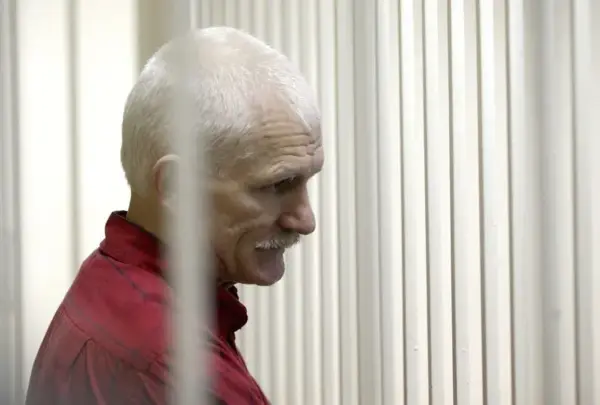
Among those pardoned were citizens of the United States, the United Kingdom, Ukraine, Australia, Japan, Lithuania, and Latvia.
HAVANA TIMES – The president of Belarus, Alexander Lukashenko, has pardoned the 2022 Nobel Peace Prize laureate Ales Bialiatski, as well as leading opposition figures imprisoned in the country, María Kalesnikava and Viktor Babariko.
According to the human rights organization Viasna—founded and led by Bialiatski—the release took place on December 13, 2025, following consultations held in Minsk over the previous two days between Lukashenko and White House envoy John Cole.
Bialiatski had been held incommunicado for a long period after being transferred in May 2023 to the notorious Prison No. 9 in Gorki, in the Mogilev region, known for its harsh detention conditions.
Amnesty International had repeatedly called for the release of the 63-year-old activist, who suffers from chronic illnesses, yet was nevertheless forced to work six days a week.
In addition, according to human rights organizations, prison officials sent him for months to solitary confinement cells, where he was denied access to parcels and medication.
As for Kalesnikava, who was first a close collaborator of Babariko and later of the presidential candidate and current opposition leader in exile, Sviatlana Tsikhanouskaya, she was detained after the massive anti-government protests of 2020.
She was forcibly taken to the border with Ukraine but tore up her passport and refused deportation. As a result, in 2021 she was sentenced to 11 years in prison for conspiring to seize power.
Babariko, a well-known banker critical of the Belarusian regime, was arrested during the 2020 election campaign before he was able to register his presidential candidacy.
Those released also include other Viasna activists such as Valiantsin Stefanovich and Uladz Labkovich, as well as lawyer Maksim Znak; the editor of the Tut.by portal, Marina Zolatava; and political scientist Alexander Fiaduta.
The release of these prisoners took place as part of a pardon granted to 123 people of different nationalities, according to a statement by the Belarusian presidency reproduced by the BELTA news agency.
According to Viasna, the foreign nationals include Lithuanian Maria Batalionak, Polish citizen Raman Haluza, Latvian Ala Sakalenka, Japanese national Nakanishi Masatoshi, U.S. citizen Natallia Beslkaya, and Australian Aliaksandr Syrytsa.
“The Republic of Belarus has decided to pardon 123 citizens of different countries convicted (…) of committing crimes of various kinds such as espionage, terrorism, and extremism,” the presidential press office told BELTA.
The statement stresses that the decision “is part of the agreements reached with the president of the United States, Donald Trump,” whose envoy, John Cole, held consultations with Lukashenko yesterday and today in Minsk.
It also adds that the move responds “to the cancellation of illegal sanctions against Belarus’s potash sector adopted by the administration of the previous US president, Joe Biden.”
In total, according to BELTA, since November 2025 the Belarusian leader has pardoned 156 citizens from countries such as the United States, the United Kingdom, Ukraine, Australia, Japan, Lithuania, and Latvia.
The measure, according to the official statement, is aimed at accelerating positive momentum in relations with the country’s partners and at contributing to the stabilization of the situation in Europe.
Shortly before, Cole announced the lifting of sanctions on that country’s potash sector, which had been imposed by Washington in 2021. In September 2025, the United States lifted sanctions against the state-owned Belarusian airline Belavia, which had been sanctioned in 2022.
Normalization between the two countries began in August, when Lukashenko held a phone call with the US president, who urged his Belarusian counterpart to release all political prisoners following the release from prison of a group of dissidents last June, including opposition leader Sergei Tikhanovsky.
Belarus, which has been ruled by Lukashenko since 1994, has been subject to sanctions since the violent repression of the massive opposition protests against electoral fraud in 2020. Those measures were expanded two years later with Minsk’s open support for Russia’s military campaign in Ukraine.
Lukashenko has pardoned several hundred Belarusian and foreign prisoners in recent months, but according to human rights organizations, more than a thousand political prisoners remain behind bars.
First published by Confidencial and translated and posted in English by Havana Times.