
Full Transcript of the 60 Minutes ‘Inside CECOT’ segment blocked by CBS News
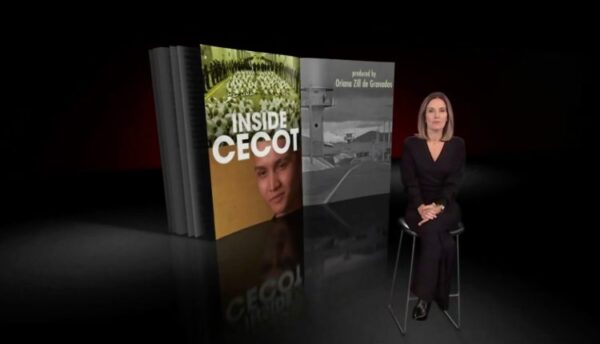
HAVANA TIMES – In a leaked email, “60 Minutes” correspondent Sharyn Alfonsi wrote that “Bari Weiss [editor-in-chief of CBS News] spiked our story,” and “in my view, pulling it now, after every rigorous internal check has been met, is not an editorial decision, it is a political one.”
First available via un sitio canadiense, the video has been pulled by a copyright claim from Paramount, because they don’t want it to be show.l
The Catholic Observer has published the transcription of the video and some screenshots which we republish in its entirety:
———
I see CBS News’s owner has taken down the “Inside CECOT” 60 Minutes segment Bari Weiss, the network’s editor in chief, pulled hours before it was to air. — Gary Gately, Editor The Catholic Observer.
I expected this, which explains why I transcribed the full segment while I still had access to the video. Here’s the transcript, with numerous screenshots from the segment and some context.
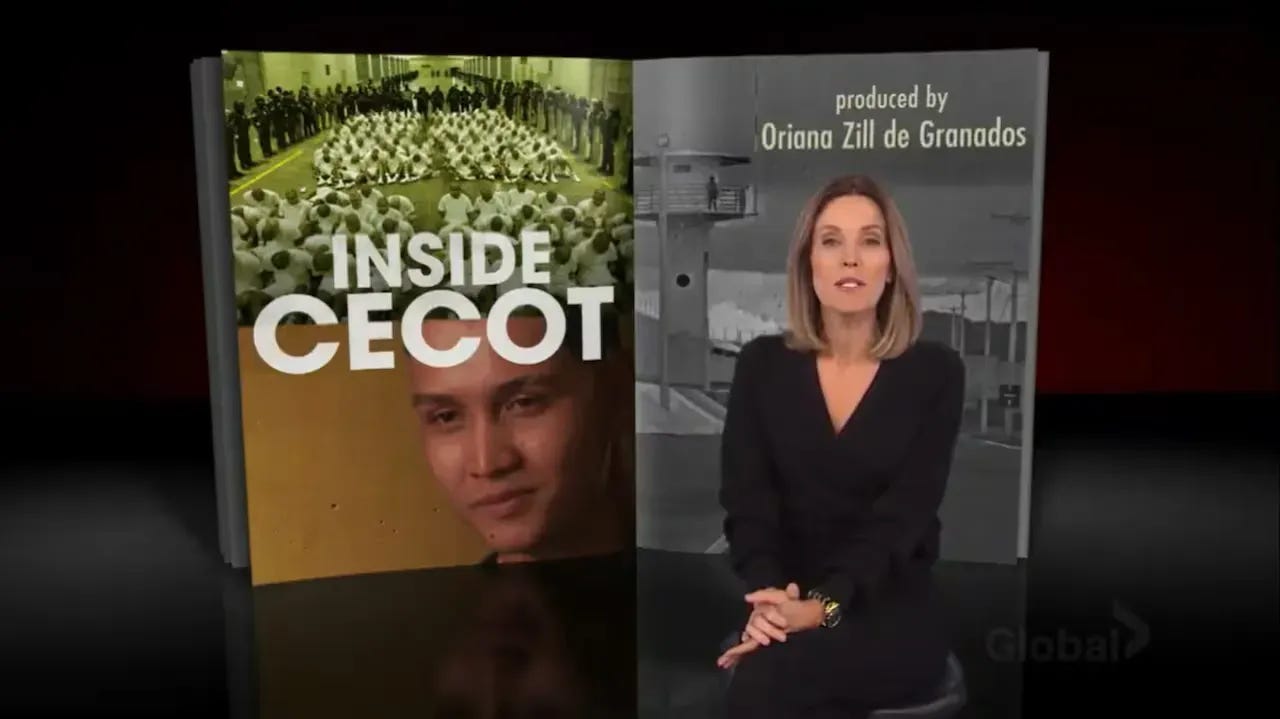
Below is the full transcript of “Inside CECOT,” the “60 Minutes” segment Bari Weiss, the CBS News editor in chief, pulled hours before it was to air Sunday night. Canadian network Global TV, which has the rights to “60 Minutes” in Canada, aired the segment — reported by award-winning “60 Minutes” correspondent Sharyn Alfonsi — on its streaming platform. Viewers shared videos of the segment, which had circulated widely on social media, but CBS News owner Paramount Skydance has since taken them down.
“Inside CECOT” documents widespread torture, physical and sexual abuse at the notorious El Salvador prison, where the Trump administration sent more than 250 Venezuelan deportees. The segment includes soundbites from administration officials, including footage of Karoline Leavitt, the White House press secretary, saying of the Venezuelan deportees at a March 17 press briefing: “These are heinous monsters, rapists, murderers, kidnappers, sexual assaulters, predators who have no right to be in this country. And they must be held accountable.”
Alfonsi’s segment proves that the assertion is patently false: Only eight of the 252 Venezuelan men the Trump administration sent to CECOT had been convicted of a violent or potentially violent offense.
Explaining her decision to pull the segment, Weiss, who became CBS News editor in chief in late October, said in a statement: “My job is to make sure that all stories we publish are the best they can be. Holding stories that aren’t ready for whatever reason — that they lack sufficient context, say, or that they are missing critical voices — happens every day in every newsroom. I look forward to airing this important piece when it’s ready.”
Alfonsi retorted in a message to her colleagues: “In my view, pulling it now, after every rigorous internal check has been met, is not an editorial decision; it is a political one.” She said neither the White House, the Department of Homeland Security nor the State responded to requests from “60 Minute” for comment.
That silence amounted to a “tactical maneuver designed to kill the story,” Alfonsi wrote, adding: “If the administration’s refusal to participate becomes a valid reason to spike a story, we have effectively handed them a ‘kill switch’ for any reporting they find inconvenient. If the standard for airing a story becomes ‘the government must agree to be interviewed,’ then the government effectively gains control over the 60 Minutes broadcast. We go from an investigative powerhouse to a stenographer for the state.”
Many critics suggest Weiss caved to pressure from the White House, failing CBS News viewers and betraying the core principles of journalism to report the news “without fear or favor,” to “comfort the afflicted and afflict the comfortable,” to give voice to the voiceless, to hold elected officials accountable, to “follow the money” and to expose flagrant abuses of power and the public trust.
Skydance Media — which is run by David Ellison, the son of a longtime supporter of President Donald J. Trump, Larry Ellison — acquired CBS owner Paramount in August. David Ellison helped secure regulatory approval for the deal.
In July, Paramount agreed to pay $16 million to settle a 2024 lawsuit Trump filed over a “60 Minutes” interview with former Vice President Kamala Harris. Trump argued that the network edited the interview to distort answers from Harris, then his Democratic opponent in the presidential campaign. Neither Paramount nor CBS News apologized or admitted wrongdoing in the settlement.
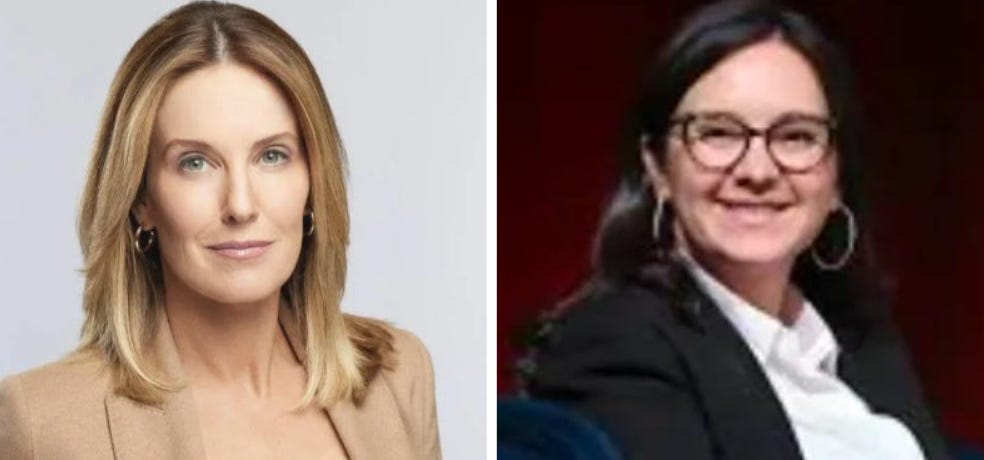
The full transcript of “Inside CECOT”
Sharyn Alfonsi: You may recall earlier this year when the Trump administration deported hundreds of Venezuelan men to El Salvador, a country most had no connection to. The White House claimed the men were terrorists, part of a violent gang, and invoked a centuries-old wartime power, saying it allowed them to deport some men immediately, without due process, an unusual strategy that sparked an ongoing legal battle. Tonight, you’ll hear from some of those men.
They describe torture, sexual and physical abuse inside CECOT, one of El Salvador’s harshest prisons, where they say they endured four months of hell.
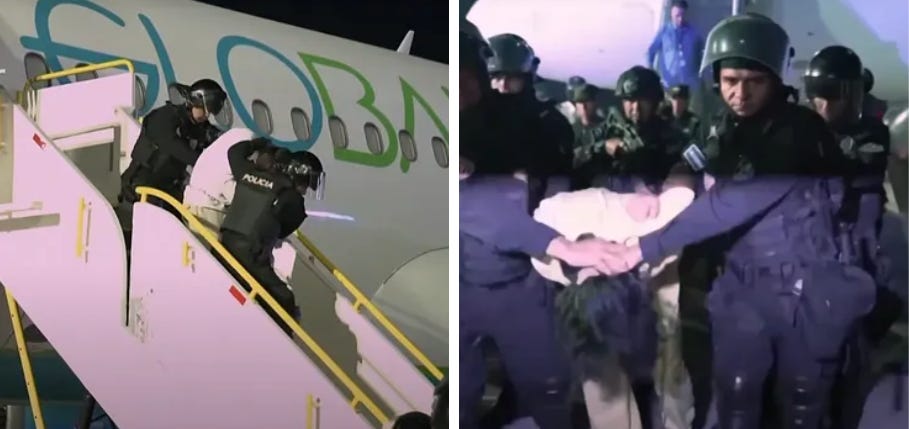
It began as soon as the planes landed. The deportees thought they were headed back to Venezuela, but then saw hundreds of Salvadoran police waiting for them on the tarmac.
Shackled, they were paraded in front of cameras, pushed onto buses, and delivered to CECOT, El Salvador’s notorious maximum-security prison.
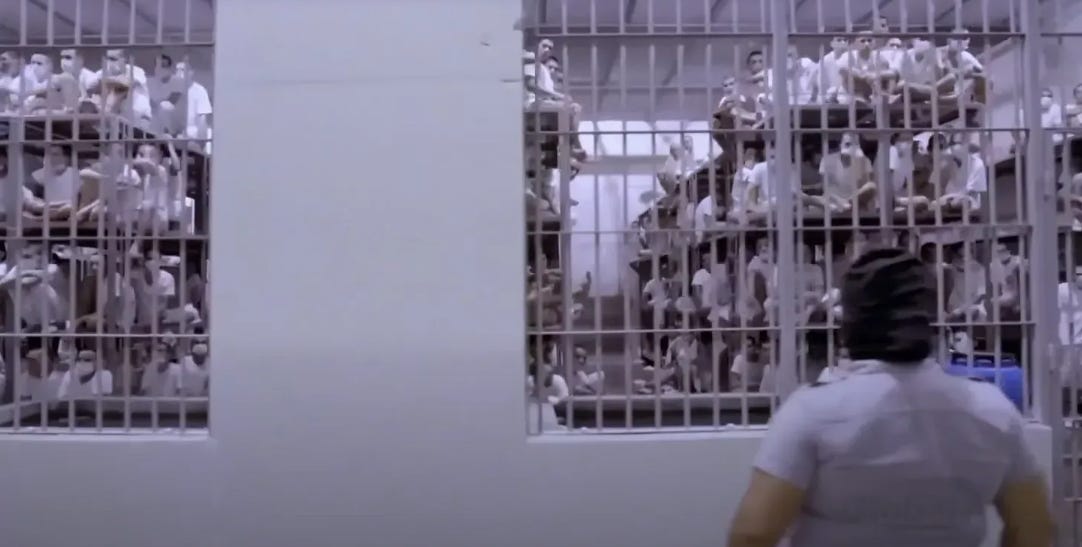
Luis Muñoz Pinto (speaking in Spanish, translated): When we got there, the CECOT director was talking to us. First thing he told us was that we would never see the light of day or night again. He said, “Welcome to hell. I’ll make sure you never leave.”
Alfonsi: Did you think you were going to die there?
Pinto: We thought we were already the living dead, honestly.
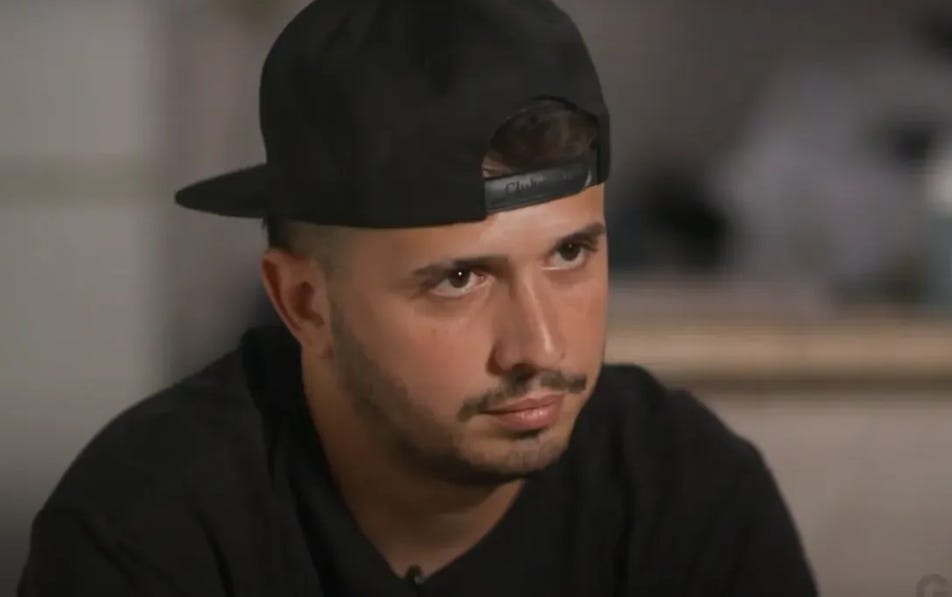
Alfonsi: We met Luis Muñoz Pinto in Colombia. He was a college student in repressive Venezuela and hoped to seek asylum in the United States. In 2024, he says, he waited in Mexico until his scheduled appointment with U.S. Customs and Border Protection in California.
During that interview….
Pinto: They just looked at me and told me I was a danger to society.
Alfonsi: You have no criminal record?
Pinto: Nothing. I don’t even — I never even got a traffic ticket.
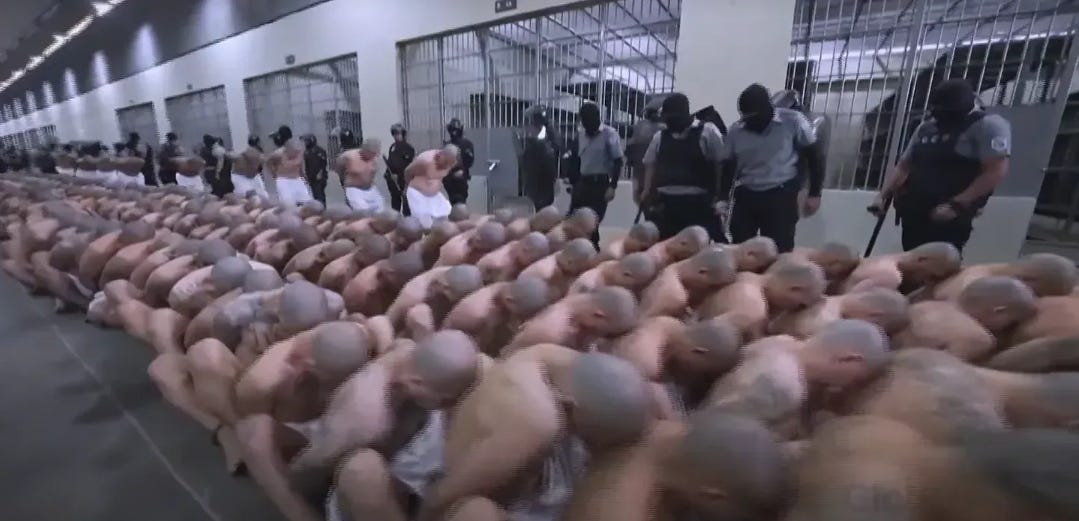
Alfonsi: Nevertheless, he was detained by Customs. He says he spent six months locked up in the U.S. waiting for a decision on his asylum case when he was deported, one of 252 Venezuelans sent to CECOT between March and April. Inside, he says their hands and feet were tied [and they were] forced to their knees. Their heads were shaved.
Pinto: There was blood everywhere, screams, people crying, people who couldn’t take it and were urinating and vomiting on themselves. When you get there, you already know you’re in hell. You don’t need anyone else to tell you.
Alfonsi: He says the guards began savagely beating them with their fists and batons.
Alfonsi, speaking to Pinto: Tellme about what they did to you personally.
Pinto: Four guards grabbed me and they beat me until I bled to the point of agony. They knocked our faces against the wall. That was when they broke one of my teeth.
Alfonsi: CECOT, the terrorism confinement center, was built in 2022 as a key part of Salvadoran President Nayib Bukele’s sweeping anti-gang crackdown. The massive prison is designed to hold 40,000 inmates, and its harsh reputation is a point of pride for Bukele, who regularly allows social media influencers to tour it.
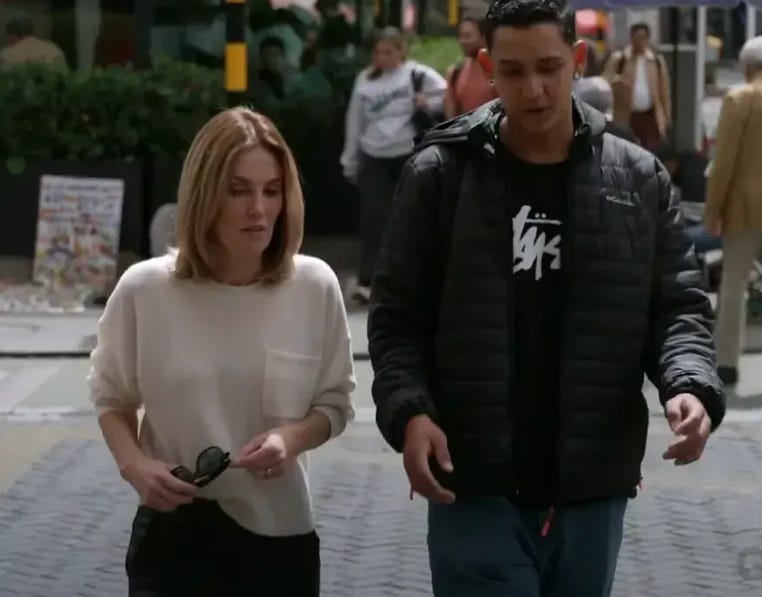
Influencer: As you can see, we’re literally in the middle of the desert.
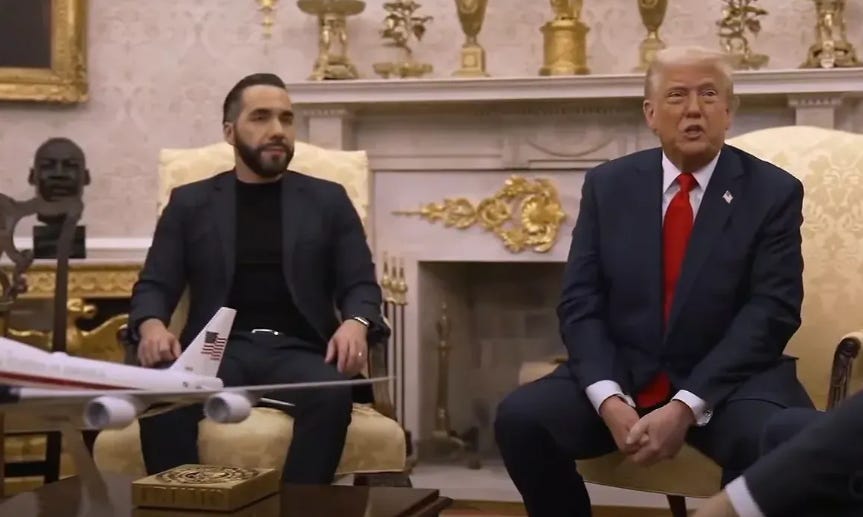
Alfonsi: Guards show off cramped cells where metal bunks are stacked four high. There are no mattresses or sheets. Inmates said they had no access to the outdoors and no contact with relatives. International observers warnCECOTwas violating the UN standard for minimum treatment of prisoners, and two years ago, during the Biden administration, the U.S. State Department, cited torture and life-threatening prison conditions in its report on El Salvador. But this year, during a meeting with President Bukele at the White House, President Trump expressed admiration for El Salvador’s prison system.
President Donald J. Trump (soundbite/video footage from Trump’s April 14 White House meeting with Salvadoran President Nayib Bukele): “They are great facilities, very strong facilities, and they don’t play games.”
Alfonsi: In March, the Trump administration agreed to pay El Salvador $4.7 million to imprison Venezuelan deportees at CECOT.
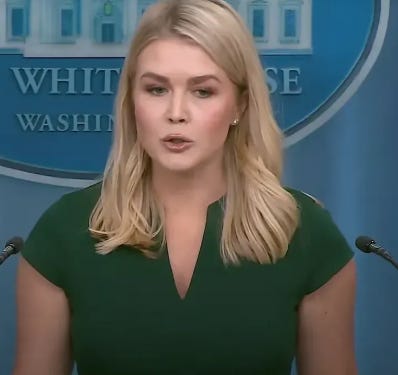
White House Press Secretary Karoline Leavitt (soundbite/video footage from March 17 White House press briefing): “These are heinous monsters, rapists, murderers, kidnappers, sexual assaulters, predators who have no right to be in this country, and they must be held accountable.”
Alfonsi: The U.S. government said these people are the worst of the worst.
Juan Pappier: These people are migrants, and the sad reality is that the U.S. government tried to make an example out of them. They sent them to a place where they were likely to be tortured, to send migrants across Latin America the message that they should not come to the United States.
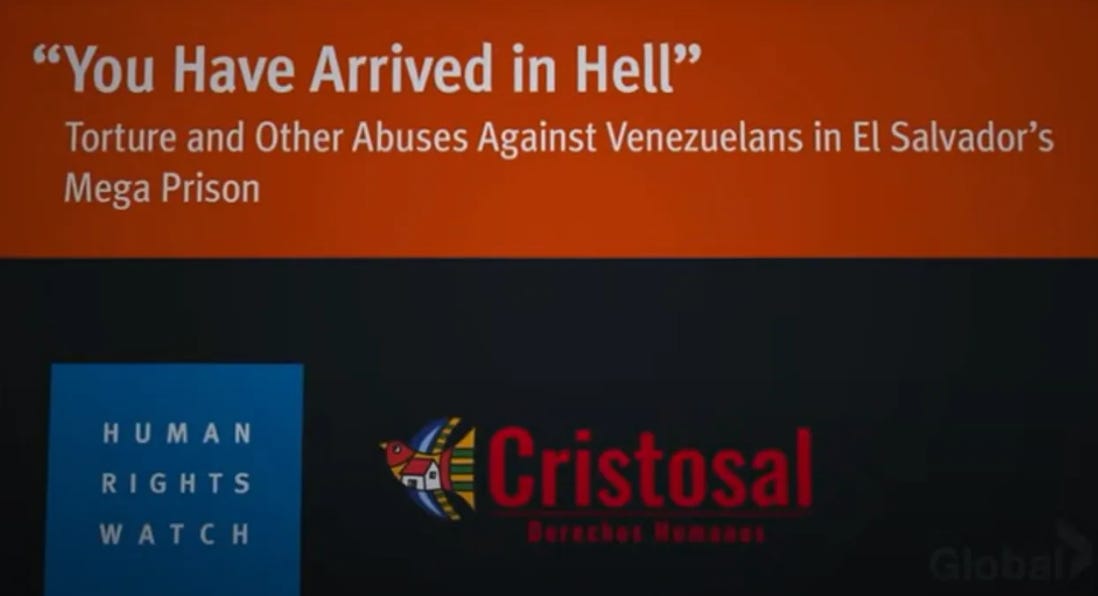
Alfonsi: Juan Pappier is a deputy director at the nonprofit Human Rights Watch. In an 81-page report released in November, the organization concluded there was systematic torture and other abuses at CECOT and that nearly half of the Venezuelans the U.S. sent there had no criminal history. Only eight of the men had been convicted of a violent or potentially violent offense.
Alfonsi, speaking to Pappier: How do you know they weren’t gang members?
Pappier: We cross-reference federal databases, databases in all 50 states in the United States, and also obtain criminal records in Venezuela and in the countries where these people live, and the information we obtained in the United States is based on data provided by ICE (U.S. Immigration and Customs Enforcement).
Alfonsi: So ICE’s own records said….
Pappier: ICE’s own records say that only 3% had been sentenced for a violent or potentially violent crime.
Alfonsi: “60 Minutes” reviewed the available ICE data. It confirms the findings of Human Rights Watch. It shows 70 men had pending criminal charges in the U.S., which could include immigration violations. We don’t know because the Department of Homeland Security has never released a complete list of the names or criminal histories of the men it sent to CECOT. Rapid deportations have been a key part of the Trump administration’s immigration overhaul. The administration considers anyone who crosses the border illegally to be a criminal. Illegal crossings are now at a historic low, but some immigration attorneys say the administration has used flawed criteria to justify deportations.
Pinto: I have some tattoos. None of them have anything to do with any criminal group. I explained to them saying that I didn’t belong to any gang, to which the agent responded, “But you are Venezuelan.”
Alfonsi: “60 Minutes” reviewed this document [an ICE document, shown on the screen] agents used to assess Venezuelans. A person with eight points was designated as a Tren de Aragua gang member and deportable. Tattoos an immigration officer suspected of being gang-related earned four points. The criminologists who study gangs say tattoos are not a reliable way to identify Venezuelan gang members, because, unlike some central American gangs such as MS-13, Tren de Aragua does not use tattoos to signal membership. Venezuelan national William Lozada Sanchez was also deported to CECOT. He told us the guards there also accused Venezuelans with tattoos of being gang members. He detailed months of abuse and being forced into stress positions.
Alfonsi, speaking to Sanchez: So you had to be on your knees for 24 hours?
Sanchez: Yes, because they put a guard there to watch us so that we wouldn’t move.
Alfonsi: What would happen if you couldn’t make it?
Sanchez: They take us to the island.
Alfonsi: What’s the island?
Sanchez: The island is a little room where there’s no light, no ventilation, nothing. It’s a cell for punishment where you can’t see your hand in front of your face. After they locked us in, they came to beat us every half hour, and they pounded on the door with their sticks to traumatize us while we were in there.
Pinto: The torture was never ending. They would take you there and beat you for hours and leave you locked in there for days.
Alfonsi, speaking to Pinto: They were hitting your private parts?
Pinto: Sí.
Alfonsi: With a baton?
Pinto: No. They tugged at them with their hands.
Alfonsi: They did that to multiple people?
Pinto: To most of us.
Alfonsi: The men say they grew weaker by the day. They claim the prison lights were left on 24 hours a day, making it difficult to sleep, and that food and medicine were often withheld.
Alfonsi, speaking to Pinto: Did you have access to clean water?
Pinto: They never gave us access to clean water. The same water from our baths and toilets was the same water that we had to drink and survive on. If we had serious injuries, when the doctors examined us, they told us that drinking water would heal us.
Alfonsi: So they’re telling the injured prisoners to drink water. The water’s filthy….
Pinto: Super filthy. The sicker and more injured we were, the better it was for them.
Alfonsi, speaking to Pinto: Did they speak to anybody? Any of the prisoners?
Pinto: Never, not with any of the detainees. They never spoke to us. We only saw the cameras
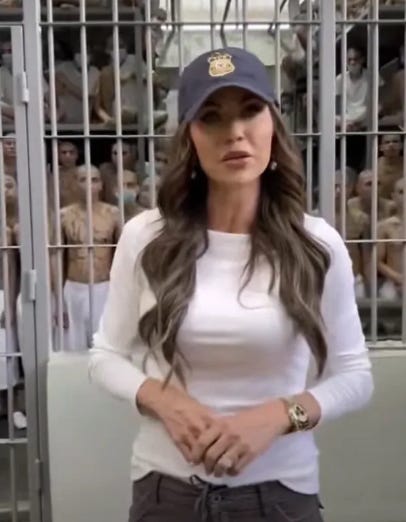
Alfonsi: At some point, Secretary Noem went to another area of the prison to record this video.
Kristi Noem (soundbite/footage from a video recorded during Noem’s March 26 tour of CECOT): “I want to thank El Salvador and their president, for their partnership with the United States of America to bring our terrorists here and to incarcerate them.”
Alfonsi: And there were men standing behind her, heavily tattooed. Who are those men? Do we know?
Pappier: We know that those men in her video are not Venezuelans. They are Salvadorans, probably accused of being gang leaders and probably people who have been in jail for many, many years in El Salvador.
Alfonsi: Human Rights Watch was able to confirm that, with the help of this intrepid team of students at [the University of California] Berkeley’s Human Rights Center.
Student Researcher A: All the invisible men have either an MS on their chest or 13 or an ES for El Salvador, and all those gangs are associated with El Salvador.
Alfonsi: Not for Venezuelans.
Student Researcher A: Yeah.
Alfonsi: To help verify the deportee stories for Human Rights Watch, the team of students combed through open-source data for weeks. Students are trained in advanced techniques and follow strict international standards for obtaining digital evidence that can be used in courts. Analyzing satellite imagery, they mapped the prison and identified the building where the Venezuelans were held. And remember all those influencers who filmed inside CECOT? One toured an isolation cell.
Influencer: These are the rooms of solitary confinement.
Alfonsi: That match the description of the so-called island where the deportees described being tortured —
Influencer: And they get absolutely nothing to use, to sleep or to rest, just pure concrete.
Alfonsi: A show-and-tell at the armory confirmed CECOT had the weapons the Venezuelans say guards used on them.
Student Researcher B: We did see in these videos the use of the T batons on prisoners. Additionally, we also saw the use of painful body positions.
Alfonsi: We were showing that off in the videos.
Student Researcher B: And they do that sort of a practice.
Alfonsi: But it was this interview with the prison warden that proved to be most helpful.
Warden: The light system is 24 hours a day.
Student Researcher B: One of the questions that we had was: “Are the lights on 24/7?” He said, “Yes, they are.” So he’s talking about how hot it can get in the prison. So there’s this sort of pride around the poor conditions and around the suffering.
Alfonsi: Using extreme temperatures or light to disorient inmates is also prohibited under UN standards.
Alexa Koenig: I think one of the things that the work of this team has really shown is that a lot of these stories can be believed.
Alfonsi: Alexa Koenig is the director of Berkeley’s Investigations Lab, which trains students to research war crimes and human rights violations.
Alexa Koenig: And it’s those little details that I think, then, if you can bring that together with the physical evidence, I think you have the strongest possible case for accountability, whether it’s a court of public opinion or at some point in a court of law.
Alfonsi: The Department of Homeland Security declined our request for an interview and referred all questions about CECOT to El Salvador. The government there did not respond to our request. In July, after four months, the 252 Venezuelan men were finally released from CECOT and sent back to Caracas in exchange for 10 Americans that had been imprisoned in Venezuela.
The Trump administration has arranged more deals, some valued at millions of dollars, to offload U.S. deportees to other so-called third countries, nations to which they have no connection. Among them: war-torn South Sudan and Uganda, which have well-documented histories of torturing prisoners.
Pope Leo XIV, U.S. bishops and Catholic immigration organizations have denounced Trump’s hardline immigration policies. In November, the U.S. Conference of Catholic Bishops overwhelmingly approved a message condemning the Trump administration’s “indiscriminate mass deportation” of immigrants as an affront to “God-given dignity.”