
Does Cuba Need an Intervention?
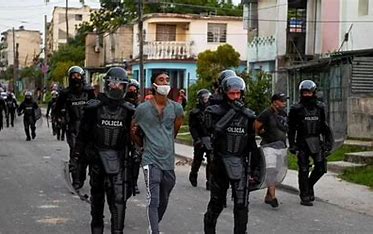
HAVANA TIMES – The recent United States military operation in Venezuela has unleashed a whirlwind of opinions and analysis on Latin America’s geopolitical dynamics and reopened the debate about whether Cuba should follow the same path to finally shake off its communist dictatorship.
It’s still not known how things will end in the neighboring country, but from the beginning of this Hollywood movie everyone here thought of Miguel Diaz-Canel as the next target of Delta Force.
If we take the hand-picked leader at his word, he has no fear whatsoever (Maduro spewed the same bravado), and according to the high military command we are prepared to come out victorious in a similar scenario (not even they believe that).
Venezuela didn’t manage to do so, despite having a much more modern military apparatus than ours, but here they keep believing the tale.
They continue placing their faith in the “War of all the people,” while that same people, who supposedly don’t even have the courage to peacefully demonstrate, according to them would be willing to risk their skin to keep them in power.
For now, however, it seems this will remain a war of words, nothing more. There is no oil here, and that alone is a strong enough reason for Donald Trump not to get smacked by his voters for getting mixed up in another country to kidnap a sitting president.
The US president himself declared that Cuba would fall on its own, but that is nothing more than yet another display of ignorance about the thousand and one ways a dictatorship can survive.
After the abuses committed during the mass protests July 2021 and the witch hunt that followed to imprison anyone who smelled like a leader, it will be very difficult to see another popular uprising in Cuba.
The lack of freedoms, the economic crisis, and the repression have led many to ask themselves whether the Cuban model — which was once a beacon of revolutionary hope — is nothing more than a ship drifting aimlessly, but from there to changing it is a long stretch.
The current situation has led some Cubans to look northward with the hope that United States “democracy” might offer them a way out, when in reality they need to find their own voice.
Although history has taught us that military interventions rarely have the ideal outcome, the true challenge in Cuba would not be simply getting rid of the current administration but rebuilding the nation after the eventual dismantling of the regime.
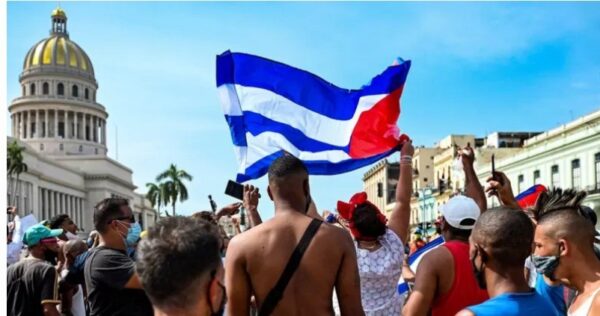
One aspect that cannot be ignored is the role of the international community, as China and Russia — Cuba’s most powerful allies — are watching closely what is happening in Venezuela, and at this moment it would be very naïve to think that a possible US military intervention could be “welcomed” by the international community.
In the end, for the USA, Cuba is not a military threat, nor are its leaders, for now, on any list of drug traffickers. The latter could change depending on how Maduro behaves in court.
If he takes everything he shouted from his platforms to its ultimate consequences, intervention is unlikely, but if his pants start to loosen and he begins to tell what he shouldn’t, he could put the Castros and their entire entourage in a very delicate position.
I don’t know if Trump heard, but here a young woman who posted a poll on her Facebook page to see whether her fellow citizens preferred Diaz-Canel or the Secretary of State Marco Rubio as president was detained and interrogated.
The young woman from Santiago de Cuba, Selena Lamberto Ortega, wanted to make use of her freedom of opinion and her social networks and not only she, but also her brother had to give explanations to State Security.
It was a symbolic poll, but it allowed Cubans, for the first time, to vote freely — even if it was only the segment who saw the poll and had electricity, connectivity, and data to participate — but the entire repressive apparatus was activated instantly.
The principles of international law that are being invoked to condemn what happened in Venezuela also condemn this sort of undemocratic behavior. So where does that leave us Cubans?
It is evident that peaceful civil resistance, international pressure, and gradual liberalization can sometimes provoke a regime change, but in Cuba history has shown the opposite, because while every attempt, individual or collective, has revealed the government’s fragility and brutality, it has not toppled it.
It is contradictory that sectors of civil society critical of the regime and demanding change at all levels, including some opposition leaders, condemned the recent US intervention under the argument of international law and the self-determination of peoples, which on this island has long been used as a shield to perpetuate the same caste in power.
No one likes having their door knocked on without an invitation, but in this case, perhaps the solution lies beyond the threshold.
Yes, we do need help, because there are already enough martyrs losing their youth in prison, and an unarmed people can no longer do anything else against the repressive forces.
A selective action like the one carried out in Venezuela could create a power vacuum that could be filled by internal democratic forces, repressed until today.
No matter how much they repeat it, the Cuban population is not willing to shed its blood for those who have plunged them into misery and this indefinite stagnation. On the contrary, it is crying out for true self-determination, and if there is no other remedy, let it come from the outside.