
Dollarization, Another Shot in the Dark in Cuba
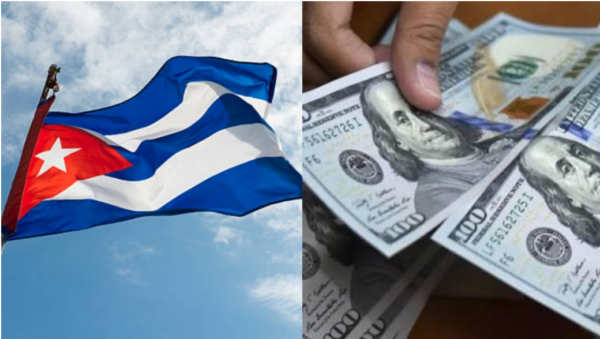
HAVANA TIMES — After going through the Communist Party economic guidelines (2011), the Reordering Task (2021 economic reforms), and a thousand measures that fix nothing, the Cuban government is now betting on the partial dollarization of the economy—and we can think of it as nothing other than another shot in the dark to buy more time in power.
The new Decree-Law on foreign-currency transactions in the national economy slightly softened the impact of the life sentence handed down to former Economy Minister Alejandro Gil, precisely one of the architects of all these schemes to try to make socialism work using semi-capitalist methods.
On December 11 the Official Gazette published Resolutions 140 (General bases for the system of management, control, and allocation of foreign currency in the national economy), 125 (Rules for the operation of bank accounts denominated in foreign currency), and 126 (Rules for the allocation of access capacity to foreign currency).
Against their will, Cuban authorities have had to introduce the hated dollar into the official vocabulary—according to them, on a temporary basis—among other reasons because of the different exchange rates that exist in the country, precisely because the State has failed to establish an official one.
That became clear when the current Minister of Economy and Planning, Joaquin Alonso Vazquez, said that the strategic objective is to move toward total de-dollarization and have all transactions carried out in pesos, in order to achieve sustained and growing development. Seriously?
“We are not building capitalism with the partial dollarization of the economy; we are building a socialism with the characteristics of our country,” Alonso Vazquez said.
We are masters at the art of creating grandiose structures, and now it is the turn of the “Allocation of Access Capacity to Foreign Currency” the mechanism that allows companies and authorized natural persons to buy foreign currency directly from the State using Cuban pesos, as long as there are funds available.
Basically, what they want is to obtain the foreign currency, control it, and then decide how it is allocated—and they say so openly. It pains them that the largest share of remittances coming from abroad no longer reaches them through their established channels for collecting hefty commissions.
The free circulation of the US dollar was already tested in the 1990s, when for many years the population was allowed access to foreign currency, although at that time there were no domestic entrepreneurs involved, as there are today. They would be the main losers in this future formal foreign-exchange market, because they would have neither voice nor vote in decision-making and would be subject to maximum control.
Severe liquidity problems already forced the government months ago to prohibit foreign companies and even foreign embassies from repatriating the foreign currency they earned on the island, in a kind of financial freeze and this could be the same fate awaiting Micro, Small, and Medium-Sized Enterprises (MSMEs).
The rules, which will go into effect in just a few days (December 17, 2025), establish that private companies and other entities may retain 80 percent of their dollar revenues from authorized transactions and must sell the remaining 20 percent to the Central Bank, to set up the future foreign-exchange market.
The Ministry of Economy will concentrate the power to approve foreign-currency operations within the country, and this centralization makes it possible to control who can charge or pay in dollars. As a result, only those with access to dollars will be able to operate with flexibility and competitiveness, while the rest of the private businesses will be left at a disadvantage.
If it is the State that decides whom allows to operate in dollars, we are already off to a bad start, because this further restricts the autonomy of the private sector and turns access to foreign currency into an administrative privilege rather than an economic right, as it should be.
Moreover, since dollar deposits in banks were not respected on previous occasions, private entrepreneurs will think twice before depositing their dollars in a Cuban bank, even though in practice they do not have many alternatives.
That is why the first step—if the longed-for state exchange rate were ever to appear—would be to generate trust, because the informal market does not disappear overnight, and the impoverished Cuban peso will be relegated to domestic functions, without any real ability to compete with the dollar as a unit of value.
The 2021 reforms triggered the public deficit and inflation (with official prices tripling since then), decapitalized banks and state-owned enterprises, and created the conditions for the emergence of an informal foreign-exchange market led by the El Toque platform, which has been the target of fierce government attacks in recent weeks.
As a result, the island’s Gross Domestic Product (GDP) fell by 11 percent over the past five years, and the forced sale of foreign currency would be aimed at waging war against El Toque.
In other words, under the promise that there would be a much more affordable and stable exchange rate, the dictatorship does not tap its meager reserves but instead forces state actors to fight it out among themselves and seizes part of their income in an attempt to solve a problem created by the Central Bank of Cuba itself.
In effect, it is the same centralized approach and the same effects of inequality and state control over foreign currency proposed by the disgraced Gil.
Since the decree establishes no date or concrete condition for reversing the measure—suggesting that the coexistence of currencies will be prolonged—we are facing yet another shot in the dark. Let’s see if it works.