
Imperial Restoration, and Irregular Venezuelans in Chile
The New World (Dis)Order
The rules-based international order exists as a form of control over superpowers and, when that system erodes, those who lose the most are the less powerful countries. The world thus becomes a more insecure and violent place.
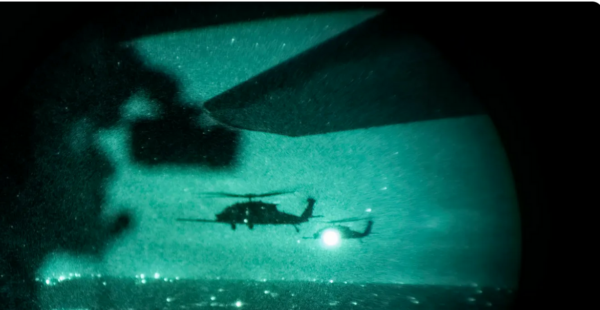
HAVANA TIMES – What happened in Venezuela — with the bombing and entry of US forces into its territory and the capture of Nicolas Maduro, then its acting president — marked a breaking point in the historical relationship between Latin America and the United States and, in global terms, a new milestone in the current international (dis)order.
Beyond the evident illegitimacy of the Venezuelan regime and the catastrophic consequences: the destruction of that country’s democratic institutions, systematic repression against the opposition, and a devastating humanitarian crisis that has forced more than eight million Venezuelans to leave their homes, the obvious question that arises is whether the also-illegal actions of the United States constituted a reasonable and prudent way to change Venezuelan reality.
Moreover, the message is clear: the military intervention was not an act to restore democracy in Venezuela, but rather a demonstration of U.S. power in the region — and, additionally, the potential appropriation of valuable natural resources from that country, not to mention producing various side effects, such as the fall of the Cuban regime.
Thus, the underlying question is what remains today of international law, as well as of the international system established after World War II. The rules-based international order exists precisely — and above all — as a form of control over superpowers, and when that system erodes, the only ones who lose are the less powerful countries. A world where Russia can do whatever it wants with Ukraine and the United States with Venezuela is not a more just or freer one; it is a more insecure world for the citizens of Taipei, Santiago, or Greenland.
This neo-imperialism that we are beginning to witness at the international level does not serve countries like Chile.
A remarkable and encouraging analysis on this point was recently delivered by Canada’s Prime Minister, Mark Carney, in his address in Davos, Switzerland — an address worth reading and reflecting upon.
Furthermore, the history of foreign superpower interventions in the 21st century offers only warnings and fears.
Thus, in Iraq, the United States had a detailed plan to overthrow Saddam Hussein, but none for what would come afterward. The result was years of war and destruction, the destabilization of the Middle East, and the rise of ISIS. In Syria, the Russian government’s support for the regime of Bashar al-Assad and the United States’ support for the rebels produced a civil war with more than a million dead and seven million displaced. In Libya, the fall of Muammar al-Gaddafi under the Obama administration was also not followed by a political reconstruction process, plunging the country into an internal conflict that persists to this day. Barack Obama himself later stated that having supported the rebels without a plan for Libya after Gaddafi was “the worst mistake of his administration.”
In Chile, the illegal US operation in Venezuela has been enthusiastically celebrated by an important sector of the right wing preparing to come to power. It is difficult to understand how this celebration can be reconciled with Jose Antonio Kast’s promise to repatriate more than 300,000 irregular Venezuelan migrants.
Where would they return to if their country lacks a government and faces an enormous scenario of uncertainty? With whom is he going to negotiate so that the planes full of irregular migrants that he promised during the campaign can land in Caracas? What happens if an even more acute form of violence emerges in Venezuela than the one that exists today?
The power vacuum in that country could lead either to a recycled chavismo or to an internal conflict of unimaginable proportions. Neither of these scenarios will facilitate repatriation; both could, instead, push more Venezuelans to leave their country — heading to Chile among other destinations.
First published in Spanish by El Mostrador and translated and posted in English by Havana Times.