
Now Cubans Are Told to Forget About Eating Rice
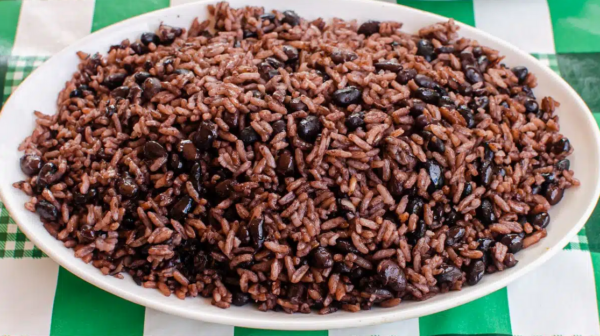
Life is a banquet, even when the menu includes ostriches and potato peels, because what truly nourishes our existence is the ability to find humor in every absurd suggestion.
HAVANA TIMES – Very few insults remain to be hurled at Cubans, but this week one more was added when someone suggested that one way out of the current food crisis is to eat less rice.
After the president himself declared that lemonade is the basis of everything; after a general proposed raising ostrich to feed the country; after a minister said peas haven’t arrived because lakes in Canada froze; and after an intellectual recommended eating potato peels—very little is left to the realm of the unbelievable. But Cuban inventiveness is inexhaustible, and we are living through a new level of surrealism.
The latest “enlightened” figure was scientist Roberto Caballero, who in a recent episode of the television program Cuadrando la Caja said—without thinking twice and without holding anything back—that Cubans consume “too much” rice and potatoes, foods that are neither native nor suited to the Island’s agricultural conditions.
Far from focusing on the structural causes of the food crisis, the specialist and the program in general diverted the debate toward the population’s consumption habits, proposing that these products be reduced in the national diet without offering real alternatives for stable and affordable access to other foods.
He forgot that Cubans produced three times as much rice in the 1960s; that we once had high consumption of milk and beef (though we’ve almost become lactose-intolerant and worshippers of cows); that the chicken and sugar we eat are imported; or that we live surrounded by sea and yet don’t eat fish.
Caballero, a member of the National Executive Committee of the Cuban Association of Agricultural and Forestry Technicians, argued that potatoes are an “unsustainable” crop for Cuba due to their high input consumption and poor adaptation to the tropical climate, and that rice belongs to Asian culture, not Cuban culture.
To us—who are the personification of ajiaco, with Spanish, Latin, Black, and Asian blood—they now want to sell us the purity of the Aryan race or something like that. He forgot that in Cuba eating habits are shaped not by culture or preference, but by availability, access, and price—by our fateful, distorted logic.
“With the shortages there are, anything you put out at the neighborhood market will sell,” Caballero said with total nonchalance—and no one else present challenged him.
In a country where scarcity forces people to accept whatever is available, it is insulting for someone to want to discard the basic staple of the Cuban table. Without going far, I myself feel like I haven’t had lunch or dinner if there’s no rice on my plate—and that’s actually false, because when there’s a chance to choose (special occasions, hotels, receptions, business dinners) I don’t even look at the rice. But my wallet doesn’t allow me that luxury on a daily basis.
The failed Cuban agricultural model, soil salinization, groundwater contamination, the lack of fertilizers, fuel, machinery, financing, and the excessive dependence on imported inputs were mentioned only in passing, as always, without emphasizing government responsibility.
Nonpayment to producers and the absence of real incentives for those who work the land are the aspects that should be improved, instead of blaming consumers for the system’s failure and normalizing precariousness by censoring our rich and varied culinary history.
The senile specialist criticized the fact that decisions about what to produce are made from above, without listening to those who work the land—but after the insensitivity of his other remarks, everything came to nothing, and the memes multiplied along with the diatribes.
No one noticed the blow he dealt the government on the issue of potatoes when he said that much of the production ultimately spoiled in cold storage because blackouts offered no respite and adequate infrastructure was lacking. The damage was already done.
I haven’t seen potatoes for months, and rice keeps getting more expensive, but whatever appears has to be bought. In fact, the rice ration we used to buy from the bodega was enough for me to also make wine and rice pudding, but for several years now I’ve had to buy rice just to eat all month—and no wine, and certainly no rice pudding; with what milk? Like millions of other Cubans, I’ve had no real chance to choose what goes on my plate.
If I’m to blame for the lack of food because I eat too much rice, then I’m also responsible for the blackouts for turning on the lights and using appliances; for the garbage because I don’t eat waste; for the lack of transportation because I don’t want to walk ten kilometers a day; and for the shortage of medicines because I get sick too often. I better stop there.
This will be the same case as the government minister who disparaged beggars. She may have spoken well for 90 percent of her intervention (which she didn’t either), but that ten percent in which she trampled the little pride Cubans have left condemns her.
Life is a banquet, even when the menu includes ostriches and potato peels, because what truly nourishes our existence is the ability to find humor in every absurd suggestion.
We witnessed yet another direct insult to a population facing inflation, pulverized wages, and empty markets—as if deprivation were a cultural choice.
One could laugh and move on, but no—this isn’t the end of the story. Hold on to your loved ones, because at any moment the solution will be to fill ourselves with air, since it’s free, lighter, and takes up no space on the scarce Cuban table. But don’t doubt that they’d eventually start charging for it. Bon appétit!
The Government officials(At the very top of the chain) need to dip into their own illegal bank accounts and withdraw and repay the Cuban People what is rightfully theirs(stolen funds) and reinvest in the Countries infrastructure. Time for change whilst they still have time otherwise it will be the Irish potato famine(In Cuba this time round!) Listen Mr President your people are in need of real help, so please help your people?