
The SUV in My Backyard and Social Equity

HAVANA TIMES – A few days ago, a neighbor approached my mother to ask if he could rent the back patio to store a car he had just bought. According to him, it would only be for a few days, until he received approval for the official license plates. My mother agreed, since it’s a bit of extra income that certainly doesn’t hurt.
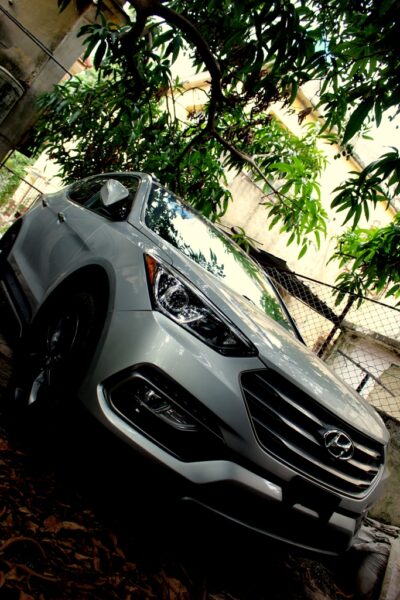
The car turned out to be a Hyundai Santa Fe SUV, a fairly expensive vehicle, especially in the midst of the country’s critical economic situation. And that made me reflect on the much-touted social equity that the government used to boast about.
Nowadays, a university engineering student—at least those I know—spends around 4,500 pesos a month on review sessions and private tutoring. That’s without counting transportation and food expenses to get to the university, which I estimate to be, at a minimum, about 12,000 pesos altogether (two and a half times an average salary). How many parents can afford that, just so their child can attend university and study? It makes me wonder whether those who graduate will be the most talented, or simply those who had the resources to do so.
In the 1990s, when I was in university, I believe that despite the many shortages that existed, there was greater equity. In the case of art students, the situation today is much worse, since practically all the instruments and supplies they need must be paid for by their parents—unlike the 1980s and even the 1990s, when anyone with talent could go and study at these schools.
The same thing happens in sports schools. Would a country kid from Segundo Frente, like Guillermo Rigondeaux, be able today to become a two-time Olympic champion and multiple-time world champion, weaving a legendary career? Now only those whose parents have economic resources can develop their talent.
In public health, the situation is similar. The vast majority of medications are found on the so-called “informal market,” at prices set by supply and demand. You go to a hospital and it’s very likely they’ll tell you to go look for the medicines and supplies you need because they don’t have anything. It must be acknowledged that many times doctors and nurses work miracles with what little they have, and as far as I’m concerned, whenever I’ve needed medical or paramedical staff, I’ve always been treated very well.
Infant mortality and life expectancy—indicators of human development—have fallen in Cuba to levels probably not seen in more than twenty years. Although there is still no official data, infant mortality in Cuba in 2025 was, according to journalists and communicators close to the government, nine per thousand live births—the highest so far this century. The same must be happening with life expectancy. There is a notable difference between the possibilities for care and recovery in a health situation for those who have resources and those who do not.
Every day there is more concentration of the little capital that exists in the country in fewer hands, and every day more people have to juggle just to try to have breakfast. Endless blackouts for some, while others—those who can afford it—buy a generator and problem solved, obviously as long as they have the money to buy gasoline at 450 pesos per liter (around $1 USD)
Where did my neighbor get the money to buy the SUV, a vehicle that costs around 40,000 USD? I don’t know, since I’m not an inspector from the ONAT. I only know that he has a “little farm,” as he himself calls it, where he raises pigs, rabbits, goats, and sheep. I’m happy for him, but it hurts to see so much inequality. It hurts to see so many undernourished retirees, while Diaz-Canel keeps talking about socialism, unity, creative resistance, and blaming the blockade, without solving any problems.
The photos of the SUV show a symbol of a system that, far from moving forward, is falling apart.
I suggest your mother asks the SUV owner to remove it immediately !!!!