
Russian Epidemiologist Urges People Not to Travel to Cuba
due to the risk of contagion
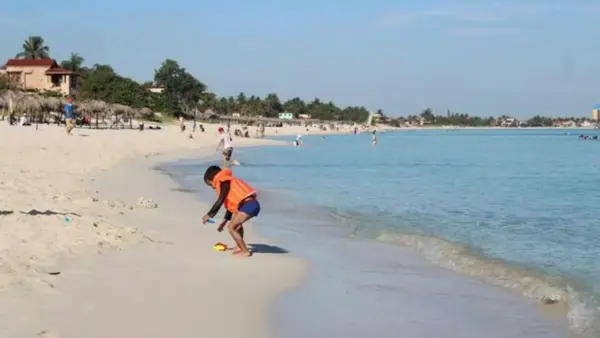
Other experts downplay the risk for “healthy tourists,” especially if they stay in coastal areas and hotels with sanitary controls.
HAVANA TIMES – “We didn’t get sick, but many around us did,” Timur, a 38-year-old Muscovite who has just returned from a family vacation in Varadero, tells 14ymedio. “In our group, three people arrived back in Russia with a fever, and from what I could gather, many of the hotel workers had been or were still sick.”
In the first days of December, several Russian media outlets reacted with alarm to the epidemic in Cuba, warning potential tourists and questioning the safety of traveling to the Island.
The outlet Life.ru, citing epidemiologist Gennady Onishchenko of the Academy of Sciences, urged Russians to return their foreign travel packages, recommending that they spend the upcoming year-end holidays “near Moscow, instead of risking contagion in tropical areas.”
For its part, the tourism website Tourdom published that “Russians on the island” could be in the “epicenter of the epidemic,” and some Telegram channels such as Mash report noted that Russians have already been infected.
The newspaper Gazeta also describes the situation as “critical,” stating that in the areas with the highest spread it is estimated there are “around 1,500 Russian tourists” at the moment, and that among them, at least “fourteen already went through the illness in a mild form” during their vacations in November.
Despite this, and although the symptoms can be very unpleasant (high fever, rashes, intense joint pain), some experts quoted in those media outlets play down the risk for “healthy tourists,” especially if they stay in coastal areas and hotels with sanitary controls.
A local travel agent interviewed by Tourdom, Elena Lapina, says that “there are no massive outbreaks among tourists,” since resort areas like Varadero or Cayo Coco, where Russians usually stay, are relatively isolated from the urban epicenters of the epidemic. Meanwhile, the insurer Euroins stated that to date they have not received reports of travelers sick with dengue or chikungunya.
From Moscow, Yulia, a travel agent, told 14ymedio that she is very aware of the Island’s epidemiological situation, although at the moment she has no clients there.
However, the fact that there are already Russian tourists who became ill shows that the risk exists, despite recommendations that they stay in resorts, use repellents, and avoid urban areas to “get around” the epidemic.
The contrast between the health warning and the message of reassurance from the tourism sector is evident. In this context, the average traveler thinks twice before buying tickets to Cuba, which threatens to become a new blow to Russian tourism—already in decline—within Cuba’s fragile tourism sector.
The latest data from the National Office of Statistics and Information (Onei) confirms that up to October 2025 the Island received 1,477,892 visitors, a number that represents a 20% drop compared to the same period in 2024. This negative balance is due in part to a 36.2% fall in Russian travelers (99,908 in the first ten months of this year, instead of 156,614 in 2024).
This trend does not seem likely to change with the measure taken by a Russian tour operator that had planned to redirect to Cuba the vacationers who were supposed to travel to Venezuela, following the announcement of the total closure of Venezuelan airspace by US President Donald Trump, since so far there have been no mass cancellations for that reason. Comments from Russian vacationers on social media show that not everyone is willing to exchange Margarita Island for Varadero.
First published in Spanish by 14ymedio and translated and posted in English by Havana Times.