
Cuba’s Viral Epidemic: New Blow to Tourist Industry
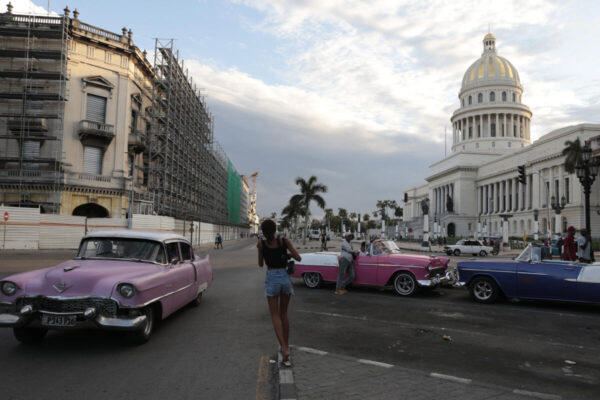
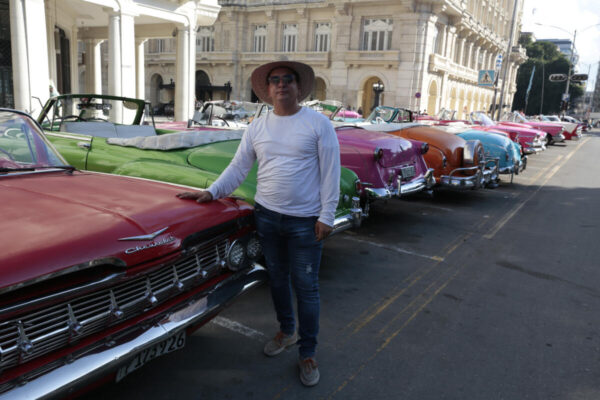
HAVANA TIMES – A line of classic cars is parked in the historic center of Havana, like a scene from a typical tourist postcard of Cuba. Paradoxically though, for the drivers who offer tour services to international visitors, such a long line means nothing more than a day of few customers and little work.
According to Kendry Fuentes, 34, the driver of a 1959 Chevrolet Impala, even in 2022 when he started working in the tourism sector, business was better.
“You didn’t see what you’re seeing now. Look at the number of cars parked. Before, there was more movement. You’d arrive and in 15 or 20 minutes, you’d be back out on another tour,” he told IPS.
The prolonged power outages and internet connection difficulties, which worsened this year, have combined to hit tourism hard. More recently, these negative elements have been compounded by a health crisis due to mosquito-borne viruses.
The decline in international tourism is evident in the figures. According to the National Office of Statistics and Information (ONEI), as of the end of October this year, the island had received approximately 1.48 million international visitors, representing a 20% drop compared to the same period in 2024.
These numbers are a far cry from the government’s target of 2.6 million visitors for 2025, with the aim of exceeding the 2.2 million achieved in 2024 – in itself the worst figure since 2007, not counting the years of the COVID pandemic (2020-2022), which affected tourism globally.
As reported in October, the leading source of tourists continued to be Canada, with almost 597,000 visitors (82% compared to the same period in 2024); in second place was the Cuban community abroad, with some 195,000 visitors (79% of last year’s totals); followed by Russia, with just under 100,000 (64%).
Since its grand re-inauguration in the last decade of the 20th century, the so-called smokeless industry has positioned itself in Cuba as one of the main sources of foreign exchange for the Caribbean island nation. But in recent years, it has experienced a notable decline.
Gloria Gomez, who has owned a handicraft shop in the historic center of Havana for 24 years, today it’s a “privilege,” to earn $10 a day. Such earnings are enough to live on, but not enough to save and grow as a business. In contrast, the income she earned during the golden age of tourism from 2014 and 2018 was enough to buy another house for her family.
“Tourism is now at rock bottom, in every sense,” she told IPS.
Memories of a golden age
According to the book The Cuban Tourism Industry: Evolution, Challenges, and Prospects, published in 2025 and co-authored by Cuban tourism specialist Jose Luis Perello, the last significant upturn in international visitors to Cuba occurred after 2014. At that time, the administration of former US President Barack Obama (2009-2017) eased restrictions on travel from the United States, bringing a considerable increase in visits by US citizens of non-Cuban origin.
The number of annual foreign visitors to Cuba continued growing significantly between 2014 and 2017, reaching 4.65 million, according to ONEI. Annual visits also increased slightly in 2018, thanks to the boom in US cruise travel, although the revenue generated was lower during that year.
However, by then, Donald Trump was well into his first term as president (2017-2021), and had vowed to reverse the easing of restrictions encouraged by Obama. By November 2017, Trump had already banned group person-to-person educational trips to Cuba. In June 2019, he ended the general license authorizing group trips to Cuba and banned US-based cruise ships from arriving on the island.
Due to these factors, the Cuban tourism industry was showing signs of setback even before the arrival of the COVID-19 pandemic, the authors of The Cuban Tourism Industry noted.
Difficult conditions discourage tourists
Asked what he thinks were the reasons Cuba is seeing fewer tourists now, Kendry Fuentes, driver of the ’59 Chevrolet, responded: “There’s the issue of the internet. Power outages… and the topic of mosquito-borne diseases.”
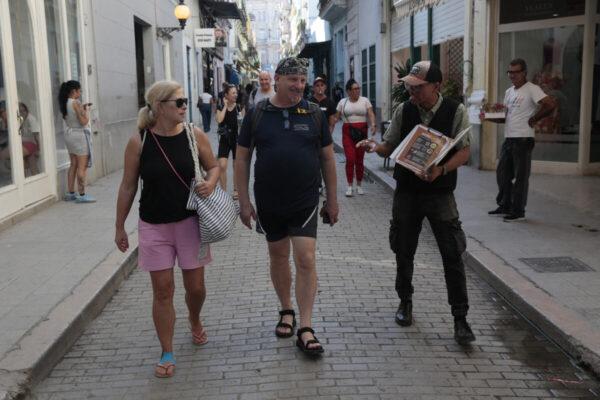
Gomez, the handicraft vendor also noted that Cuba “is expensive,” even for foreigners, in addition to the poor sanitation in the streets, and the ‘harassment’ of tourists, asking them for “money or anything else,” she said.
Both agreed that other major factors contributing to this decline are the electricity crisis that the country has been facing for five years, and the most recent outbreak of viral illnesses such as dengue and chikungunya, which are transmitted by mosquitos and other insects.
The island’s population has been suffering from rampant contagion for months. On Monday, December 1st, Cuba’s Ministry of Public Health reported 33 deaths from these viruses and a total of 39,000 active cases.
By November, when the Cuban government officially classified the resurgence of these diseases as epidemics, the embassies of Russia, Canada, the United States, Spain, and other countries had already issued warnings to their citizens about the risks of traveling to Cuba due to the health crisis.
Raciel Gonzalez, a tour guide based in Havana, told IPS that three US clients he was expecting canceled their flight to Cuba at the last minute due to fears of being infected by the epidemic.
Other reasons for the crisis in the sector also persist, such as the scarcity of culinary offerings, the unequal relationship between quality and price, the shortage of food, water, medicine, and fuel, and the deterioration of infrastructure, among others.
Cuba’s inclusion on the list of state sponsors of terrorism has also resulted in Washington denying visa waivers under the Electronic System for Travel Authorization, ESTA, to citizens of the European Union and countries such as Japan, who visit the island, but then wish to enter the US.
Along with disruptions in the supply of all kinds of products for Cuban hotels, and a growing need to increase imports, it is estimated that around 10,000 tourism workers have changed jobs or left the country, which has led to a deterioration in the quality of tourism services, according to Perello’s book.
“In addition, there are all the problems that have plagued the tourism sector for decades: from widespread inefficiencies and low profitability to insufficient service standards, supply chain instability, and difficulties in adapting to new tourism trends,” the book notes.
Caribbean tourist market very competitive
Unlike other Caribbean countries that compete for the tourist market, Cuba has been unable to fully recover its tourism industry following the isolation caused by COVID-19.
According to the UN World Tourism Barometer, at the end of 2024, the Caribbean region as a whole recorded 7% growth compared to pre-pandemic results, with the Dominican Republic leading the way; that island registered a 32% growth in tourism compared to 2019.
In contrast, tourists who stayed overnight in Cuba in 2024 represent only 58% of the 3.8 million who visited in 2019, a declining performance contrary to the Caribbean trend.
In a 2019 article, Jose Luis Perello noted that Cuba differs from other Caribbean tourist markets in that its tourism sector operates within the framework of a centrally planned economy and its tourist establishments are mostly state-owned. However, the author pointed out, it markets a sun and beach product through the same distribution channels used by other Caribbean countries – a single market where competitors offer similar products. Hence, until Cuba resolves some key aspects of its crisis and manages to re-enter the “competition,” it will not be able to revive this core sector of its economy.
First published in Spanish by IPS and translated and posted in English by Havana Times.
Why would the Cuban government restrict entry to someone, who have for years visited Cuba spent thousands of dollars in restaurants , stores for accomodation, and have given to Cuban people and help many people there , because I am a historian and maybe had notes that they didn’t like in my notebook, that is why they confisticated it, and the Cuban Pesos , I had more than the limit and my other currencies that I was unable to declare at entry, this is a loss for cuba’s economy, the stores , restaurants I visited and the business where I stayed during my time there four weeks, think of the money they have loss !!!!!
Single biggest issue for tourists in Cuba is the wide spread very aggressive and incredibly intense harassment they must endure. A 15 minute walk down Obispo or on Prado will have the tourist get attacked at least 5 times and often up to 10. Fake cigars, “chickas”, straight out begging, taxi, classic car, dangerous money exchange, drugs, where are you from, best mojito in town, cigar festival etc. etc. etc. All that while all this people are fraudsters and often worse – organized groups of simply criminals. Believe me; if you get harassed 5 times every 15 minutes, 20 times in one hour you are mentally exhausted and hating every single minute you have to spend in Cuba. And we are not even getting into increasingly common robberies and growing number of straight out assaults. Cuba is a horrible place to visit for the above reasons. Internet? Hehe. Electricity no problem. Mosquitoes quite an issue but you can be prepared via repellent that comes in so many varieties. However, the organized gangs of hustlers that hunt for tourists can not be avoided or defended against. And this issue is growing bigger and bigger by the month. I can tell you that offers to sell drugs are becoming as common as offers to buy fake cigars. Prostitution getting out of control – it was a shock when I was approached by 12 – 13 year old boy offering me a “chicka”. His approach in a very confident manner indicating experience and mafioso like mentality. The situation on the streets of Cuba for tourists is in a very dramatic state.