
To Confront Trump, the Cuban Government Has to Look Inward
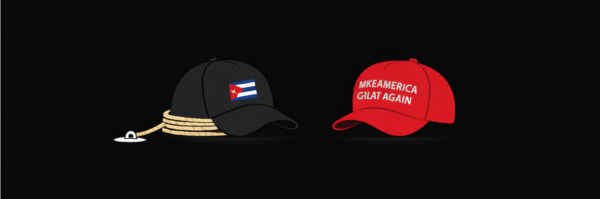
By Mariana Camejo (Joven Cuba)
HAVANA TIMES — The Trump government is hoping Cuba will fall soon. In the early nineties the same was expected, and it didn’t happen, but this is not the Cuba of those times. Today, amid a sustained systemic crisis that has eroded the government’s credibility, it is this government — and no other — that has had to face a long-standing conflict. Operating as it has until now, it has little room for maneuver and little political capital; but there are steps it could take to rally as many Cubans as possible around the flag.
That said, adaptability is not the Cuban government’s usual practice. It is accustomed to speaking only to its most loyal followers and, in hostile contexts, prefers to dig in. This is an attitude that not only blocks external influence but also restricts the possibility of addressing internal problems, because it interprets as a threat the criticisms and recommendations that could help solve them. In any case, without deep reform it will be hard to generate consensus.
That change begins with understanding sovereignty as the existence of a political community that has a voice and rights, and not solely as the argument upon which to erect discourses of resistance or heroism, the raison d’État against foreign interference.
It is naïve to think national sovereignty can be preserved without attending to individual sovereignty, because a state can declare itself sovereign, but the country will only be so if its citizens feel they have control over their destinies, if they perceive themselves as active participants in the national project, if they feel they have something they consider worth defending. That is why the unity that is indispensable to withstand external pressure is a form of political capital that is lost by closing spaces for public participation and gained by opening them. The unity of a majority, therefore, is something built through political engagement — not through obedience, but through consensus.
That said, the truth is that there are still reserves of legitimacy and consensus to which Cuban authorities could appeal, but so far, they do not seem to show the ability or the willingness to take advantage of them. Added to this, they have lost the capacity for initiative and politically mobilizing responses. An example was the initial reaction to the military operation in Venezuela: public acts devoid of real enthusiasm, repeated slogans, and staging that, once again, indicates an interest more focused on displaying control than on building popular support. Political skill would read the moment as an opportunity to broaden its social base, or at least to unite citizens. That is not achieved with a rally, fists raised, down with imperialism!
The issue here is that there is a difference between appealing to symbolic gestures and making politics in pursuit of the public interest. The Cuban government may be the target of economic persecution, but it should long ago have understood that this does not justify it in the eyes of citizens, who judge it for erratic or misguided decisions regarding the management of the country — not only in economic terms. Decisions, moreover, that are often interpreted as deliberate and against the interests of the people.
Before Cuba existed as an independent nation, before the emergence of the first Communist Party, or before anyone named Castro set foot in what is now known as the Palace of the Revolution, political groups in the United States were proclaiming their interest in the Island. Long before Maduro had his first disputed election in 2018, there were repeated attempts to overthrow the government or force political change in Venezuela, despite the fact that Chavez won four presidential elections democratically and Maduro at least one. The control of the region is a historic imperial aspiration that transcends ideology, and the Trump administration doesn’t even bother to pretend that democratic legitimacy is what drives its regime-change efforts.
Although the Trump administration has built a narrative of glorification and victory around the events of Saturday, January 3, they can also be interpreted not as a show of strength but of weakness and retreat. Because they signify the abandonment of a global influence that the United States finds increasingly hard to sustain, and thus its pullback to its own sphere of influence: Latin America. The fact that the Trump administration relies on theatre and the psychological impact of its military operation, rather than on diplomatic language or “democratic” arguments to justify it, indicates a deliberate shift in its foreign policy, which no longer rests on international consensus. Hence the explicit interest in oil, the discarding of the Venezuelan opposition, and the open embrace of the Monroe Doctrine.
The word that best describes this policy is imperialism, but it arrives worn out due to oversaturation in the hands of official propaganda. It also arrives at a moment of exhaustion with governmental stagnation and weariness from the prolonged multi-crisis. Therefore, more than a few people receive the illegal military operation as “liberating.” That is a reality that cannot be ignored unless a political suicide is intended.
It is important to state that the Monroe Doctrine in its Trump version does not represent the national interest of the United States nor the will of its population. A Reuters/Ipsos poll indicates that only one third of US Americans approve of the illegal capture of Maduro, and 72% are concerned that the country will become too involved in Venezuela. In addition, voices from the Democratic Party reacted by criticizing the operation strongly enough that the White House issued a response, and one of the party’s most popular current figures, New York mayor Zohran Mamdani, called it a violation of federal and international law.
But no one in Latin America with common sense should sit around waiting for the Democrats to restrain an administration that despises and even dismisses its own institutions and laws. To respond effectively, left-wing governments need democratic legitimacy and results. Legitimacy comes from credible elections and from governance that strengthens the relationship between leftist parties and the citizenry. Claudia Sheinbaum is giving a master class in this regard. Both that democratic legitimacy and those results must be evident to the public, and truly be such — not only appear to be.
But how to mobilize feelings in favor of sovereignty if for many it is a matter of lesser importance? Especially when there is less and less to eat, while the perception grows that the political class lives in privilege. When Raul Guillermo Rodríguez Castro (El Cangrejo) frequently travels to Panama in private jets and is rumored to frequent luxury restaurants without needing to pay the bill — and he is not the only one. When one of Fidel Castro’s sons is a golf champion in Varadero. When the president’s family is included on official trips despite holding no public office, and when children of officials live comfortably abroad. And on top of all this, there is a terrible lack of candor and transparency about it. Subsidies and freebies for the population ended in late 2008; not so much for the top leadership.
Anyone attempting to talk about rescuing the national project while tiptoeing around the issue of corruption — on what values and with what moral standing do they expect to speak to the majority? How can people identify with a project that, in common perception, benefits a political class rather than the well-being of the population? The heavy-handed gestures, the abuses of authority, political inertia and the policing of dissent are also far too frequent. The State should not surrender so easily to such authoritarian temptations — neither those imported from the USSR nor those we already had at home.
It will be pointless to attempt to build political capital against Trump by appealing to (necessary) sovereignty when privileged lifestyles are in plain sight. If no radical action is taken against corruption among officials, against authoritarianism, and in favor of real accountability, no one can say for sure how many people will share the feeling of protecting national interests or will interpret the Trump administration’s disregard for sovereignty as a threat rather than a source of hope.
Far too often the Communist Party delegates to the Ministry of the Interior matters that are its own responsibility, and that in the time of Fidel Castro had political solutions, even if not always the best ones. The current internal crisis is not only the product of unilateral coercive measures by the United States, but also of democratic deficits within the country’s political structure and of debts accumulated over time; warnings have not been lacking.
With so much danger facing the country’s sovereignty, the worst political move is paralysis, apathy, and complacency — or betting on turning critical citizens who want to help develop the country into political enemies. Expanding democratic freedoms, freeing political prisoners, managing channels for dissent, and carrying out a comprehensive social-oriented economic reform to address inequalities are among the central pending tasks facing Cuba today.
The threat of the Trump administration for the Island and for the United States itself must not be underestimated. Accepting this shift goes against the internal logic of the Cuban authorities, but the issue is not whether the rulers are comfortable with the level of reform needed, but whether they will respond to public demands. When a country is under aggression, citizens generally close ranks with their government — but only if they feel it represents their interests. To confront Trump, the Cuban government has to begin by looking inward.
First published in Spanish by Joven Cuba and translated and posted in English by Havana Times.
Sen Paul and John Giotis are the key to containing Trump’s reckless plans in the Western Hemisphere
the cuban elite are already revising their escape plans to russia with the loot
Threat of Trump? Trump is the only HOPE for the Cuban people because Cuba with its current regime and society that stands around on the street all day looking for a tourist to scam is not going anywhere besides down, down and down.