
Venezuela Amid Relief Without Maduro and Fear of Chavismo
Trump has thus far excluded the opposition
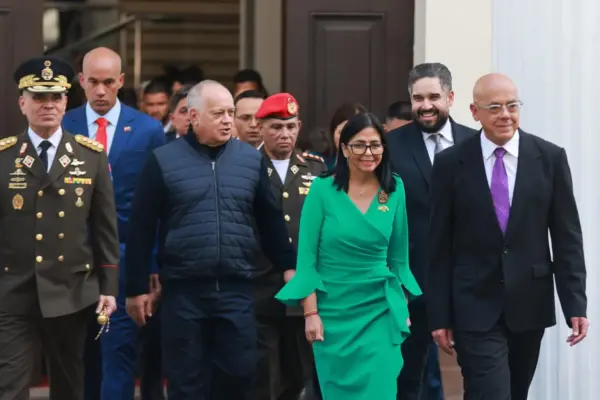
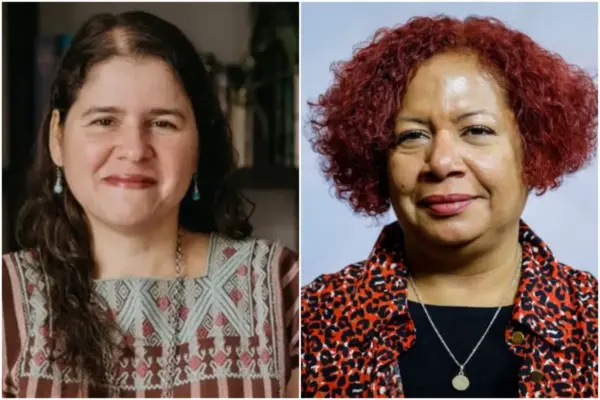
Luz Mely Reyes and Carolina Jimenez: Venezuelans demand a democratic transition without political prisoners, With free elections and justice without impunity.
By Carlos F. Chamorro (Confidencial)
HAVANA TIMES – One week after the US military intervention that resulted in the capture of dictator Nicolas Maduro and his wife, Cilia Flores, and the appointment of Maduro’s vice president, Delcy Rodríguez, as interim president, Venezuela oscillates between relief over Maduro’s fall and fear that the Chavista dictatorship will remain in power, now under the tutelage of President Donald Trump and an internal state of “civil commotion,” without any clear roadmap toward a democratic transition.
On the program Esta Semana, broadcast Sunday, January 11 at 8:00 p.m. on the Confidencial YouTube channel due to television censorship in Nicaragua, we spoke with human rights defender Carolina Jimenez, president of the Washington Office for Latin America (WOLA), and journalist Luz Mely Reyes, director of the independent outlet Efecto Cocuyo, about Venezuela’s future under the control of the Trump administration.
They spoke about the fear generated by the declared state of “civil commotion,” about how President-elect Edmundo Gonzalez—winner of the July 28, 2024 elections—has been discarded by Donald Trump, and about the lack of a date for free elections or a justice process without impunity. But, they added, “there is hope that this could lead to a democratic transition. It’s not what we’re seeing at the moment, but the context is truly different from what it was on January 3.”
What is happening in Venezuela one week after the US military operation that led to the capture of Nicolas Maduro and Cilia Flores? Those images of Maduro imprisoned generated much joy in Venezuela and among the diaspora. How did Venezuelans react to the news that Donald Trump decided to impose Delcy Rodríguez as interim president in a government tutored by the United States? Was that a surprise to Venezuelans?
Luz Mely Reyes, director of Efecto Cocuyo. Totally. It was a surprise. We went from the joy that many expressed to this shock over Trump’s decision. And now, a week later, with everything still shifting, expectations revolve around whether Trump’s tutelage will function economically—whether there will be some economic stability in the country. And unfortunately, discussions about how to build a path toward democracy—not just changing the head of the dictatorship—still haven’t found space across Venezuelan society.
What is the atmosphere in Venezuela today? Is there joy and hope, or fear and uncertainty? Who controls the streets right now?
Carolina Jimenez, director of WOLA. All the feelings you just listed are present. The country feels relieved seeing Nicolas Maduro—the strongman of the government, or at least its most visible face as de facto president—facing judicial proceedings in the United States. That initially generated surprise, but also relief and joy among the diaspora. But it quickly turned into uncertainty, especially when people saw that power had passed to the Rodriguez siblings, and that there was no real transition process. What we are seeing is a transition without a (democratic) transition.
There is fear. The minute those bombs fell in Caracas and elsewhere, the government responded by issuing a decree of “civil commotion,” a kind of highly repressive state of exception that means anyone in Venezuela can be detained for advocating a change of government. We already know of at least two elderly people detained in Merida in western Venezuela for publicly expressing joy over Maduro’s capture.
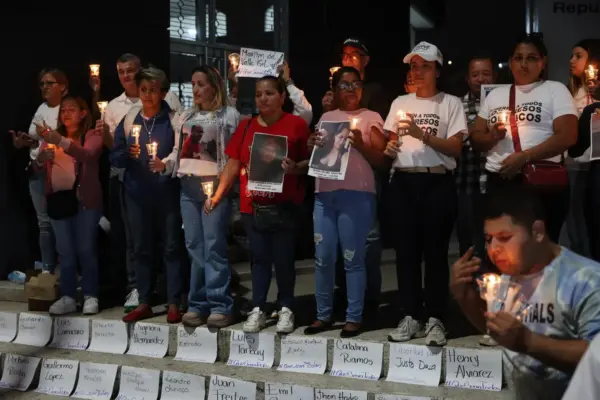
There is also hope, especially among victims’ relatives, who have seen some political prisoners released. There is hope that many more will be freed in a country with more than a thousand political prisoners. And there is hope that this may lead to a democratic transition. It’s not what we’re seeing right now, but the context is truly different from January 3.
Who is Delcy Rodríguez, Maduro’s vice president now serving as interim president? Some media describe her as ideological and a Chavista loyalist, but also pragmatic.
Luz Mely Reyes. She is all of that. Although she is firmly on the left—not only as a matter of family background but personal conviction—she doesn’t belong to the first generation of Chavismo. She had a stint during Hugo Chavez’s government, but became more involved after Chavez’s death. She has been labeled from abroad as pragmatic and moderate. I would say she is pragmatic, but not moderate at all.
She has always been aligned with her brother Jorge Rodríguez—the architect of many negotiation efforts and deals with the United States, and now president of the National Assembly. Both have always been more willing to negotiate on political prisoners and releases. On everything else, Delcy Rodríguez has been fully committed to Nicolas Maduro’s cause.
Besides Delcy in the presidency and Jorge Rodriguez in the legislature, General Vladimir Padrino remains head of the Army, and Diosdado Cabello heads the Interior Ministry. The power structures of “madurismo” remain intact. How is Maduro’s dictatorship supposed to be dismantled?
Carolina Jiménez. This is a question the US government has been asked many times. The closest thing to a transition plan is the statement given by the Secretary of State outlining three phases: stabilization, recovery, and transition. Stabilization is what we’re seeing now, which implies removing Maduro and installing a government with different authorities. Marco Rubio says this is ‘stabilization’ because removing those authorities as well might have provoked violent responses from actors unwilling to accept new authorities. But that doesn’t mean the US should stop pushing for political opening under this new government—opening the door to key opposition figures. So far, none of that has been announced.
Maria Corina Machado is traveling to Washington to speak with President Trump, the outcome remains to been.. Spanish president Pedro Sanchez has said he is willing to mediate between the opposition and Delcy Rodriguez’s de facto government, alongside Lula, Sheinbaum, and Petro. Pieces are moving so hopefully this stabilization phase may lead to democratic opening.
The second phase—economic recovery—is what most interests the United States, because Trump has openly stated his desire for US oil companies to control the Venezuelan oil market.
According to Rubio, the final phase would be transition. But we still don’t know what that means. It will be important for the US to understand: (1) actions should not be unilateral—they should be accompanied by regional governments; (2) no phase can occur without democratic civil society actors in Venezuela; and (3) timelines and concrete plans must be defined. If the transition phase is six, seven, eight years out, then from the standpoint of democratic transition, the plan is doomed to fail.
Trump has spoken a lot about oil—as if selling Venezuelan oil at market price and injecting revenues into the economy were a panacea. But economic and petroleum experts say that is only possible long-term and requires institutional rebuilding and long-term investment.
Luz Mely Reyes. Economists focus strongly on macro indicators. But if Venezuela were to receive an injection of economic resources—no one knows through what mechanism—that would have an immediate impact on small improvements in daily life. If people see improvements in income, a rapid plan to reactivate the economy—not intensively through oil, but more broadly by redistributing that rentier income (because Venezuela is a “rentier” work-for-hire model)—that would have immediate effects. Small improvements, but highly valued by the population.
You mentioned expectations among victims. There are still many political prisoners, and as of the time of recording, very few have been released. And you mentioned Maduro will be tried in US court for narco-terrorism. But international justice has sought Maduro for crimes against humanity, and investigations are ongoing regarding other regime figures. Will there be justice in Venezuela?
Carolina Jiménez. Without justice, there is no transition. It would be very hard to have a transition in Venezuela if victims—thousands of them—do not feel their dignity has been restored.
Venezuela is the only country with an open International Criminal Court investigation for crimes against humanity. That shows the magnitude of state crimes against the population. We are talking about a society with deep wounds. If victims’ integrity and dignity are not repaired, it is very hard to have a real transition.
What should justice look like for Venezuelans? How should it be built? That is an open debate. We need justice, but also democratic transition and change of government—and probably inclusion of some Chavista figures in transitional governments.
That doesn’t mean impunity. We need to build our own transitional justice process. We cannot accept a blank check for impunity. It must be an integral transitional justice system, and we must ensure that transition does not become a context for impunity.
What role does President-elect Edmundo Gonzalez Urrutia have in this process, if any? He won the July 28, 2024 election with more than 67% of the vote and embodied electoral legitimacy.
Luz Mely Reyes. From Trump’s government, he has no role. It was implied that the democratic transition “route” ends in new elections, and that a real transitional government—not this one—would not appear to be led by Gonzalez. However, the role he has now, alongside Maria Corina Machado, relates to another global actor: the European Union. Just as the EU intervened when Trump dismissed President Zelensky, it has said that Venezuela’s democratic transition must be built. That is where Gonzalez could play a major role. Practically hours after Maduro was ousted, he signaled the path forward: freeing political prisoners.
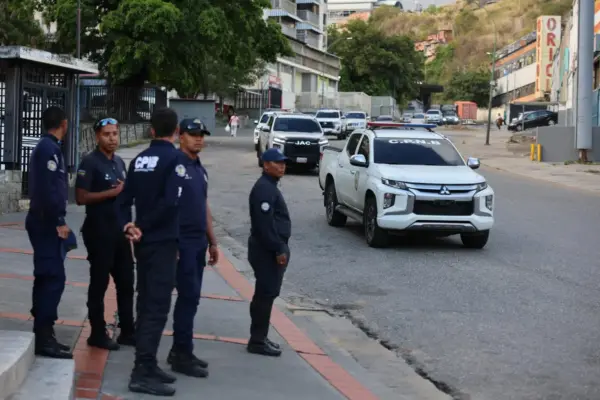
In Venezuela today, is there freedom of assembly and mobility? Can people take to the streets to celebrate Maduro’s exit or demand change? Or is the country under a police-state regime?
Luz Mely Reyes. The decree of civil commotion reduces the possibility of dissenting groups or critics of the dictatorship mobilizing. Who has taken to the streets? The same groups always permitted—under protection from the Armed Forces, police, and paramilitaries. Recently, during the installation of the new National Assembly—which has nothing to do with the change of government because it was elected last May—one deputy wore a T-shirt reading “Freedom for Political Prisoners.” He was assaulted inside Parliament.
Carolina Jimenez. That same day, 14 journalists and media workers were detained and a foreign journalist was deported. What was their crime? Reporting. They were later released, but it was a very bad sign.
We learned about events in Venezuela from Venezuelan media and international correspondents. But are independent Venezuelan outlets like Efecto Cocuyo blocked? Is digital censorship still in place?
Luz Mely Reyes. Digital blocking continues; legal harassment continues; stigmatization continues; surveillance continues. Recently, several independent journalists were allowed access to the headquarters of the political police, where 65 political prisoners are held. We saw that as a small step. Meanwhile, the city of Cúcuta has become a kind of dormitory for dozens of foreign correspondents trying to enter Venezuela and being denied. The only people barred from entry are journalists.
Information control remains. Independent journalists cannot sign stories for security reasons and cannot show their faces publicly when doing critical coverage. From exile, we are being strengthened by those still on the ground.
What can we expect in the coming week? What signals could indicate movement toward democratic transition—or away from it?
Luz Mely Reyes. We are not yet moving toward democratic transition, and I don’t think that will happen in a week. We are moving toward regime stabilization—meetings in Colombia with President Petro, meetings with US State Department officials, and a US diplomatic delegation already in Venezuela. One thing we will continue to see is political prisoner releases. There are more than 800 political prisoners—likely more, since many cases were never reported out of fear. Now people are approaching human rights organizations. So we will see that first.
In this search for stabilization, the regime may appeal to a mantra of unity—bringing back emblematic Chavistas who dissented from Maduro but never renounced Chavismo itself. Strategically, that helps calm the Armed Forces and reconnect with Chavista social bases.
María Corina Machado will meet with Donald Trump next week. Is there expectation that this could have consequences—or is it merely a protocol meeting with a Nobel Peace Prize laureate?
Carolina Jimenez. Trump is one of the most unpredictable leaders in US political history. One learns, working on democracy and human rights issues during his time in office, that he shifts based on instincts—he is a businessman and moves accordingly. He once spoke terribly about Brazil and then at the UN praised Lula da Silva—and the rest is history. Bolsonaro must be praying for a change of heart because today Lula and Trump are friends.
And now Petro?
Carolina Jimenez. And now he a friend of Petro. So Trump’s personality often defines foreign policy. We must also note that this is a (midterm) election year in the United States. Polls vary, but US Americans generally view Maduro’s exit positively—yet there is not necessarily strong support for military action.
For Trump, a stable Venezuela is important. A Venezuela that requires heavy US financial investment would not be well received by his base—and that is ultimately his main political calculation, especially with critical elections ahead. If his party loses the House of Representatives, he may lose everything.
We will all be glued to our screens the day he meets María Corina Machado. Beyond public praise, that relationship is extremely complex. How that meeting unfolds and what consequences it has may determine shifts in Venezuela today.
First published in Spanish by Confidencial and translated and posted in English by Havana Times.