
Peru: Fair Markets for Agroecology Require Political Will
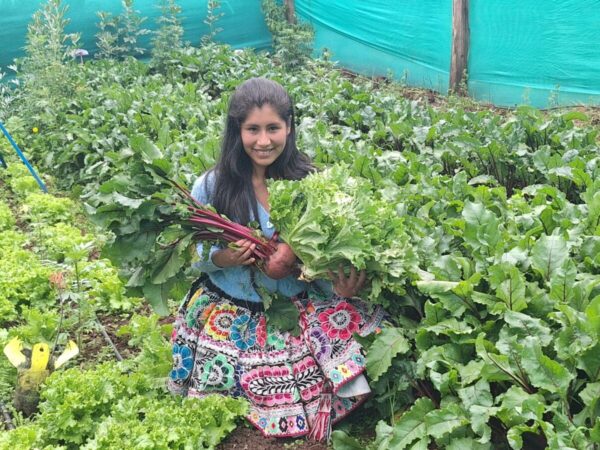
HAVANA TIMES – “With agroecology I’m getting my little daughter ahead because I sell my vegetables, which are healthy, tasty, natural; but we need support from the authorities to have markets and fair prices,” says young Quechua farmer Ruth Flores, from the rural community of Umachurco, more than 3,500 meters above sea level.
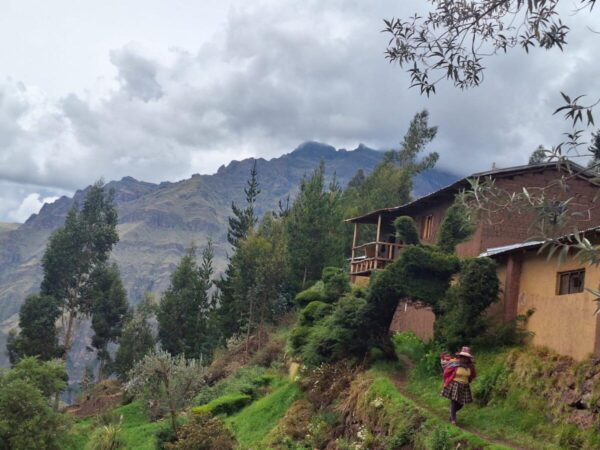
Located in the area known as the Sacred Valley in the department of Cusco, in Peru’s southern Andes, this community of around 200 small farming families dedicated to family agriculture belongs to the municipality of San Salvador, one of eight that make up the province of Calca.
Two years ago, Flores obtained access to a 100-square-meter greenhouse and intensive training in agroecological production and women’s rights when she joined a project run by the Peruvian Women’s Center Flora Tristán, a nongovernmental organization. Eighty women producers from four municipalities in Calca, including San Salvador, are part of the initiative.
As part of that project, financed by the Basque Cooperation Agency of Spain with support from the Basque organization Mugen Gainetik, each of the 80 women received her own greenhouse equipped with a tank and drip irrigation module to store water and use it during drought periods.
“I’ve learned how to prepare the soil, how to use manure from my animals to make fertilizer, how to regulate irrigation, how to fight aphids and other pests in a natural way, without chemicals. For example, I plant garlic next to the lettuce and then the insects don’t appear,” explains the 21-year-old producer and mother of a two-year-old girl, speaking to IPS in her garden.
She raises her daughter with the help of her mother, who cannot dedicate herself to growing vegetables as she would like due to severe osteoarthritis that limits her movement.
The effort and enthusiasm of Flores and her classmates at the Agroecological School meet a major barrier in the difficulty of accessing spaces to sell their products and in obtaining recognition of fair prices for their produce.
That school is the training space provided by Flora Tristán through workshops, demonstration practices, and ongoing technical field assistance in which the 80 participants take part.
Because they live in communities far from the cities and do not have their own transportation, moving their produce is difficult for them, as is storage due to the lack of facilities where vegetables can be properly kept.
From Words to Action
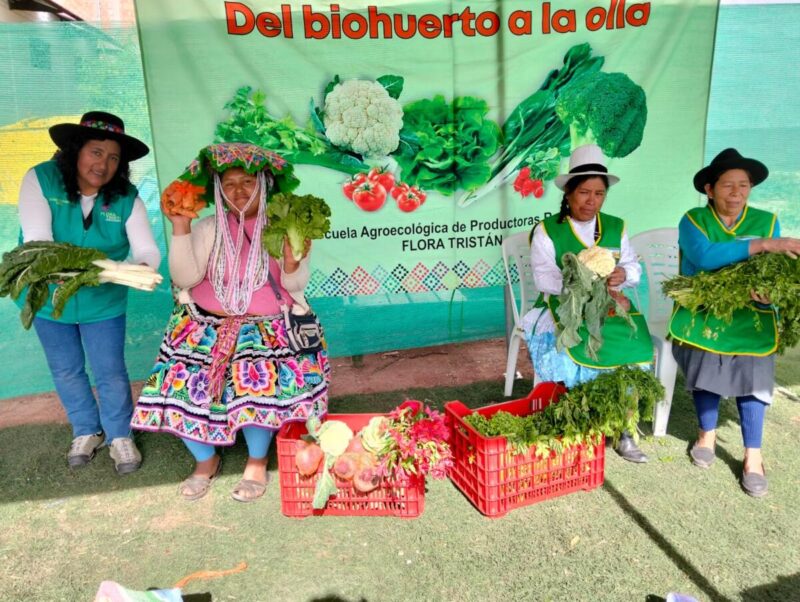
“We have asked our mayors to support us. We women from the countryside have changed our way of producing and now we’re providing healthy food not only for our families but also for consumers,” says Martina Santa Cruz, president of the Provincial Association of Agroecological Producers of Calca (Appac).
This organization, created in October 2024 in response to the need to strengthen joint action among women producers, is made up of the 80 participants in the project, from the district municipalities of Calca, Coya, Lamay, and San Salvador.
A Quechua farmer from the community of Saccllo in the municipality of Calca, Santa Cruz tells IPS that they have already submitted their proposals to the authorities.
“We’ve asked them to help us transport our products to a place where they can be stored and preserved, to guarantee differentiated spaces in local markets so that the value and properties of our agroecological vegetables can stand out, and to carry out campaigns on healthy eating and fair prices,” she explains.
These demands are part of Appac’s Political and Rights Agenda, which they have presented to the mayors in their jurisdictions.
“The authorities and officials have committed to take measures, but we need to move from words to action. For now we have begun to fill a monthly order of 30 packages of vegetables from our greenhouses for the municipality of Calca,” she adds.
Her role as a leader is one more responsibility in Santa Cruz’s life. She takes care of a 15-year-old teenage daughter and a six-year-old son, tends her animals, and runs her greenhouse. Her husband helps whenever he can, though he works as a construction laborer in the city of Cusco.
Saccllo, located about an hour and a half from that city—capital of the department of the same name—via public transport, is a community in which more than 100 families are dedicated to small-scale agriculture and animal husbandry.
Rural Poverty
Peru, with 34 million inhabitants, is a middle-income South American country dependent on the export of raw materials. According to analysts, it projects economic growth of slightly more than 3%, which would reduce the annual poverty rate from 27% in 2024 to 25% in the year just ended.
However, the rural poverty rate stood at 39%, far above the national average.
This sector is precisely where large gaps persist in access to basic needs such as housing, education, health, and sanitation, and where climate change worsens the challenges facing family agriculture, one of the main livelihood activities for the population.
“It is necessary to promote human development to drive sustainable rural development: education, basic sanitation, safe and healthy housing, water—these are some of the structural problems that urgently require attention to improve people’s quality of life,” says Ricardo Giesecke, a physicist, environmentalist, and highly knowledgeable of the country’s reality.
In an interview with IPS in Lima, the specialist—with a long academic and professional career and experience in public and private positions—stressed that the Peruvian state should not wait to have an ideal level of economic growth in order to invest in priority sectors, because the task is to create opportunities for the people who need them most.

He emphasized that family farming “feeds 60 to 70% of the Peruvian population,” noting that it is essential to defend it, and to focus on agroecological production and its commercialization.
“It can’t be that the State is not interested in the commercialization and transportation system. People produce on their plots, but someone has to take it to the road, and that road has to lead to a market, and that market has to pay a fair price. But if everyone is charging fees and bribes, what’s left for the farmer?” he said.
He recalled his time in the Lima Wholesale Market: “I worked there and saw wholesalers with more luxurious and armored pickups while the people from the countryside they bought from were worse off every time, more and more barefoot.”
He specified that it’s up to municipalities to regulate rural transportation and to guarantee the operation of public warehouses where rural producers can place their agroecological products in safe conditions, from where they can then be transported to various markets for sale.
“This process must have the oversight of the Ministry of Agriculture and Irrigation, starting from production,” he added.
Giesecke stressed the urgency of accelerating these decisions because mining is attracting rural youth. “Young people don’t want to be farmers because they associate it with poverty, and that has to be reversed with greater opportunities from the State,” he noted.
Yes, Greater Development Is Possible
Flores shared her pride in gaining the trust of a pollería—a restaurant specializing in roasted chicken, very common in Peru—in the city of Calca, to which she supplies beets every week.
“Since I know customers won’t come to my community or to my greenhouse, I went offering [my produce] in different places. Now every week I take lettuces to a stall in the market and my beets to the pollería,” she says.
She remembers that “at first they didn’t believe it was natural, because the bulb was large, they thought it was inflated with chemicals, but when they tried it they found it delicious, tasty, different from the artificial one which is bland.”
In addition to this initiative, she and the other Appac producers take turns every month at the fair held in the city of Cusco and organized by the regional government. To do so, they have the support of the Flora Tristán Center for post-harvest processes such as washing and packing vegetables, as well as transportation.
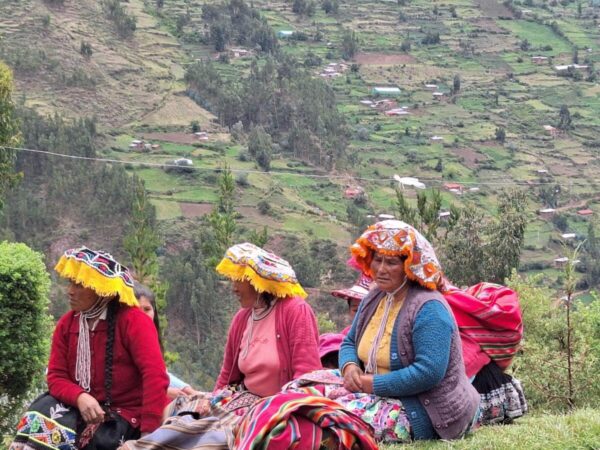
“It’s time for our authorities to show greater willingness to make policies that allow us to take our products out, bring them to markets, and sell them at their real value,” Flores insists.
“That way agroecology can develop more, so that the entire Sacred Valley can grow in harmony with the pachamama (mother earth) and our families can live better. That is what is called a lever for development,” she says.
First published in Spanish by IPS and translated and posted in English by Havana Times.