
A Popular Havana Market Under Police Siege
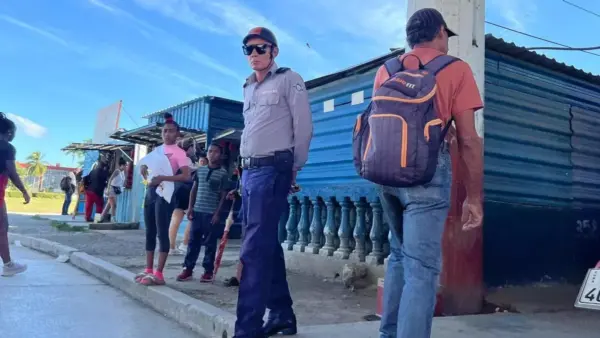
The militarization of the commercial fair leaves empty platforms, tension, and paralyzed trade after an operation targeting especially medicines and foreign currency.
HAVANA TIMES – The 100 St. and Boyeros Ave market, one of Havana’s most important commercial hubs, woke up this Friday with a strange atmosphere, as if suspended between its usual bustle and an imposed silence. After the police operation carried out this week, the place remains submerged in a level of surveillance that resembles a military checkpoint more than a marketplace where thousands of Havana residents solve their daily needs, from a pair of shoes to an antibiotic impossible to find in state pharmacies.
At first glance, what stands out most are the empty platforms. Where improvised stalls once lined up selling medicines, cigarettes, bottles of syrups, antibiotic ointments or blister packs of painkillers, today there remains only the echo of what was once a trade as active as it was informal. “Police and inspectors are everywhere,” says a vendor who has had his stand for more than five years. “Today 100 y Boyeros is poorly atended,” he emphasizes.
Police officers, plainclothes agents, and olive-green uniformed soldiers patrol the narrow aisles, peering into every kiosk, checking documents, interrogating vendors. One officer takes notes in a notebook while his partner examines a few boxes of athletic shoes. A few meters away, another group detains a man who tries to leave hastily with a backpack slung over his shoulder.
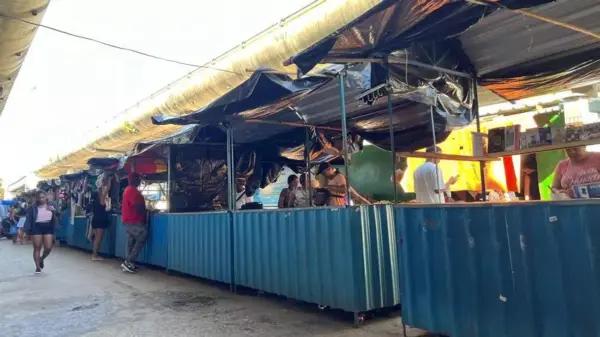
The official newspaper Tribuna de La Habana reported Thursday that the police raid at the fair included the seizure of goods considered “of dubious origin.” Ten people were arrested during the operation “for acts of illegal commercialization,” and “five fines ranging from 16,000 to 32,000 pesos” were imposed on citizens “for illegal sales of products.” Authorities also “controlled the presence of harassing and wandering minors,” the paper added, referring to children and adults who beg in the area.
Among the confiscated items, witnesses told 14ymedio, were everything from medicines and hospital supplies — such as syringes or blood-pressure equipment — to hardware items, parts for electric motorcycles, and imported clothing. For the moment, the market appears to have retreated, waiting for the uniformed forces to leave and for the waters of commerce to settle again.
The crackdown is not new, but it is particularly intense. In December, when consumption increases and shortages deepen, operations multiply. “That’s because it’s December, and they need to find something to eat… at the expense of those of us who really work,” mutters a vendor who watches the inspectors come and go from the back of his kiosk.
Police move in pairs, and here and there a state inspector pops up. They ask for documents, demand licenses, examine merchandise, and in a matter of seconds decide if someone walks away with a fine or, in the worst case, has their goods confiscated. “They stop people and ask for their papers,” explains a customer who came this Friday to buy a hose for his toilet. “I’ve never seen this market so quiet,” he says.
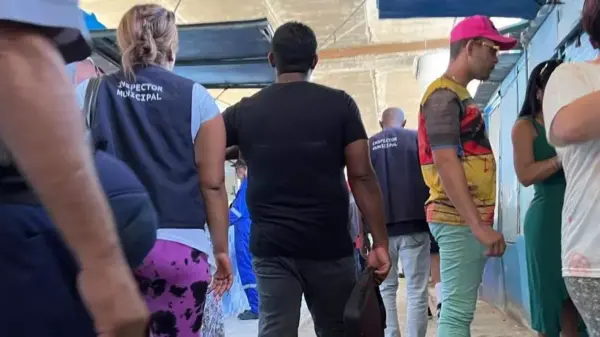
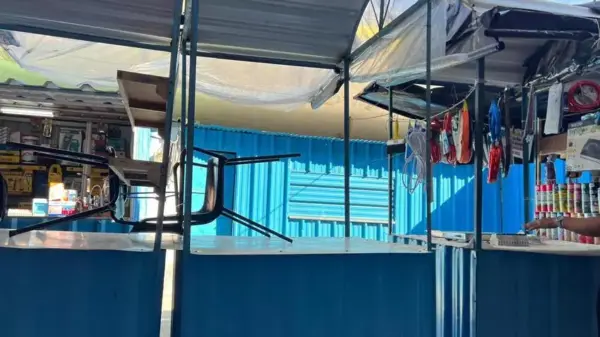
Tension is visible in people’s faces. A teenager clutches a mesh bag full of plastic balls while eyeing an approaching policeman. An elderly woman walks grim-faced past the Frozen ice-cream stand, now with almost no line. The aisles between the sales points are clear, yes, but not out of efficiency: they are deserted out of fear. A pair of chairs placed atop a counter suggest closure — that some vendors will not return until the police leave.
The 100 y Boyeros market is not just any space. For decades it has consolidated itself as a vital market for the capital’s economic functioning. Within its grounds converge small merchants, informal currency exchangers, speculators, mechanics, barbers, desperate mothers searching for antibiotics, and elderly people reselling products they buy through the ration book.
This mixture makes the place an indispensable supply zone: products priced below those in state stores, variety, speed, and a network of providers covering the chronic shortages of the official system.
But it also makes the market a target of the State, especially after the rise of the informal dollar market and the explosion of the clandestine medicine trade. At 100 y Boyeros, more real economic information circulates than in any bulletin from the Ministry of Economy — prices, devaluations, exchange rates, what enters the country, and what is scarce.
Its ability to be reborn after each police operation, each storm, each forced closure has been proven over the years. But this Friday felt different: too many uniforms, too many empty stalls, too many watchful eyes. Even so, under the bridge, among crates of eggs and improvised carts, some vendors held their ground. “This will fill up again,” said a young man as he moved sacks of produce. “It always does. They come, make noise, leave, and life goes on.”
And perhaps he is right. Because if the 100 y Boyeros marketplace has proven anything, it is that even under siege, Havana depends on hustling. Still, this week’s police raid has left behind an amputated market, half-functioning, where buyers and sellers move quietly, where no one shouts “I’ve got cigarettes” anymore, where anyone could be detained for “illegal economic activity.”
First published in Spanish by 14ymedio and translated and posted in English by Havana Times.