
Chronicle of a Havana Tenement
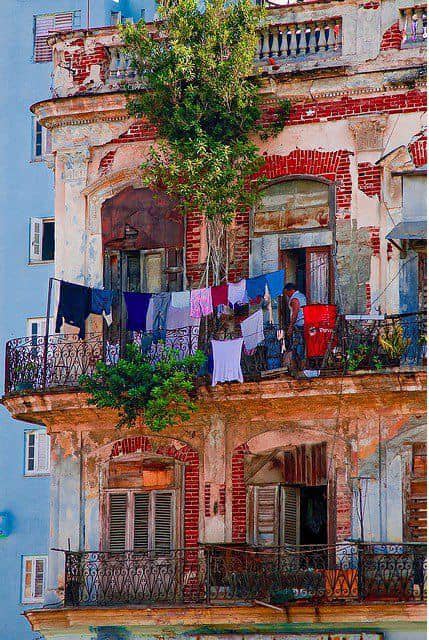
HAVANA TIMES – The day doesn’t begin; it emerges. The first ray of sunlight slips between the bars of a balcony. Clothes hang like flags drifting in the half-light of the central courtyard. There is no alarm clock. The tenement wakes to the metallic screech of the first water pump. That sound, acting like the bell of a secular monastery, calls the community to the daily ceremony of survival.
The walls don’t just speak; they whisper and shout gossip. At the shared water spigot, where a line forms with bottles and buckets, the social network is woven. “Did you hear about the girl in number 12?” a woman whispers while filling her pail. “Magdalena, if you’re going to the bodega, bring me a bread roll!” another woman shouts from two floors up, leaping over distance. It is a public and domestic exchange at once, a choreography of voices tangling with the rattling of Marta’s sewing machine as she, in her back room, stitches life back together one seam at a time.
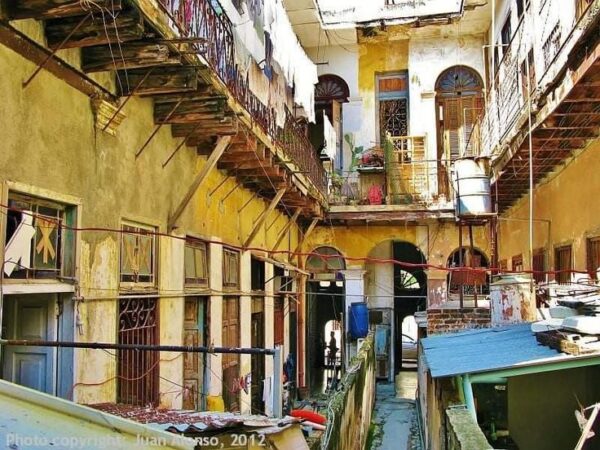
Every corner is a world of its own, and all worlds converge. The children of the tenement rule the territory. They transform the narrow hallway into a baseball stadium; a wooden bat and a rag ball are enough for a National Series playoff. Their cries of “Strikeout!” echo against peeling walls that preserve the memory of the elegant mansion the building once was. Now, dangling wires replace the old chandeliers, and pots of basil and oregano rest on broken columns.
The economy of solidarity is the common currency. Caridad, on the back balcony, doesn’t just shake her rug with vigor; she is everyone’s counselor. Her door, like Lucí’s on the first floor, is always open. “Here everything gets handled and shared,” she says with a smile. A plate of food, some pills, or a borrowed electrical cable—sharing is the unwritten law of a tenement.
As afternoon falls, the tenement exhales its fatigue. The men pull their chairs to the doorway. The clack-clack of domino tiles on the table becomes the soundtrack of dusk. A bottle of rum, laughter, and camaraderie are never missing. Later, the women bring cups of freshly brewed coffee. The problems—the leak in the ceiling, the money that never stretches far enough—haven’t disappeared, but for a moment they remain suspended.
At night, beneath the dim glow of a single bulb, when there is electricity, whispers mix with the lament of a bolero filtering through a crack in a door. It is the hour of secrets and sighs that the moon, peeking between the clotheslines, quietly observes.
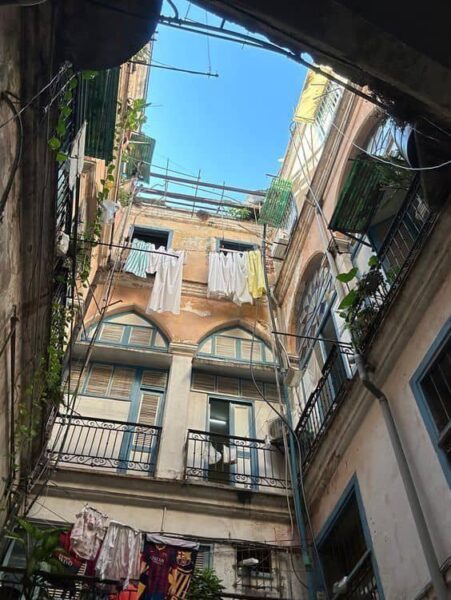
I loved the story described with the photos. It transports you and makes you feel like you’re right there in the midst of that bustling scene.