
Cuba Grinds to a Halt with New Government Measures
to confront the fuel and energy crisis
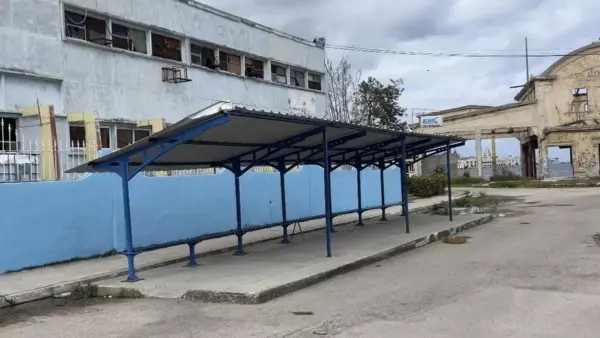
Rationed gasoline is being sold only in dollars, drastic reduction of public transport, and higher food prices.
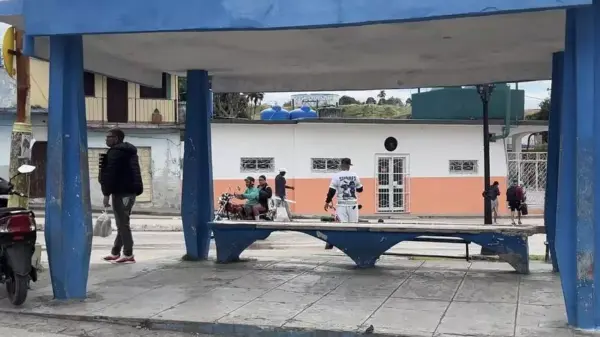
HAVANA TIMES — Empty bus stops is the image seen across much of Havana, a city almost paralyzed. In Regla and Guanabacoa, where until recently the A29 route connected both municipalities, not a single bus runs today. Urban public transportation, already fragile, has practically disappeared. And the new measures announced on Friday threaten to worsen the situation, even if authorities avoid using the word “collapse.”
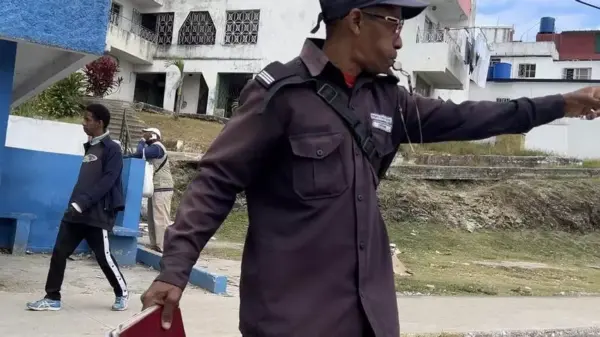
In other places, such as the Guanabacoa traffic light, there are crowds, but not because routes are operating. Inspectors stop state vehicles there and force drivers to take on passengers. “There aren’t many state cars on the street either,” clarifies a woman waiting, with no certainty how many hours it will take her to reach her destination. The result is improvised, irregular, and humiliating mobility, where getting around depends on luck, charity, or administrative coercion.
The near-total absence of buses is pushing people toward private transport, now almost the only available option. But moving around Havana this way is a luxury. A trip in a private collective taxi from the Guanabacoa traffic light to Parque de la Fraternidad cost 350 pesos this week; from there to El Vedado, another 200. In total, 550 pesos to cross the city. “I spent the money I had planned for this outing just on transportation,” summarized one passenger as he got out of a taxi.
Electric three-wheelers, once presented as a “sustainable” alternative, barely ease the situation. “They’re only a little cheaper — 50 or 100 pesos less than cars,” a passenger told 14ymedio. Their fares are also skyrocketing. For the past two weeks, ticket prices have risen exponentially, and transport operators themselves warn that increases will continue as long as the fuel shortage persists.
These light vehicles, with capacity for a maximum of six passengers, face an additional problem: the layout of their wheels prevents them from effectively navigating potholes. This forces drivers to move at very low speeds and take dangerous detours to avoid the many craters scattered across Havana’s streets.
The impact of the current restrictions is not limited to mobility. The transportation crisis is already showing up in the price of basic goods. A small shopkeeper in Regla reported that his suppliers raised the price of all bread by 20 pesos “because of the fuel issue,” and he fears the same will happen with the rest of the food supply. Rising transport costs are transferred almost immediately to the cost of living.
“People think that since work hours and school have been cut back there’s no need to move around,” reflects a Guanabacoa resident. “But what do I do if I want to see a relative, go out at night, or visit a nearby place like Havana or El Vedado?” The question sums up a reality the official discourse avoids: the city is not just work and study — it is also social life, affection, leisure. All of that is now conditioned on having enough money to pay inflated fares.
Government measures have not eased public fears, even though they have been presented as an “opportunity.” On the television program Mesa Redonda, Deputy Prime Minister and Minister of Foreign Trade and Investment Óscar Perez-Oliva Fraga acknowledged the “low availability” of fuel and announced new restrictions. The Cimex Corporation reported that, “until conditions allow, fuel sales in pesos are postponed, as well as the commercialization of diesel fuel in USD to the population.”
In addition, starting February 7, the Ticket app will be implemented at service stations that sell gasoline in dollars, as was already done for purchases in pesos. The stated objective is to “organize the process,” but the imposed limit — 20 liters per registration — confirms the magnitude of the shortage. Far from normalizing access, the measure institutionalizes rationing and leaves out those who are not paid in foreign currency.
At the same time, the Ministry of Transport has announced a drastic reduction in interprovincial services, the suspension of national routes, and the readjustment of urban and worker transport nationwide. Trains departing at spaced intervals — every eight days — canceled buses, and exclusive priority for sectors considered “strategic” complete a panorama of near-total paralysis.
In practice, the State is withdrawing from everyday mobility and shifting the problem to citizens. Those who can pay move; those who cannot stay put. “People without money will get around through charity — or they won’t get around at all,” concludes one testimony. It is the country’s new reality.
First published in Spanish by 14ymedio and translated and posted in English by Havana Times.