
Cuba Suspends Surgeries in Hospitals, Closes Some Hotels
approaches the “zero option”
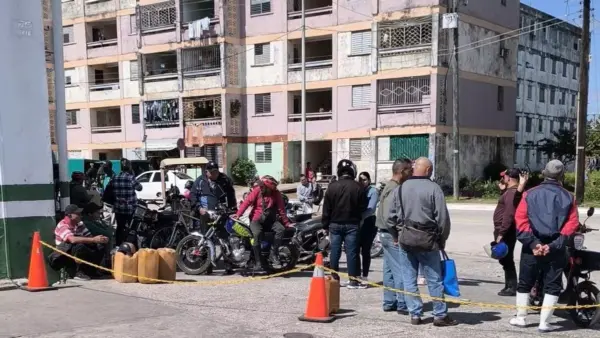
The fuel crisis forces reductions in bus routes, halts the sugar harvest in Sancti Spíritus, and cancels an international congress with 1,500 participants.
HAVANA TIMES — A critical shortage of basic medicines, the paralysis of surgeries, and the suspension of transportation for outpatients. For now, that is the situation in many hospitals in Cuba amid an unprecedented fuel crisis — one the regime has not even named this time. “Contingency or emergency, I don’t know,” a provincial Public Health employee told 14ymedio, requesting anonymity. “Because the president spoke and spoke but said nothing. They asked him everything and he dodged it all, and said other people would be in charge of explaining the energy issue.”
The woman was referring to Miguel Díaz-Canel’s appearance this Thursday, in which the president stated that the Government has designed a plan to confront the fuel shortage — worsened since the US intervention in Venezuela on January 3 — but he did not specify any concrete measures beyond promises and the usual victimist slogans about the “imperial government” and the “enemy.” “We are going to live through difficult times,” he limited himself to saying, betting on overcoming the obstacles with one of his favorite phrases: “creative resistance.”
Díaz-Canel did announce that “a group of ministers and deputy ministers will gradually provide information” about the measures, approximately “within a week,” but in some institution’s restrictions are already being announced. This is the case in the health sector, as the worker explained to this newspaper.
“All surgeries and the transportation of patients from other municipalities have been canceled due to the lack of fuel,” she reports, asking that the name of the hospital where she works be withheld, where a “contingency” has been in effect since yesterday. “They are discharging many admitted patients,” she repeats, “and compiling all available resource information to see where they can save.”
The list illustrates the situation. “We have diesel left for 160 hours and the boilers have coverage for two days. Liquefied gas we have for 47 days, but the incinerator barely has burning capacity, only 1.8,” she recounts. The shortage of medicines is also striking: “There is no pethidine to relieve labor pain, nor analgesics in general, nor antihypertensives, nor IV fluids, nor catheters, nor gauze; all of that is at zero.”
As for antibiotics, she continues, there is also “very low coverage.” Encomed, the Pharmaceutical Marketing Company, promised them a delivery, but “it had no fuel to transport it and nothing has arrived.” For patients undergoing hemodialysis, they have concentrate for three days, and hospital disinfectant for seven.
Regarding food, she says they have rice and grains for about 15 days, but “protein is almost gone”: “there is ground meat for two days and chicken for three.” Although the employee trusts that “they’ll come up with something, because we’re not going to die,” uncertainty remains about possible solutions.
In the absence of government statements, word-of-mouth information is proliferating. A health worker from a polyclinic in Ciego de Ávila told 14ymedio they have been warned that only the emergency unit will remain open and that doctors must bring “their rechargeable lamps to work.”
The sugar harvest in Sancti Spíritus — already meager — is halted, according to an employee at the Melanio Hernández mill. “They ordered state transport to stop and everything in general,” the man says.
Likewise, on social media it is reported that several hotels on the Keys have been closed and their guests relocated to other facilities.
“This was the message received this morning by guests at the Valentin Perla Blanca hotel, in Cayo Santa Maria,” wrote Adelth Bonne Gamboa on social media Thursday, illustrating her post with an image of the letter distributed by the customer service team. “Not even the employees themselves know the reason for the closure,” the activist explained. “They were simply informed this morning that the facilities would stop operating at 4:00 pm today.”
Officially, so far, very few agencies have published concrete measures. One of them is the Provincial Directorate of Isla de la Juventud, which among nearly twenty points calls for leaving in workplaces “only indispensable administrative personnel” and decrees the “total shutdown” of electricity service in state buildings throughout the weekend, including Friday, as well as the closure of boarding schools and “recreational areas and bars.”
In addition, authorities say, “one hundred percent of territorial investments are paralyzed,” including those of the Electric Company, Agriculture, and Fisheries. This contrasts with Diaz-Canel’s words yesterday, when he explained that if some areas had more blackouts — specifically Havana and during the day — it was because they were prioritizing resources for actions that would reactivate the economy.
As for the Isla de la Juventud’s connection with the rest of the country, it remains uncertain: the communique indicates that the ferry Perseverancia will sail “once or twice a week depending on fuel availability and transportation guarantees from Batabano to Havana.”
In Las Tunas, as of this Friday, national bus departures to Camagüey, Holguín, and Santiago de Cuba are suspended “due to the worsening fuel availability in the country.” Only one route to Havana remains — the 9:00 pm “express” — and the alternate route to Matanzas is also halted. It will not be the only measure, reported Tiempo 21, but additional ones “related mainly to national passenger transportation, especially rail service,” are under study.
For its part, the University of Havana has decreed, among other resolutions, the postponement of activities for the international congress that was to be held in just a few days — expected to gather more than 1,500 delegates, 500 of them from 32 countries — and the extension of “semi presential learning to all degree programs and Higher Technical Education tracks,” starting this Friday and for 30 days.
If one looks to the official press for information on the measures, only reporter Elsa Ramos, from Escambray, asks pertinent questions: “How are priorities set to distribute the little fuel that reaches service stations? Why is dollar-denominated sales privileged? Why are cards loaded and charged if there is no liquid supply to back them? How true is it that gas sales, when available, will be in dollars?”
It is not that the official she interviews, Camilo Perez — coordinator of Government Programs and Objectives in Sancti Spíritus — fully answers everything, but he is forced to provide some details. For example, the order for the Dairy Company to transport milk “in different thermoses” to reduce vehicle travel, or the rehabilitation of ovens in the Food Company to produce bread “with firewood.”
In Education, Perez indicates — without detailing — that “alternatives are being applied” both for student transportation and food preparation, “mainly in boilers,” where “savings can be made.”
Likewise, the official acknowledged that “at this moment there is no guarantee for private carriers linked to passenger transportation, since only state vehicles are being prioritized due to the restrictions we have.” He did, however, rule out the feared “zero option” that has been on the lips of Cubans in recent weeks: “We have never been left at zero. It has been quite responsible work, especially by all the consuming entities, and with good communication and awareness of the difficulties we may have in each place, decisions have been made and services guaranteed.”
First published in Spanish by 14ymedio and translated and posted in English by Havana Times.