
Gaza Refugee Camps Are Death Traps
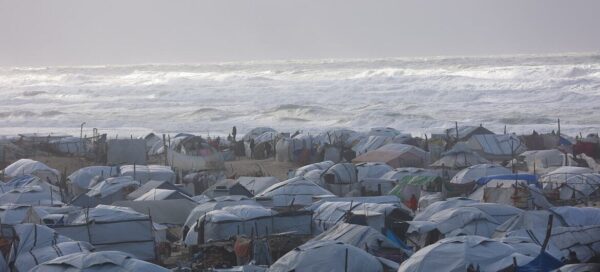
HAVANA TIMES — Heavy rains have destroyed, swept away, or flooded thousands of tents in the displaced Palestinian camps in the Gaza Strip, and those located on the shores of the Mediterranean Sea are among the most affected, according to reports from United Nations agencies.
Before the winter season, which broke in with heavy rains in December, almost 25,000 people (4,400 families) were living in high-risk coastal areas, although efforts had been made to relocate the most vulnerable.
Wind, water, and low-lying terrain have turned the camps into death traps, exposing nearly 800,000 displaced people — more than a third of Gaza’s 2.2 million inhabitants — to serious risks as they shelter in makeshift structures or camps.
“The lack of safe land has forced many families to remain in exposed locations, including sites directly on the beach,” the UN Office for the Coordination of Humanitarian Affairs (OCHA) noted in its latest report.
On Tuesday, 13 of OCHA’s humanitarian partners reported that more than 3,000 people were exposed to extreme weather conditions after hundreds of tents and makeshift shelters were swept away by the wind or suffered severe damage.
In addition, more than 60 inhabited buildings could be at risk of collapse in Gaza City.
“In the absence of viable alternatives, residents of Gaza continue living in structurally damaged buildings, where recurrent storms and winds significantly increase the risk of collapse,” OCHA stated.
According to Gaza’s Ministry of Health, 25 people, including children, have died since mid-December due to the collapse of buildings already weakened by weather conditions. The situation is all the more concerning given the extremely limited resources available to address it.
Beyond these particularly vulnerable areas, the housing crisis now affects the entire territory. Almost the entire population of Gaza remains displaced — often repeatedly — and more than one million people are estimated to be in need of emergency shelter assistance.
The massive displacement is aggravated by an almost total lack of relocation options within the 365-square-kilometer territory, half of which remains occupied by Israeli military forces.
With more storms expected, humanitarian partners remain restricted to short-term emergency solutions and are unable to implement sustainable flood-mitigation or reconstruction measures.
“Families have few resources to prepare their shelters for the winter or to rebuild them,” the OCHA report stressed.
According to the agency, this is due to restrictions imposed by Israel on the entry of materials for building shelters and improving the sites, including drainage equipment (pumps, pipes) and especially reconstruction materials (such as cement and wood), which are classified as dual-use.
Without those materials, “displacement sites are routinely flooded and shelters must be replaced,” OCHA emphasized in its report.
On the ground, these limitations translate into lasting insecurity, to which humanitarian organizations are attempting to respond with emergency measures.
Three months after the ceasefire, the UN and its partners have collected more than 164,000 tons of humanitarian aid at Gaza’s border crossings (with Egypt and Israel), including about 19,000 tons in the first 10 days of January.
This represents a monthly average of 54,000 tons — nearly three times the monthly average collected between May 19, 2025, when the entry of limited aid resumed after a 78-day blockade on incoming supplies, and the October 10 ceasefire.
The ceasefire — fragile and frequently violated — followed two years of war that began on October 7, 2023, when the Islamist militia Hamas attacked southern Israel and Tel Aviv responded with a large-scale military offensive on the Strip.
The war cost the lives of more than 71,000 Palestinians, wounded over 171,000, and the bombings and attacks resulted in widespread destruction of most built structures in the Strip. The population was deprived of essential goods and services, including water, food, health, housing, communications, and shelter.
According to OCHA, improved food deliveries have made it possible, for the first time since October 2023, to fully cover minimum caloric needs through monthly food rations and to increase the production of bread and other meals by 70% over the past three months.
But the agency warns that although the food situation is improving thanks to increased deliveries, the effects of the ceasefire are not enough to remove all obstacles, including damaged roads, limited storage capacity, and material restrictions.
The UN and its partners continue responding to flood alerts by distributing tents, waterproof tarps, blankets, and warm clothing, as well as nutritional, hygiene, and sanitation supplies throughout Gaza.
But heavy equipment for debris removal is urgently needed, along with additional plastic sandbags and tools whose entry into Gaza is restricted due to fears by Israeli forces that they could be used by groups that fought them during the armed conflict.
First published in Spanish by IPS and translated and posted in English by Havana Times.