
Masked US Agents Undermine the Rule of Law
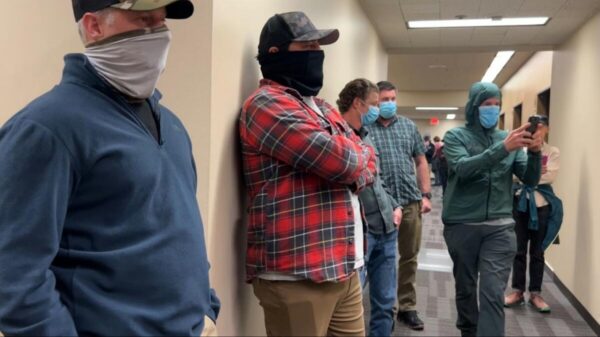
HAVANA TIMES – US federal immigration agents are now routinely operating masked and without visible identification, exacerbating the abusive and unaccountable nature of the current administration’s mass-deportation campaign, the organization Human Rights Watch (HRW) has reported.
According to a report by the human-rights organization, “the indefinite and widespread nature of these practices is fundamentally incompatible with the United States’ obligations to ensure that abuses by law-enforcement forces are investigated and that there is accountability.”
Belkis Wille, associate crisis and conflict director at HRW, said that “this kind of concealment should be the exception, never the norm. Law-enforcement agents must be identifiable so that they can be held accountable for their actions.”
“And it is even more alarming given the widespread abuses that have occurred during immigration-related arrests in recent months,” she added.
HRW stated that since Donald Trump assumed the presidency again in January 2025, “his administration has carried out across the country an abusive campaign of immigration raids and arrests, primarily targeting people of color.”
“Many of the raids are deliberately carried out in places where people from the Latino community work, shop, eat, and live,” the report noted.
Agents have apprehended people in courthouses for routine appointments with immigration officials, as well as in places of worship, schools, and other sensitive locations, the text highlighted.
Many raids have been marked by the sudden and unjustified use of force, without provocation, creating a climate of fear in many immigrant communities.
These immigration-enforcement operations have often involved agents from Immigration and Customs Enforcement (ICE) who wear masks and, in some cases, are dressed in plain clothes.
It is common for agents to conceal agency badges and use unmarked vehicles to detain people in their cars as well as in courthouses, schools, workplaces, homes, on the street, and on public transportation.
On its website, ICE justifies the widespread practice of masking by stating that it is intended to “avoid being exposed.”
“This kind of broad and indiscriminate justification for concealing officials’ identities is not compatible with the United States’ human-rights obligations, except when the measure is necessary and proportionate to address specific security considerations,” HRW stated.
By contrast, when applied as a broad and automatic strategy, such measures “constitute an obstacle to accountability that is incompatible with the United States’ human-rights obligations,” it said.
It added that anonymity also weakens deterrence, fosters conditions for impunity, and inhibits the exercise of rights.
According to the Deportation Data Project at the University of California, nearly 220,000 people were detained by ICE agents in the first nine months of the Trump administration.
HRW interviewed 18 people who were arrested or witnessed arrests by unidentifiable individuals in five US cities since January 20. All described the incidents as terrifying, saying they felt they could do nothing if they suffered abuses, especially if the agents were not identifiable.
The organization also analyzed dozens of videos of stops and arrests involving masked agents that were posted on social media.
Many observers “have suggested that the terror these tactics instill is deliberate,” HRW noted.
Additionally, HRW reports that in recent months the media have covered cases of people impersonating federal agents who kidnap, sexually assault, and extort victims, exploiting the fear generated by immigration-control measures.
“This shows that the lines between criminals and law-enforcement agents can be blurred when federal agents themselves are not identifiable,” HRW said.
The organization maintained that “Congress must investigate the brutality in ongoing immigration-enforcement activities, including the specific impacts of unidentifiable agents carrying out stops and arrests.”
“Allowing masked and unidentified agents to roam communities and apprehend people without identifying themselves undermines trust in the rule of law, creates a vacuum in which abuses can spread, and exacerbates unnecessary violence and the brutality of arrests,” Wille concluded.
First published in Spanish by IPS and translated and posted in English by Havana Times.