
Most Havana Gas Stations Have Stopped Pumping
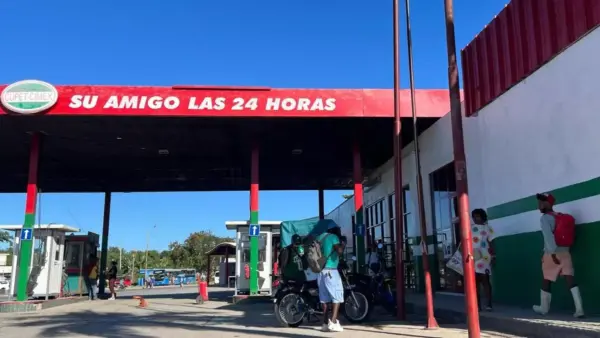
Even refilling a cigarette lighter has become a difficult task in Cuba due to the fuel shortage.
By Dario Hernandez and Miguel Garcia (14ymedio)
HAVANA TIMES – Under the uneven shade of a tree in a park in Holguin, Genaro waits for someone to approach with a lighter. The scene has repeated itself for more than a decade: a folding table, several gas sprays, screwdrivers and pliers. For years, that small family business—refilling disposable lighters—allowed them to eat. Today, however, the lack of fuel threatens to extinguish even that minimal flame. “Now it’s cheaper to buy a new one than to repair it because gas has gotten so expensive,” he says, while arranging his tools with a mechanical gesture.
Genaro charges 100 pesos for each lighter he refills and 50 more if the flint needs replacing. Until recently, that fee guaranteed a steady trickle of customers. Today, the flow has shrunk drastically. “This no longer makes money and if things get worse,” he warns, “I’ll have to look for something else.” His trade—rescuing what in other countries is thrown away—becomes unviable in a context where even gas for lighters has become a luxury.
The problem goes beyond his improvised table. At home, he explains, they cook with firewood and with liquefied gas “when it shows up.” The small gas cylinder that supports domestic life for thousands of families already costs 50,000 Cuban pesos (more than $100 USD) on the informal market in Holguín. “You almost never find it, and when someone offers it, then they can name their price because people are desperate.” At state sales points, the supply was suspended weeks ago and there is no date for its resumption.
The cut in Venezuelan oil shipments, following the capture of Nicolás Maduro by US troops, has tightened a daily life already marked by scarcity. What happens in Caracas translates almost immediately into cold stoves, paralyzed businesses, and reduced transportation in Cuba. The Island’s energy dependence turns any tremor in the South American country into a domestic quake.
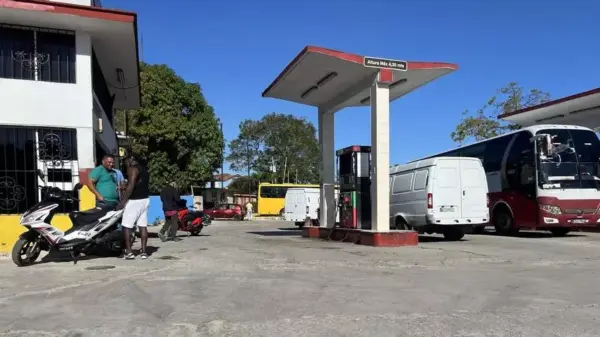
In Havana, the situation is visible in empty gas stations and conversations repeated beneath the roofs of the state-run Cupet stations. On the Telegram groups where virtual queues are organized, discouragement is palpable. This Saturday, in Havana’s eastern districts only 11 gas stations were offering service; another 10 were completely out of fuel. In the western part of the capital, seven stations closed on Friday. Nobody dares to predict short-term improvement.
The mechanism for purchasing gasoline has become a digital labyrinth. To even aspire to a turn, one must register in the Ticket app, enter the identity card number, vehicle registration and license plate data. With luck, confirmation arrives in two or three months. But even then, the outcome can be frustrating: on the appointed day there may only be “motor” or regular low-octane gasoline, unusable for many vehicles.
A tour of several Havana gas stations this Saturday confirmed the situation. The centrally located station at G and 25 in El Vedado woke up without fuel. The same scene repeated at its neighbor in La Rampa. Only at the nearby Tangana station was there some fuel for those waiting with a Ticket turn, and in the entire central area of the capital only the station at L and 17 continued pumping with relative normality.
Under the red sign reading “Your friend 24 hours” at G and 25, three men talk. They begin discussing gasoline, but soon the conversation drifts toward Caracas, Washington’s warnings, and Marco Rubio’s declarations urging Havana to choose between “change and collapse.” International politics slips into their words as yet another explanation for the empty tank.
“The situation is tight, I’d never seen it this bad,” says a motorcyclist who came to the Cupet just to confirm the obvious. He has a generator at home and urgently needs fuel. “My mother is bedridden with a relapse of chikungunya,” he explains. With the generator they try to lessen the impact of the blackouts that for months have struck even previously privileged areas of the capital. “At home we’re preparing for the worst because this is only just beginning.”
At the Cupet stations on Vía Blanca and La Coubre, fueling this Saturday was limited to state vehicles, the same as at the Shell roundabout in Guanabacoa. Rafael, a Spanish businessman temporarily based in Cuba, recounted to this newspaper his fruitless tour of several stations in the Playa municipality. “When I asked the employees, they said they had no idea when fuel would arrive again. They look lost,” he summarizes in frustration.
One worker was more direct and, in a mocking tone, fired at the Madrileño a phrase heard repeatedly across the city: “Maduro abandoned us.” In four words, she condensed the feeling of orphanhood extending after the rupture of Venezuelan supply. A tremor in Caracas is an earthquake in Havana.
In Cerro, Karel and Omar, two brothers who earn their living doing moving jobs, have halted all operations. “We had a turn to buy gasoline last Wednesday, but that day they didn’t deliver,” they explain. The family’s old truck remains immobilized in the garage while requests to move furniture and belongings pile up unanswered. “With what happened in Venezuela, I don’t think this will get fixed soon,” they say, resigned.
Early Sunday morning, both were watching their phones. Donald Trump had posted a message on his Truth Social network urging the Cuban regime to reach “an agreement before it’s too late.” The warning was clear: “There will be no more oil or money for Cuba: zero!” For many, that message sealed the certainty that the severe fuel shortage will not be temporary.
Along Havana’s Malecón, some watch the sea with that same expectation. They look for the silhouette of a tanker that might return some semblance of normality. For a young man who sings boleros and guarachas to tourists, the definitive collapse will arrive “when El Morro goes dark.” The lighthouse—symbol and recurring joke of the exodus, “the last one out, turn off El Morro”—thus becomes a measure of disaster.
A massive exodus may not be necessary to see it go dark. It would be enough for the fuel not to arrive. Enough for the wait to stretch on. Like Genaro, beneath the tree, with an empty lighter in his hand and the certainty that in Cuba even a light depends on decisions made far from home.
First published in Spanish by 14ymedio and translated and posted in English by Havana Times.
No one remembers Cubans, talks about them, or makes movies about them. They haven’t earned a warrior’s heart yet. It will take blood; it won’t be ‘free’ like the stale rice.
Screws are tightened now on the regime. It is very weak now and very venerable. Cuban society needs to act. Stop doing nothing! Stop standing around the streets waiting for a tourist to scam and do something productive. Stop waiting for your free rice and stop beilg All-Talk how the regime is bad. Do something about it! If Cuban people do not stand up for themselves they have no right to complain. Period.