
Nicaraguan Journalism in Exile: Insecurity, Silence, & Resistance
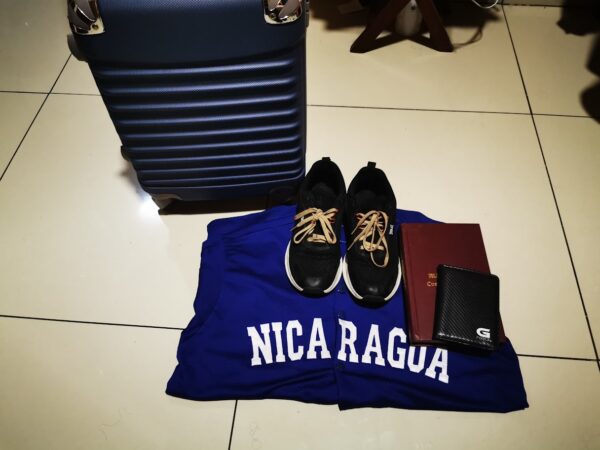
HAVANA TIMES – Independent journalism in Nicaragua is going through a period of sustained deterioration marked by shrinking international funding, labor insecurity in exile, tightening state control over information, and a climate of fear that is pushing many journalists to abandon the profession or practice it in silence.
Recent reports by specialists, professional organizations, and monitoring centers agree that, if anything, conditions are not expected to improve in 2026.
Journalist and Social Communication professor Alfonso Malespín believes the current crisis is the result of a combination of economic and political factors that have weakened the independeent media platforms that emerged after the sociopolitical crisis that erupted in Nicaragua in 2018, and those that existed before.
According to Malespín, since that year digital media became an alternative to sustain independent journalism following the closure, confiscation, or economic suffocation of numerous newsrooms inside the Central American country of 7.1 million inhabitants.
However, that model depended heavily on international cooperation and began to suffer when, starting in 2025, several funding programs were reduced or canceled, beginning with those of the United States Agency for International Development (USAID).
“The shift in priorities of European and US governments has significantly impacted the sustainability of Nicaraguan media outlets in exile,” Malespín told IPS.
According to his analysis, the first reaction of many newsrooms was to cut costs. This meant reducing in-depth investigations, cutting staff, lowering salaries, and decreasing publishing frequency.
Malespín argues that this process has not only made journalistic work more precarious but has also weakened investigative capacity. He explains that networks of sources inside Nicaragua have been lost and that the news agenda has shrunk, along with the diversity of journalistic formats.
He also warns that several outlets have tried to explore new sustainability models, but so far results have been modest and some projects have disappeared.
Of the 42 digital media outlets that emerged after 2018, fewer than half survive today. They were accessible until 2024, when the Institute of Telecommunications and Postal Services annulled the domains that operated within the country, while others established abroad did not withstand economic hardship.
Malespín also attributes part of the current uncertainty to the regional political context.
He notes that Costa Rica—long the main refuge for Nicaraguan journalists—shows signs of strain as a host country due to rising migratory flows, pressure on public services, and a less favorable political climate toward migrants.
In that context, he adds, the arrival to the presidency of right-wing populist Laura Fernandez, who will take office on May 8, is generating concern among sectors of the exile community, especially due to the deepening of already restrictive migration policies and the priority given to security issues.
A Nicaraguan journalist who left Costa Rica in 2025, now living in a European country and who asked not to be identified for security reasons, described her decision to move again as the result of a combination of economic precarity and fear.
“There came a moment when I could no longer support myself. I had two jobs and it still wasn’t enough. There was also fear, a lot of mistrust, the feeling that you weren’t completely safe,” she said of living in a country bordering Nicaragua.
Abandoning the Profession and Everyday Precarity
The concrete effects of this crisis have been documented by the organization Independent Journalists and Communicators of Nicaragua (PCIN), whose report presented at the end of 2025 describes a significant deterioration in the living and working conditions of the profession.
Gerall Chavez, president of PCIN, says the study’s data reflect a deep economic and labor crisis that has forced many journalists to change professions or practice journalism only partially.
The report, based on surveys of more than one hundred exiled communicators, indicates that 81% reported a drastic drop in income over the past year and that 59% have had to venture into other activities to survive.
“A large majority has had to work in areas unrelated to journalism, such as hospitality, construction, or domestic services,” Chavez explained to IPS.
The study also reveals that only 56% continue to practice journalism actively, while 27% do so partially and at least 14% have abandoned the profession.
Chavez adds, based on the study, that insecurity extends to labor conditions. Only 43.8% of surveyed journalists have formal employment, while the rest work informally or as freelancers with unstable income.
According to the report, many communicators struggle to cover basic needs such as housing, food, and medical care, forcing them to prioritize urgent expenses and limiting the time and resources available for journalistic work.
Life in exile, the study adds, is also marked by migratory uncertainty. Only 44.6% have obtained refugee status or asylum, while 38.4% are still awaiting resolution.
A Nicaraguan journalist who remains in San José but left media work and requested anonymity explained that her life has changed radically over the past two years.
“At first you think it’s temporary, that soon you’ll be able to work again or that the outlet will stabilize. But months pass, then years, and you end up looking for any job to pay the rent. I decided to step away from journalism because I couldn’t support myself,” she said.
Despite this outlook, Chavez maintains that the report also shows a high level of commitment to the profession. According to his data, most journalists express the intention to continue practicing in the long term, even under adverse conditions.
Surveillance, Digital Attacks, and Silence as Survival
The deterioration of the environment for Nicaraguan media has also been documented by the Foundation for Freedom of Expression and Democracy (Fled), which in a report presented on December 31, 2025 concludes that conditions for practicing journalism will be even more negative in 2026.
Guillermo Medrano, author of the study, argues that repression against the press has transformed but not diminished.
“Conditions for practicing journalism continue to harden, combining state repression with persistent digital attacks, forced displacement of journalists, and legal provisions with direct effects on informational freedom,” he told IPS.
According to the organization’s records, at least 309 journalists have been forced into exile since 2018 as a direct consequence of their reporting work.
The report also documents 18 attacks against journalists and media outlets between October and December 2025, many of them in the digital sphere.
Medrano warns that the decline in the number of complaints does not imply an improvement in the context.
“Many journalists choose silence as a form of protection for themselves and their families, even in exile due to transnational repression,” he explained.
Monitoring carried out by the organization detected threats, smear campaigns, and hate speech on social media directed at independent media. Of the aggressions recorded in that period, 72% were attributed to non-state actors.
Fled also warns that the entry into force of Nicaragua’s Telecommunications Law, approved in 2025, expands the State’s capacity to monitor communications and restrict the flow of information.
Among other restrictions, it obliges communication service providers to hand over Nicaraguan users’ digital information to police and security forces.
The report further confirms that at least three journalists remain under what the organization describes as “de facto house arrest,” without due process guarantees or transparency regarding their legal status.
An Exile That Began in 2018 and Has Not Ended
Specialists agree that the current crisis of independent journalism cannot be understood without the context that began in April 2018.
According to analyses from PCIN and Fled reports, the outbreak of social protests that year and the subsequent state repression marked the start of a process of closing civic spaces that directly affected the independent press, within a broader deepening of authoritarian rule.
In April 2018, thousands of citizens took to the streets against the government of former guerrilla Daniel Ortega, in power since 2007, initially rejecting a social security reform that reduced benefits for workers and retirees.
The protests spread rapidly and evolved into a national movement that challenged the government and demanded its resignation.
Authorities responded with the deployment of security forces and paramilitary groups in operations that human rights organizations agreed constituted excessive use of force.
According to the Inter-American Commission on Human Rights (IACHR) and local organizations, the repression left at least 355 people dead, more than 2,000 injured, and thousands detained—many of whom reported torture and mistreatment.
From then on, the regime promoted legal reforms and new regulations that, according to human rights organizations, criminalized protests and political dissent under charges such as “treason against the homeland” or crimes against state security.
These provisions translated into arbitrary detentions of opposition figures, activists, business leaders, religious leaders, and journalists, as well as the closure or confiscation of independent media outlets.
Since 2018, press organizations have documented the closure, cancellation, or confiscation of at least 56 media outlets and the exile or banishment of more than 300 journalists, some stripped of their nationality or with their civil and professional documents annulled, effectively leaving them stateless.
This strategy, within a climate of general hardening of Ortega’s authoritarian regime, significantly reduced outlets of independent reporting and forced a substantial portion of Nicaraguan journalism to continue its work from exile.
Medrano explains that since 2018 journalists have faced threats, surveillance, defamation campaigns, judicial proceedings, and confiscations, as well as legal reforms aimed at restricting freedom of expression.
This climate of criminalization of journalistic work pushed hundreds of communicators to leave the country to preserve their personal safety and that of their families.
For many, the exile that initially seemed temporary has stretched on for years, transforming journalism into a dispersed, economically fragile activity marked by uncertainty.
The journalist now living in Europe summarizes that feeling with a phrase she says she often hears among Nicaraguan colleagues: “You’re still a journalist—but you no longer live like one.”
First published in Spanish by IPS and translated and posted in English by Havana Times.