
The Secret Negotiations Between the USA and Delcy Rodriguez
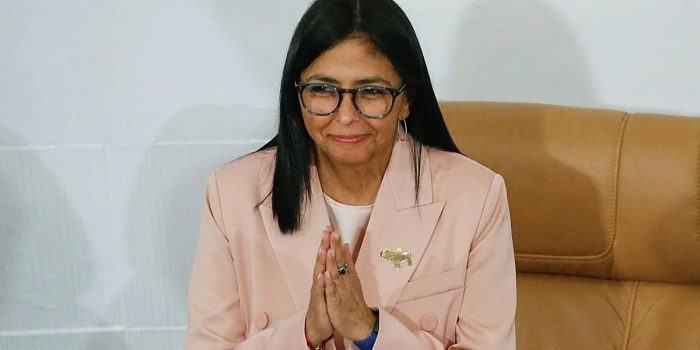
A US journalistic investigation, published in October, revealed that since April 2025 the now interim president of Venezuela had been in negotiations with the Trump administration.
By Carlos Basso Prietro (El Mostrador)
HAVANA TIMES – Probably one of the most striking statements made by US President Donald Trump at the press conference he gave on Saturday January 3rd was the one concerning Venezuela’s current interim president, Delcy Rodriguez. Trump said that she had held lengthy talks with Secretary of State Marco Rubio and that she told him, “we will do whatever you need,” implying the total subordination of Maduro’s successor.
A few hours later, however, Rodriguez appeared on television demanding the release of Nicolas Maduro, whom she described as the “only president of Venezuela.” She said he had been kidnapped and that her country had been “savagely attacked.”
Yesterday, meanwhile, Trump seemed to respond to those remarks, stating in an interview with The Atlantic magazine that if she does not do what is expected of her, she will “pay a very high price, probably higher than Maduro.”
However, taking into account a series of reports published by The Miami Herald—especially one from last October 16—all of these statements would be nothing more than public bravado masking negotiations carried out by the now head of state with the US since April of last year. The talks took place thanks to the mediation of a small Middle Eastern country that enjoys a rare quality: it maintains equally friendly relations with both the United States and Venezuela.
This refers to the investigation written by journalist Antonio María Delgado, a specialist in Venezuelan affairs, entitled: “Venezuela’s leaders offer the United States a path to remain in power.”
The article begins by noting that both Delcy Rodríguez and her brother Jorge (president of the National Assembly) “have discreetly promoted a series of initiatives in recent months aimed at presenting themselves to Washington as a ‘more acceptable’ alternative to Nicolas Maduro’s regime, according to people with direct knowledge of the conversations.”
One point in favor of the two siblings is the fact that neither of them appears indicted in the two formal charges pending against Nicolas Maduro, nor in the other indictments brought in US courts against figures close to Maduro’s dictatorship, such as defense minister Vladimir Padrino—despite the existence of suspicions regarding criminal activities carried out by the Rodríguez siblings.
According to the investigation, the siblings proposed implementing a “Madurismo without Maduro,” which “could allow for a peaceful transition in Venezuela while preserving political stability without dismantling the governing apparatus.”
To that end, they met twice in Qatar with US representatives, in April and September. On those occasions, they also agreed that the retired general Miguel Rodríguez (who is not related to Delcy and Jorge), currently living in exile in Spain, could eventually take over in a transitional government. What is striking—adds the report, published in October, it bears repeating—is that these negotiations were known to Maduro, whom Trump claims was given multiple options to go into exile before deciding to overthrow him by force and take him into custody to New York, where this morning he is to be formally charged with drug trafficking and other crimes.
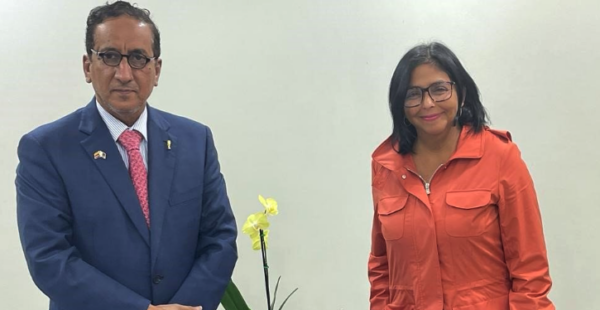
The Role of Qatar
Antonio María Delgado’s report explains that “all proposals were sent through its capital, Doha, where, according to sources, Delcy Rodriguez maintains ‘a significant relationship’ with members of the Qatari royal family and conceals part of her assets. During a meeting in Doha, a high-ranking member of the royal family reportedly acknowledged acting as a bridge between Caracas and Washington on intelligence and economic cooperation matters.”
The key to what happened on Saturday seems to lie in the fact that “the proposals were presented to the White House and the State Department by US special envoy Richard Grenell, who earlier this year met with Maduro at the Miraflores Palace in Caracas and helped secure the release of several US citizens.”
In Washington, in fact, the group of Venezuelan negotiators was known as “the lite cartel” (a reference to the Cartel of the Suns, which Maduro is accused of belonging to). The article adds that although the Rodriguez siblings are not formally charged in cases before US courts, there are suspicions that both supported logistical operations related to drug trafficking and money laundering.
The first transition proposal, in April, involved Delcy Rodriguez assuming the presidency—as ultimately happened—and Maduro “remaining in Venezuela with guarantees for his security and negotiating an agreement granting US companies access to the oil and mining industries. In exchange, it suggested that US prosecutors drop the criminal charges against Maduro.”
Although this agreement was negotiated for several months, the hardline position of the White House, led by Rubio, ultimately prevailed, resulting in the rejection of that idea.
The September proposal, meanwhile, included leaving Delcy Rodriguez as president and then transferring power to Miguel Rodriguez, while sending Maduro into exile in Turkey or Qatar. It is only at this point that Nobel Peace Prize laureate María Corina Machado is mentioned, with the report noting that she “was not included in the plan, as Chavista officials consider her too firm in her principles and inflexible to participate in such an arrangement.”
This explains Trump’s comment on Saturday when he was asked whether he had had contact with her, to which he replied, no, just as he did when asked whether the opposition leader would take part in Venezuela’s transitional government: “I think it would be very difficult for her to lead the country. She has no support or respect within her country. She is a very kind woman, but she does not inspire respect,” he said.
The Miami Herald investigation concludes by noting that “despite their image as disciplined technocrats, longstanding allegations persist regarding the Rodriguez siblings’ involvement with the Cartel of the Suns. Sources familiar with US investigations said the siblings participated in coordination meetings for drug shipments alongside high-ranking officials such as Diosdado Cabello. According to those same sources, the Rodriguez siblings now act as the cartel’s financial managers: ‘They are the ones who control the money,’ a source told the newspaper.”
Second Proposal Rejected
General Miguel Rodriguez Torres was the founder of the Bolivarian Intelligence Service (SEBIN), which, along with the General Directorate of Military Counterintelligence (DGCIM—believed to have been involved in the killing in Chile of Lieutenant Ronald Ojeda), is one of the main bodies responsible for the massive human rights violations committed in Venezuela over recent decades, as documented in reports by the United Nations, Human Rights Watch, and other organizations. This, incidentally, would have been one of the factors influencing the final rejection of the second proposal in October.
Nevertheless, in light of subsequent events, everything indicates that negotiations continued. The British newspaper The Telegraph claimed that “a senior member of the British royal family was acting as a bridge between the (Venezuelan) regime and Donald Trump,” and further asserted that, contrary to what the US newspaper reported, the negotiations were conducted behind Maduro’s back.
It should be noted that, as evidenced on Qatar’s official website, on October 11 of last year (that is, after the second Rodríguez proposal had already been rejected), the then vice president met with the Qatari ambassador in Caracas, Rashid bin Mohsen Fetais. According to the same report, “the meeting discussed aspects of bilateral cooperation between the two countries.”
Meanwhile, in December, Qatar’s Foreign Ministry spokesperson, Majed al-Ansari, stated that his country was “waiting for the parties or other states to ask Doha to act as mediator between the United States and Venezuela.”
That same month, Delcy Rodriguez—who in addition to being vice president was also serving as minister of hydrocarbons at the time—told workers at the petrochemical company Pequiven that “this is the time to defend and not postpone into the future this dispute over Venezuela’s energy resources. If there is anything we must leave to our sons and daughters, it is the legacy of a free, independent, and sovereign country. Never an energy colony of any foreign power,” according to Swissinfo.
First published in Spanish by El Mostrador and translated and posted in English by Havana Times.
What a nest of vipers!!