
“I Don’t See Signs a US Military Operation in Cuba”
says Cuban historian Rafael Rojas
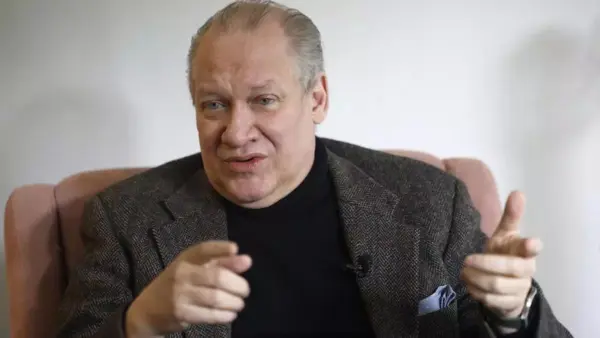
Instead, the Cuban historian living in Mexico believes Washington seems to be betting on “pressure” against Havana through “collateral effects,” such as the end of oil shipments.
By Alfonso Fernandez (EFE / 14ymedio)
HAVANA TIMES – Cuban historian Rafael Rojas said on Monday, in remarks to EFE, that he sees no “signs or evidence” of a US military operation in Cuba like the one that culminated on January 3 with the capture of Venezuelan president Nicolás Maduro. Instead, he believes Washington appears to be betting on “pressure” against Havana through “collateral effects,” such as the end of oil shipments from Caracas to the island.
“I do not see signs or evidence that the US is considering a Venezuela-style military operation in Cuba. Everything seems to indicate that the US is betting on the pressure that collateral effects from the operation in Venezuela can exert,” said Rojas, a professor at the Center for Historical Studies of El Colegio de Mexico and a renowned historian – and brother of former Cuban deputy culture minister Fernando Rojas – in a conversation with EFE at his home in Mexico City.
At the same time, he noted, “The United States is making negotiation offers that do not appear to be well received on the Cuban side.”
The expert on the intellectual and political history of Latin America, who has spent several decades exiled in Mexico, pointed out that two elements currently overlap in Havana: the “mourning” over the 32 Cubans who died in the US military attack on Venezuela, and the “tense way” in which Maduro allied forces are processing his capture.
“Certainly there is a change in the governing style of Delcy Rodríguez, and that change is also reflected between the new Venezuela and Cuba.”
On one hand, Rojas noted that “there is an interpretation in favor of the betrayal thesis,” comparing it to other cases of Bolivarian leaders succeeded by new governments that abandon the Bolivarian line, as in Ecuador with Lenín Moreno (2017–2021) following Rafael Correa (2007–2017).
“Others see it as an inevitable transaction, as a tactical setback in order to negotiate with US president Donald Trump,” explained the author of Tumbas sin sosiego. Revolución, disidencia y exilio del intelectual cubano (2006), winner of the Anagrama Essay Prize.
“But certainly there is a change in the governing style of Delcy Rodríguez: it is not the confrontational type of government that Maduro had with the US, and that change is also reflected between the new Venezuela and Cuba. The statements from Caracas that refer to Cuba are tremendously cold; the anti-imperialist tone has been lowered,” the author added.
In this sense, he pointed out that “what has happened in recent days demonstrates that negotiations are still underway. And the current Venezuelan government is adopting measures that respond to demands such as the release of political prisoners and the offer of up to 50 million barrels of oil to the US.”
In this context, Rojas, who graduated in Philosophy from the University of Havana, stressed that it is important to analyze the attitude in the region of the traditional international allies of Bolivarian governments, such as Russia and China, in response to the military intervention in Venezuela and the arrest of Maduro, who is being held in New York awaiting trial on several drug-trafficking charges.
“Clearly there was a withdrawal of China and Russia even before the January 3 operation, especially at the end of 2025 when the US began attacks against vessels in the Caribbean and the Pacific. Now we understand the matter a bit better. China was focusing on the tension with Taiwan and Russia was still concentrated on its invasion of Ukraine while also watching with some sympathy the US gestures toward annexation of Greenland,” he noted.
The Cuban government has described the US military attack on Caracas as “unacceptable and barbaric” and has repeatedly insisted on its “support and solidarity with the Venezuelan people and government” while also demanding Maduro’s release.
Havana and Caracas have been close political and economic allies, and since the year 2000 they have maintained an agreement under which the Island received Venezuelan crude oil in exchange for professional services, mainly doctors and teachers, but also, in abundant numbers, military personnel, as shown by the Cuban dead — who were part of Maduro’s security detail — as acknowledged by the regime.
First published in Spanish by 14ymedio and translated and posted in English by Havana Times.
Cuba has a lot of important friends in the US.
Elected leaders in the US like Rand Paul and Tim Kaine, activists like John Giotis and James Williams, and business leaders like Carly Fiorina all are pushing for normalization between Washington and Havana.