
Maduro Declares Himself Innocent and a “Prisoner of War”
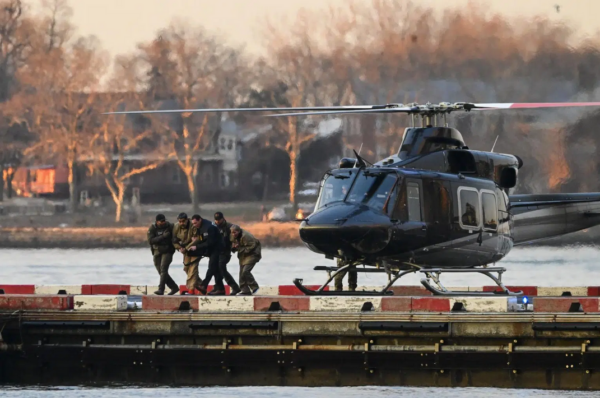
“I am the president of Venezuela (…) I was captured in my home in Caracas,” he said at the hearing. His lawyer did not request bail.
HAVANA TIMES – The president of Venezuela, Nicolas Maduro, stated on Monday, January 5, 2026, during his first appearance before the US District Court for the Southern District of New York, that he considers himself “an innocent man” of the drug trafficking charges on which the Trump administration bases his capture and transfer to the United States, and declared that he regards himself as “a prisoner of war.”
“I am the president of Venezuela, and I consider myself a prisoner of war. I was captured in my home in Caracas,” Maduro said during the hearing, at which both he and his wife, Cilia Flores, pleaded not guilty to the charges they face.
Maduro entered the courtroom with a slight limp and wearing prison clothing: orange shoes, khaki pants, and a navy blue short-sleeved T-shirt over an orange one.
He was followed by his wife, Cilia Flores, who was wearing the same attire.
For the proceedings, his handcuffs were removed, and during the hearing—lasting less than an hour—Maduro put on headphones to listen to the Spanish translation of the judge, the prosecutors, and his attorneys.
Throughout the proceedings, he took notes, some of which he even passed to his wife’s lawyers, and he also asked the judge for permission to keep his notes, a request that was granted.
“I Am a Prisoner of War”
The first time the Venezuelan president spoke was when Judge Alvin Hellerstein, 92, asked him whether he was Nicolas Maduro. In addition to confirming his identity, Maduro said in Spanish that he had been “captured” from his home during a “military intervention” and that he considered himself a “prisoner of war.”
“There will be a time and place to address all of that. (For now) we only want to know whether you are Nicolas Maduro,” Hellerstein interrupted, adding that his duty as judge in this case was to ensure that “a fair trial” takes place.
The formal indictment made public on Saturday, January 3, 2026, and which revises the original 2020 filing, charges Maduro with conspiracy to commit narco-terrorism and conspiracy to import cocaine, among other offenses.
For her part, Flores is accused of allegedly participating in the conspiracy to traffic cocaine.
These charges carry severe prison sentences if the defendants are found guilty.
“Not Guilty”
Today, both defendants pleaded “not guilty.”
Maduro said he was “an innocent man” and reiterated that he is the president of Venezuela, while his wife declared herself “completely innocent.”
Both requested a “consular visit” and, through their lawyers, indicated that they have health issues requiring medical attention—particularly Flores, who reportedly has more serious rib injuries and appeared with bandages on her forehead—though no specific details were provided.
The Next Hearing
Hellerstein noted that he will see all parties again on March 17 for the next hearing.
However, Maduro’s lawyer, Barry Pollack, raised “questions about the legality” of the proceedings during this hearing.
He argued that his client, as the “head of a sovereign state,” is entitled to the corresponding “privileges,” and maintained that there are doubts regarding the legality of his “kidnapping by military forces.” He added that “numerous” pretrial filings would be submitted to address these issues.
A High-Profile Case
Maduro’s appearance drew the attention of journalists from around the world, as well as dozens of Venezuelans and Cubans living in New York.
“We want to witness history with our own eyes,” Nelia, a Venezuelan visiting New York to see her daughter Cristina, an immigration lawyer, told EFE.
Both women waited for hours in the marble-lined hallways of the US District Court for the Southern District of New York to see Maduro’s first hearing.
Outside the courthouse, there were two small groups of demonstrators: one made up of Venezuelans celebrating the arrest, and another—mostly US Americans—protesting the Trump administration’s military intervention.
Barry Pollack, Maduro’s lawyer, stated in the New York court that “for the time being he will not seek bail” for the president, though he did not rule out doing so at a later stage.