
“Chikungunya,” Cuba’s Word of the Year
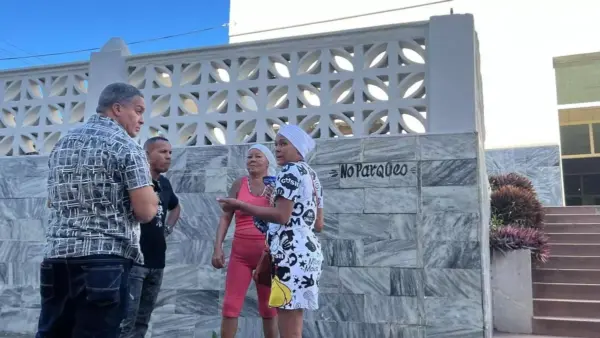
More than 50,000 Cubans were hospitalized at the end of November 2025 for arboviral infections, including chikungunya, dengue, and Zika
HAVANA TIMES – Just a few months ago, “chikungunya” was an unpronounceable word for most Cubans. It sounded like a distant term, the kind of exotic disease mentioned on international newscasts. But today that strange word dominates conversations in lines, posts on social media, and—worst of all—the worries of millions of people on the Island. It has become, without question, Cuba’s word of the year.
Everywhere you hear: “So-and-so was bedridden by the fever,” “she’s spent a week unable to move her legs,” “the kids in the building have swollen joints,” or “the neighbor can only swallow gelatin.” The disease is no longer a statistic but a face, a voice, a weakness. It carries the smell of homemade insecticide families use to defend themselves and the sound of the insistent fluttering of mosquitoes entering through windows.
More than 50,000 Cubans were hospitalized last week for arboviral infections, including dengue and Zika. The extent of the problem can no longer be concealed. In provinces such as Villa Clara, Camagüey, and Holguín, hospitals are at the limit, and in many municipalities family doctors quietly admit that “this is out of control.” But while chikungunya spreads, the authorities have opted for caution. First it was downplaying the presence of the virus, then sticking to vague references of “autochthonous transmission.” Between one ambiguous statement and another even more confusing, the country filled up with fever, rashes, and aching knees.
The epidemiological deterioration surprises no one. It comes hand in hand, like an inseparable shadow, with the collapse of basic services. In numerous cities, garbage collection stopped being a daily task and became a sporadic event. Mountains of waste rot under the sun. On top of that visible decay come the blackouts, which force people to open doors and windows to survive the nighttime heat—just when Aedes aegypti mosquitoes enjoy their feast.
Then there is the water: it either arrives dirty, arrives once a week, or arrives with such low pressure that people must store it in every container they can find. In this precarious ecosystem, breeding sites multiply, while the former anti-vector program—an army of fumigators and inspectors—vanished for years now. The sound of fumigation wasn’t heard again until a few days ago, when the health emergency forced the reactivation of a tiny fraction of that once-massive campaign.
The streets know more than the official bulletins. They know about the elderly man who spent ten days with a fever without being admitted because “there were no hospital beds.” They know about the mother who, due to the lack of state-provided insecticide, paid a private business 1,200 pesos for fumigation—one quarter of her monthly salary. They know about the young man who, despite his physical strength, shakes with pain as if every bone had been replaced with a piece of rusted metal. And they know the stories of overcrowded funeral homes that spread faster than the official press, always more honest than any report from the Ministry of Public Health.
That is why, when someone says “chikungunya,” no one asks what it means anymore. It means a country that can barely move and is at the mercy of the mosquito. A word that was unpronounceable yesterday has become commonplace today. A term that, sadly, sums up 2025 in Cuba better than any other.
Published in Spanish by 14ymedio and translated and posted in English by Havana Times.
Good Day “Jenny C” from Canada. “Right On” !! A “Me Too” Movement in Canada against the Cuban Regime. You, similarly and quite-likely, must love the Cuban People as much as “most of us” Canadians. Would guess, like myself, you have been there many times and maybe for many years !!
We can only help the People by “finally and collectively” taking our voice directly to Havana. We must “meet” with the Tourism Minister “face to face” and explain how us, normally passive Canadians, are going to “Bust their Bubble” by, once-and-for-all, “organize and beg” our fellow “travellers” to Cuba, to “STOP” travelling there until the “Halls of Power” are “CRUSHED” !!
We have the “Power” to do such… Why ?? Well we represent, as a group, almost 50% of their Customers.
I am ready to get “On this Train” pronto and with pleasure. It is “TIME” !!
Let’s take the “Fight for our Friends” directly to the “Devils” themselves. We can “Win this War” and protect the “PEOPLE”. I am ready to “Play Ball”.
I can be reached @ [email protected].
Whomever wants to help can connect !! Together we can finally “Make Progress”.
ME TOO (For Cuban People) TORONTO !!
If Cuba had a “Me too” campaign for chikungunya, I wonder how many tourists’ names would be on the list?
Signed,
Me too in Canada