
Paper Pardons in Venezuela
Editorial from La Estrella de Panamá
HAVANA TIMES – In Venezuela, freedom has become an announcement: it is promised in statements and vanishes in reality. The Chavista regime spoke of “significant” releases, but independent verification contradicts that narrative.
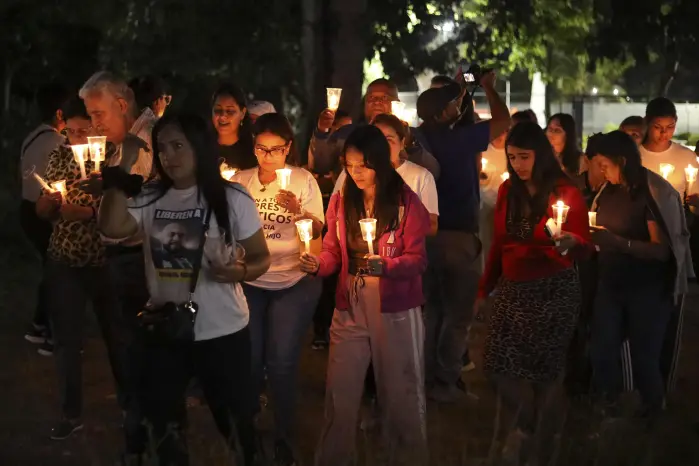
Foro Penal counts only 14 releases as of yesterday afternoon. By contrast, its registry confirms that 811 people remain detained for political reasons, although other sources raise the number to more than a thousand due to cases that are not reported out of fear of reprisals.
The gap between propaganda and reality is not a detail: it is the method. In a system without checks, justice becomes a tool of punishment, and announcements of releases work as smokescreens. When releases do occur, they are handled without transparency, without clear criteria, and with a pattern that fuels uncertainty: who is freed, who stays, who disappears from the radar.
The problem is no longer just Venezuelan. Eighty-seven political prisoners are foreigners or binational, from more than 30 countries. Venezuela has extended the reach of its repression beyond its borders: passports offer no protection; they merely signal vulnerability.
Panama is on that list. And the name cannot be diluted among numbers: Olmedo Javier Núñez Peñalba, detained for more than seven months. He is not a party leader nor a public figure of confrontation. He is a worker, in charge of engine maintenance, caught in a dynamic where accusations like “espionage” serve to justify imprisonment without due process.
When a State imprisons without transparency, it not only violates individual rights: it normalizes abuse. Panama says it is pursuing consular, diplomatic, and multilateral actions. Democratic governments must speak out publicly and in coordination. The international community cannot continue treating these detentions as an internal matter: they are violations of human rights. In this context, silence is not prudence: it is tolerance.
First published in Spanish by La Estrella de Panamá and translated and posted in English by Havana Times.