
Mexico’s Explosive Cocktail: Beauty Queens & Organized Crime
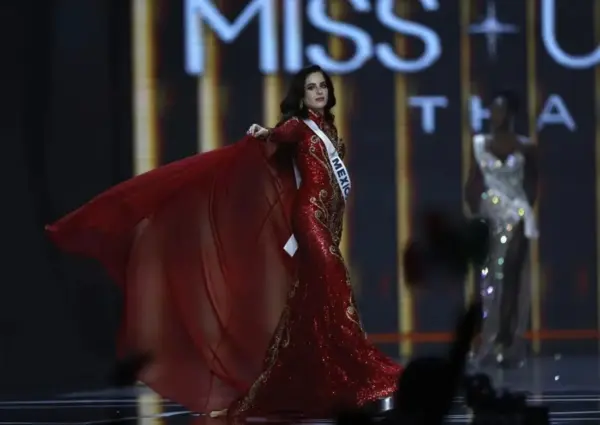
The Miss Universe pageant uncovered a criminal network in Mexico that led to the resignation of the attorney general and presents the government with a challenge.
By Deutsche Welle (Confidencial)
HAVANA TIMES – November 21 was a day of celebration in the southern state of Tabasco, Mexico: the regional government opened the doors of the Centenario Stadium so that the population could watch a live broadcast of the Miss Universe beauty pageant final, which was taking place in Thailand. Among the finalists was Fatima Bosch, a native of that state.
In the end, Fatima, daughter of an official at the state oil company Petróleos Mexicanos, was crowned the winner. Popular celebrations erupted and spread, with congratulations pouring in from Pemex and even Mexican President Claudia Sheinbaum.
But the joy was short-lived – rapidly followed by allegations and revelations of favoritism, corruption, and organized crime involvement in the pageant.
From favoritism to drug trafficking
Suddenly, a dark web emerged that, in the opinion of analysts, puts to the test the Mexican government’s willingness and ability to confront sophisticated forms of organized crime involving public servants, private companies, the military, and cartels that conspired to defraud the state.
The scandal began even before Bosch’s victory: two of the eight jury members resigned, and one of them, French-Lebanese musician Omar Harfouch, criticized the selection of the 30 finalists on his Instagram channel as “a major conflict of interest.”
This caught the attention of the entertainment media, which then shone a spotlight on Mexican businessman Raul Rocha Cantu, co-owner of the Miss Universe organization. Rocha is an important and controversial businessman in Mexico, who has million-dollar contracts with Pemex. The trail led to evidence of his links to other previous scandals in a journalistic investigation into corruption in the awarding of public contracts.
The surprises did not end there: shortly afterwards, authorities leaked that an arrest warrant against Rocha has been pending for a year, on charges of leading a drug, arms, and fuel trafficking network between Mexico and Guatemala.
Resignation of the attorney general and a challenge for Sheinbaum
According to the press investigations, high-ranking officials and even members of the Attorney General’s Office itself are involved in this network. Their revelations led to the resignation of Attorney General Alejandro Gertz, whose nine-year term began in 2019 and was set to end in 2028.
Analysts consulted by DW, Germany’s international news agency, say the case puts the government of President Claudia Sheinbaum in a difficult corner. “This is not a classic case of corruption,” warns Maria Amparo Casar, president of the organization Mexicans against Corruption and Impunity. “This is the second huachicol network (illegal fuel trafficking in Mexican slang) to be uncovered in a few months, following the case involving the Navy,” she emphasized in an interview.
She went on to offer three reasons that make fuel theft particularly serious: “First, because of the high cost to the public coffers, with losses of over 500 billion pesos (US $27.4 billion); second, because the links between organized crime and various institutions and political figures are becoming apparent; and third, because of the complex mechanisms that had to be set up for this purpose, involving technology, logistics, and intelligence, which require the participation of many private and public figures.”
Eduardo Bohorquez, representative of Transparency International in Mexico, agrees. “Fuel trafficking is a global macro-criminal business,” he tells DW. “It’s not just petty corruption that takes money out of the state coffers, it’s a tax fraud operation that is more difficult to detect.”
He further noted that transnational structures are needed to launder this money, such as “sponsoring a contest like Miss Universe, which can be injected with a lot of liquidity.”
Rethinking the strategy against crime
For that reason, Bohorquez, who holds a postgraduate degree in Development Studies from the University of Cambridge, UK, believes that Mexico needs to rethink its anti-corruption policy and focus much more on financial intelligence.
According to the corruption specialist, the resignation of the attorney general, accused of using the Prosecutor’s Office for personal gain and not collaborating sufficiently with the government, points to this: “It is an attempt to make the Public Prosecutor’s office operational,” Bohorquez believes.
Maria Amparo Casar also believes that the new Attorney General, Ernestina Godoy, will foster better coordination between the Public Prosecutor’s Office and the Ministry of Public Security, headed by Omar García Harfuch, in pursuing organized crime networks. But she warns that this does not mean crimes affecting the political class will be prosecuted.
Both were officials in Sheinbaum’s administration when she was head of government in Mexico City (2018-2023).
“Knowing the reality in Mexico, I doubt that this will be a watershed moment in the fight against corruption,” affirms Casar. She recalled that seven years ago, Sheinbaum’s predecessor and political mentor, former President Andres Manuel Lopez Obrador, decreed the death of corruption in Mexico. However, the scandals continued.
Published in Spanish by Confidencial and translated and posted in English by Havana Times.
turns out Casar is about to face the supreme Court for cashing a fraudulent pension check from the state owned Pemex from her husband she doesn’t deserve the check because her husband committed suicide instead of it being a on the job related accident she used her political connection and leverage by being part of president Fox cabinet to obtain the right to get that check so she’s being taking money that she doesn’t need let alone deserve