
Maduro Is Gone: What Are Venezuelans Saying in the Streets?
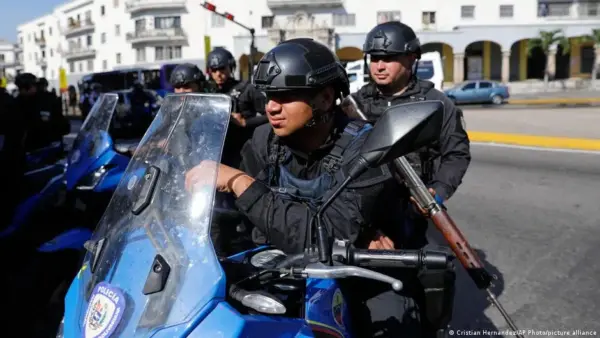
Venezuelans inside and outside the country are living between fear and hope as they face the uncertainty following the events that brought about the fall of Maduro.
By Deutsche Welle (Confidencial)
HAVANA TIMES – On the streets of Caracas, there is fear, uncertainty, and great caution, but also hope. The extraction operation that removed Nicolas Maduro, carried out by the United States in the early hours of Saturday, January 3, 2026, kept Venezuela on edge and its capital literally awake. Many still have the deafening noise of the planes etched in their minds. Yet the future is far from clear.
On Thursday, January 8, 2026, US President Donald Trump hinted, in an interview with the New York Times, that the current situation could drag on for years: “Only time will tell,” he said.
“There is a lot of anxiety about what will come after Maduro’s fall, because Caracas’ political elite is still there in power,” says Jesus Renzullo, a Venezuelan researcher at GIGA. According to Renzullo, how Venezuelans analyze the situation largely depends on whether “the person speaking is free to talk and, in this case, those outside Venezuela have more advantages.” It also depends on whether one can “emotionally distance” oneself—something that is quite difficult.
Increased repression
“Maduro’s vice president, now interim president, Delcy Rodriguez, remains in power, and the fact is that the repressive and security apparatus is still active,” Renzullo says from Hamburg. In Venezuela, he explains, the streets are full of police and so-called colectivos, pro-Chavista paramilitary groups, who inspect cell phones and cars and arrest “people who have messages against the government.” Renzullo notes that “fourteen journalists have been arrested, some of them already released.”
Many reporters are afraid to go out with their equipment. “Because if they catch you with a camera, it’s a big deal, they can take you,” one of them tells DW anonymously. People, too, are reluctant to speak on the record, although some do.
Chavismo in the streets, opposition silenced
While opposition groups—who have in the past organized massive demonstrations—remain on hold, the government side is occupying the streets. “We are outraged, but also very, very motivated to defend our homeland,” Hilda C. tells DW. She hopes to be able to say to Trump: “You don’t know, you have no idea, of the moral, revolutionary, and libertarian stature of the Bolivarian people, of the Venezuelan people.”
The ousted president, however, “had no real support among the Venezuelan population,” says Renzullo. “The last polls in 2024 already had Maduro below ten percent popularity,” he recalls. And this is also noticeable among those who dare to speak in the streets. “What we have here is a cycle that had already come to an end, that already deserved a change… and it happened, perhaps not through the most ideal path,” says consultant Hector R., who sees Maduro’s fall as “the chronicle of a death foretold.”
Opinions on Delcy Rodríguez
Regarding the decision to name Delcy Rodríguez as Maduro’s successor, Hector R. says that “it seems it was the most prudent choice: first, because it complies with the Constitution, and second, because it’s the beginning of a change where many elements remain the same.”
Opposition leader María Corina Machado has said that Delcy Rodríguez is the “architect” of all human rights violations in the country, but some sectors view her as competent and someone who at least delivers results.
“In the business world there are good communication channels with the vice president, now acting president,” says Asdrubal Oliveros, director of Ecoanalítica. With her as economy minister, “there was a shift compared to what was happening before, when Chavismo practically despised business owners and there was no direct communication,” he explains. But it is unclear how she “will manage to unite the different Chavista factions, especially after such a traumatic event.”
“Obviously, it is a change, a transition… maybe not as sweeping as expected, but a transition nonetheless,” Oliveros says. “And hopefully—this is the wish of Venezuelans—this will lead to more solid institutional agreements and to a democratization of the country, which is so badly needed,” he adds. Although for now, what exists in Caracas is a government that, in the words of analyst Ricardo Rios, quoted by AFP, is being “hacked” by Trump, who “makes it work for him,” at least when it comes to oil. In other areas, Rodriguez maintains she governs without pressure.
A bet on stability
In his January 8, 2026 interview, Trump refused to answer why he recognized Maduro’s vice president as acting president, but analysts see it as a short-term bet on stability. “It should be remembered that instability, protests, and chaos are bad for business,” Renzullo says pointedly. Trump also declined to answer under what conditions he might send ground troops to Venezuela—something some analysts say would be “political suicide.”
Meanwhile, Rodriguez has begun exercising power in Venezuela and making her first appointments, starting with her own replacement as economy chief, and also naming the new commander of the Presidential Honor Guard and the head of the General Directorate of Military Counterintelligence. “To those who threaten me, I say: only God decides my fate,” Rodriguez recently declared.
Will there be elections soon?
However, what she should do is call elections. “Article 234 [of the Venezuelan Constitution] is clear: ninety days, extendable for another ninety as determined by the National Assembly,” says Juan Carlos Apitz, dean of the Law and Political Science Faculty at the Central University of Venezuela.
Once that period ends, “at some point a new universal, direct, and secret presidential election will have to be called,” says the constitutional law expert. “I am not entering into the question of whether Mr. Nicolas Maduro’s presidency was legitimate or not, that is another matter,” he adds.
“What politicians do and what they have to resolve is up to them,” Anuer Z. tells DW, admitting he is afraid. “We, as citizens and civilians, must maintain calm and unity; here we are neither green nor red, we are tricolor,” he says, referring to the colors of the Venezuelan flag. “May Venezuela rise again—that is what we want, what all of Venezuela wants—and put an end to so much hatred, to 26 years of harassment,” he concludes. He also calls for the economy to be revived, and for “peace and tranquility” to be preserved.
Published in Spanish by Confidencial and translated and posted in English by Havana Times.