
Trump Has Only One Option in Venezuela
Whether de admits it or not
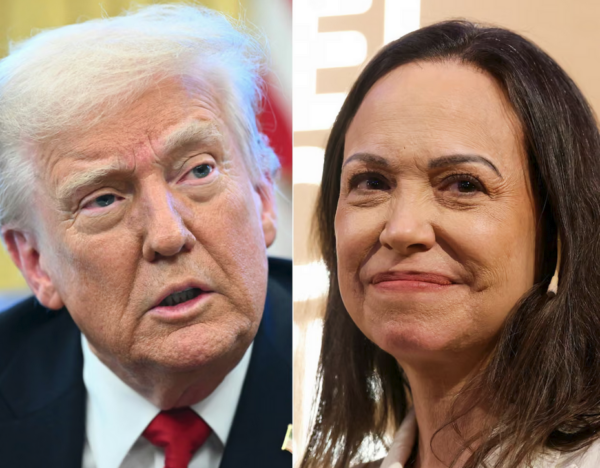
Amid power vacuums and diplomatic maneuvers, Venezuela’s fate is at stake.
By Federico Hernandez Aguilar (14ymedio)
HAVANA TIMES — Reducing geopolitical threats against the United States — that is, limiting the influence of Iran, China, and Russia (probably in that order) — is reason enough for someone like Donald Trump to order the extraction of a dictator in South America. Nicolas Maduro was an ideal candidate for a sudden eviction without the need for a military invasion. And that is how the Republican president acted, removing the missing piece needed to better control the board.
With the fall of Hugo Chavez’s hand-picked successor, however, a new range of possibilities opens up. We already know that Trump lacks democratic credentials and even the minimal scruples needed to conceal that lack. We also know that his temperament is volatile, his ego colossal, and his hunger for power astonishing. He has no qualms about saying what he thinks because he has never needed to think about what he says. His limits, as he himself has stated, depend on what he calls his “own morality” — a claim that will surely be the subject of debate among psychotherapists and legal philosophers in the years to come.
But Donald Trump, like any politician who lacks the qualities of a statesman, does have fears. He fears real challenges to his power. And he has a sharp instinct for understanding when that power can truly be challenged. The midterm elections next November exert real pressure on the president, because by then he must show tangible achievements on almost all the fronts his excesses have opened.
And it is precisely here where democracy in Venezuela can slip through, in that small gap that lies between unbearable narcissism and electoral realism. If figures like Marco Rubio have managed to steer their boss toward the path of a surgical and successful strike, they are now obliged to propose the long undertaking of democratic restoration as a noble and lasting legacy. Not because Trump cares about Venezuelans, but because he cares about what posterity will say about him.
And a resounding failure in the land of Bolívar is now not only a possibility — in addition to being a terrible legacy — but the quackery coming from the White House has already made that grim scenario feel palpable to many observers inside Venezuela and around the world. The time has come for the tough-guy rhetoric to turn into pragmatism and skill — even for Trump’s own benefit.
To dismiss Maria Corina Machado as a key actor in Venezuela’s transition was, as we now know, a political blunder and a childish emotional outburst (Nobel Prize jabs included). However, as was to be expected, someone eventually told Trump that that tantrum had consequences. Machado will — like it or not — have to return to Caracas and lead the reconstruction of her country, whether she has the US president’s blessing or reluctance.
Long before that, it is true, the dangerous power vacuum left by Maduro must be filled. The residual Chavismo embodied for the moment by Delcy Rodriguez is the necessary scapegoat for this purpose. Without someone like her, dismantling Venezuela’s oppressive structure would require a military occupation in the short or medium term. And no one wants that. Not even Trump; least of all his voters.
But imposing order in the barracks is very different from governing toward democracy. That task cannot be carried out by any figure from the fallen regime, among other things because none of them knows what the rule of law, separation of powers, or accountability actually mean. Whoever Washington negotiates this tutelage period with must know that their mission has an expiration date.
After the stabilization phase that will prevent the country’s collapse, the United States will then have to provide on-the-ground protection and support to the legitimate opposition that defeated Maduro at the polls in July 2024. And this accompaniment would have to be shared with other neighbors in the region. An overwhelming US presence is inadvisable.
Recognizing these basic conditions is the foundation of a successful transition. If the decision is truly to guide the initial stabilization from the United States with the promise of laying the foundations for a full democracy, Rodriguez’s role is merely instrumental, while Machado’s is essential. But until that point is reached, it falls to the Chavista past to assume the risks of the most urgent dismantling.
The liberation — not mere release — of political prisoners is non-negotiable, as is the disarmament of the motorcycle collectives under the command of Diosdado Cabello. The still-defiant must have their options limited: join the Colombian guerrillas at the border, attempt a futile internal military resistance, or go to prison. What matters is that every remnant knows what awaits if they challenge Delcy Rodríguez’s interim authority.
At the same time, the opposition’s social base must receive clear messages — no more confusion. As Andres Izarra, a former Chavez cabinet member, has written, “Trump’s victory was removing Maduro from the driver’s seat while the car was still moving and sitting down himself.” True. The problem is that the car has not only kept moving, but that this automobile — called Venezuela — has only one possible destination: democracy. Any other destination is a collision… and it will be fatal for whoever is on board, even if his last name is Trump.
First published in Spanish by 14ymedio and translated and posted in English by Havana Times.