
Air Canada Cancels Flights to Cuba Due to Fuel Shortage
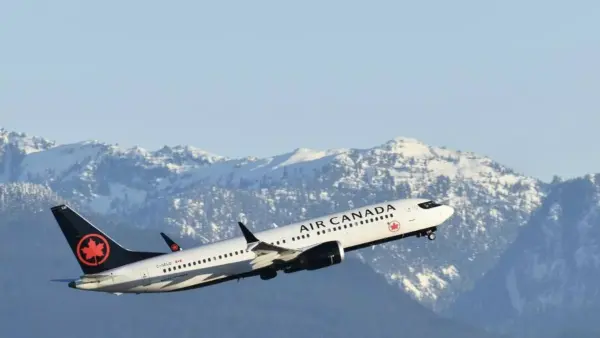
Spain’s Iberia and Air Europa announce technical stopovers to refuel their airplanes in the Dominican Republic.
HAVANA TIMES — Air Canada suspended its flights to Cuba this Monday due to the country’s critical shortage of jet fuel. In a statement, the Canadian company indicated that the measure will directly affect around 3,000 passengers currently stranded on the Island, so it will send empty flights to transport them back to their country.
“Air Canada made this decision following the notices issued (NOTAM) regarding the unreliability of aviation fuel supply at Cuban airports,” the statement notes. The company said that, as of February 10, aviation fuel will no longer be available for purchase at airports on the Island. “For the remaining flights, Air Canada will carry additional fuel and make technical stops to refuel on the return journey if necessary,” it explains.
The message from Cuban authorities to pilots and controllers specifies that the kerosene deficit affects all of Cuba’s international airports. The nine affected air terminals are in Havana, Varadero, Cienfuegos, Santa Clara, Camagüey, Jardines del Rey in Cayo Coco, Holguin, Santiago de Cuba, and Manzanillo. The notification is valid for one month, from February 10 through March 11.
In response, the airline reported that flights to Holguín and Santa Clara are canceled “for the rest of the season,” while flights to Varadero and Cayo Coco, which operate year-round, are currently suspended “with a tentative restart, pending review, on May 1.”
In total, Air Canada operates, on average, 16 weekly flights to four destinations in Cuba, from Toronto (four weekly flights to Cayo Coco, two to Holguín, four to Varadero, and one weekly flight to Santa Clara) and Montreal (three weekly flights to Cayo Coco and two to Varadero).
Other Canadian airlines have issued their own travel alerts or implemented more flexible cancellation options. Air Canada, WestJet, Air Transat, and Sunwing announced rescheduling or cancellation options without penalty. WestJet, in its notice, cited “power outages” as the reason for the alert covering all flights to and from Cuba from Sunday through February 26, 2026.
From Spain, Iberia and Air Europa reported this Monday that their flights traveling from Havana to Madrid will require a technical refueling stop in Santo Domingo, Dominican Republic. The measure mirrors what has happened in similar situations in Cuba — both during the Special Period in the 1990s and in temporary “bottlenecks” in recent months — when airlines solved the problem by rerouting departures from the Island with extra stopovers to refuel in Mexico or the Dominican Republic.
However, the measures taken from Canada are the ones hitting the country hardest and could end up undermining one of the sectors the Government relies on. Tourism from that country, the historic leading source of travelers to the Island, has improved slightly in recent months but still shows considerable losses compared to the past. In 2025, 754,010 Canadian visitors arrived, 12.4% fewer than the previous year — and a dramatic drop compared to the 1.3 million recorded in 2015. The case is relatively similar to Russia, where a major promotional push sought to secure 200,000 travelers after the success of recent years but resulted in a meager total: 131,882, 29% fewer than in 2024.
Cuba closed 2025 with 1,810,663 international visitors, far from the 1.9 million forecast in Parliament in mid-December and even worse compared to plans made a year earlier. At that time, the projection was 2.6 million — 30.3% more than what was ultimately achieved.
The US oil squeeze has also led governments in the Americas and Europe to issue warnings to potential travelers. The messages follow a similar pattern, urging caution due to worsening shortages of electricity, fuel, and basic necessities — including food, water, and medicines — which could also affect tourist centers.
These announcements come amid social media reports that several hotels have been closed and their guests relocated to other establishments.
Given this scenario, Kremlin spokesperson Dmitry Peskov said Monday that Russia is seeking solutions together with Cuban authorities and indicated it will do what it can to help with the airport crisis and facilitate the return of Russian tourists. “Through diplomatic channels as well as other avenues, we maintain intensive contacts with our Cuban friends,” Peskov said in his daily telephone press briefing, noting that “the situation in Cuba is truly critical.”
First published in Spanish by 14ymedio and translated and posted in English by Havana Times.