
Life in the Dark: How Blackouts Fracture Daily Life in Cuba
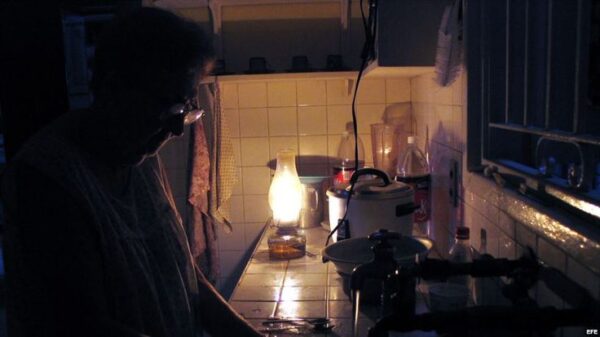
HAVANA TIMES – At 9:00 PM in Havana, the fan stops turning, the television switches off in the middle of a soap opera, and the lamp’s dim glow disappears. A chorus of “the power’s out!” echoes through the apartment building. For millions of Cubans, this moment marks the beginning of a silent struggle against time, darkness, and heat. Scheduled or unexpected blackouts lasting from 6 to 12 hours or more have ceased to be an anomaly and have become a constant variable around which life must be planned.
Planning Around Darkness
In Laura’s kitchen, at age 68, the weekly menu is no longer designed around family preferences or nutrition, but around the electricity schedule. “If I know the power goes out at 2 PM, I have to cook everything before noon — that’s the priority,” she explains as she hurries to finish rice and beans. The refrigerator, which she manages to partially fill only with enormous effort and sacrifice, becomes a ticking time bomb: each prolonged outage threatens to spoil milk for the children, most of the food, and even medications like insulin that require refrigeration. Laura’s kitchen functions like those in every Cuban household: everything revolves around electricity, conditioning efforts and schedules.
Daily routines are inverted. Nights without power often mean sleeping outdoors on patios and balconies, searching for a breeze impossible to find inside homes turned into ovens. Scarce and expensive candles barely illuminate schoolwork for children, teenagers, and university students. Water — dependent on electric pumping systems — becomes even more limited. Entire families mobilize in the early morning hours, when power sometimes returns, to fill every available container, wash accumulated clothes, and recharge flashlights.
Work in Forced Pause
For the labor sector, blackouts are an almost insurmountable obstacle. Workshops, small state-owned and private businesses (such as cafes or beauty salons) see their activities paralyzed. Economic losses are direct: spoiled food, absent customers, halted production.
Office workers face an absurd reality: they must show up to their workplaces even when there is no electricity to turn on a computer. They spend hours in the dark in a simulation of productivity while the heat builds. For those who work remotely or depend on digital self-employment, a blackout means income evaporating, international clients who cannot wait, and projects abruptly halted.
In the countryside, the impact is even more brutal: without electricity, irrigation systems do not function, crops spoil in refrigeration chambers, and dairy production grinds to a halt. The food chain suffers from the very beginning.
Health and Safety: Vulnerability in Darkness
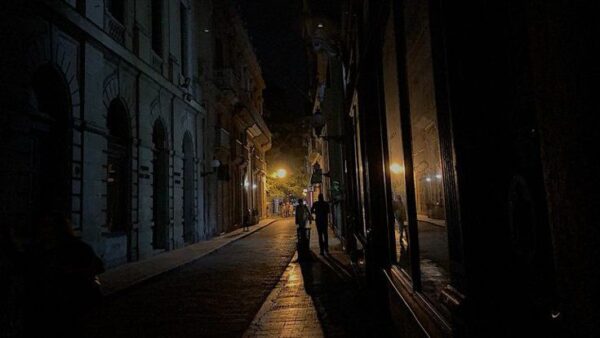
Hospitals, although equipped with generators, operate at the limit. In residential neighborhoods, elderly people or those with chronic illnesses who rely on medical equipment at home live in constant anxiety. Darkened streets become dangerous territory, with increased crime and insecurity. Internet connectivity and phone communication become practically inaccessible without electricity, and often network use is impossible.
Adaptation as a Form of Resistance
Faced with this reality, Cubans have developed a kind of survival engineering. Neighborhood information networks share electricity schedules — often spread through WhatsApp groups or by word of mouth. It is important to note that blackout schedules change constantly and are often not respected. Social life is reconfigured: on porches, under the glow of a shared candle, conversations weave together complaints and spontaneous acts of solidarity.
The Invisible Cost
Beyond material and economic losses, there is a profound psychological toll. Constant uncertainty generates chronic stress. The inability to plan even one day ahead creates a sense of hopelessness. Students see their study hours limited; children grow up normalizing darkness as part of life. The lack of sleep due to unbearable nighttime heat erodes health and collective morale.
Epilogue: When the Light Returns
The return of electricity does not mean a return to normal. It signals the start of a race against the clock: refrigerating, cooking, washing, charging, working. It is a brief sigh before the cycle begins again. Blackouts in Cuba are not merely a technical failure in the energy system; they are a force that reshapes existence, imposing a logic of permanent emergency over home and work life. Meanwhile, people wait, improvise, and resist, learning to live amid incessant interruptions, day after day.
Read more from the diary of Safie M. González aquí en Havana Times.
In other provinces throughout Cuba for example Cienfuegos, Camagüey, Las Tunas, Holguín, Guantánamo, Santiago, and Bayamo, the blackouts are even worse! I have family that lives in the city center of both Camagüey and Holguin, they get a mere 3 hours of electricity during the day at whatever random time they decide to turn it on, there is no given schedule, and sometimes in the middle of the night between the hours of 2:00-4:00AM for a couple hours and that’s it! On average during the last few months there is absolutely no power 16-20 hours within a 24 hour period. The internet has not been working for the last 2 weeks as of today, and trying to call direct to speak with my family is a challenge too, telecommunication lines are overwhelmed, so just about every time you’ll get the automated recording that the phone you’re calling is turned off or outside the calling area which is NOT true! Their system is collapsed, the dictatorship will not admit it, there is no plan of action, it’s always the same BS lie disguised in a different way! They all have solar power, communications equipment that doesn’t fail, and as long as the people in power have what they need, live a capitalist lifestyle, travel, they couldn’t care less about the rest of society, it hasn’t bothered them for 66 years and it will not continue to bother them at all! Their feedback is “let them figure it out whichever way they can!” Cuban people will have everything they need, and again prosper, the minute the communist regime is gone!